Pre-Inspection Checklist: 30-Minute Prep
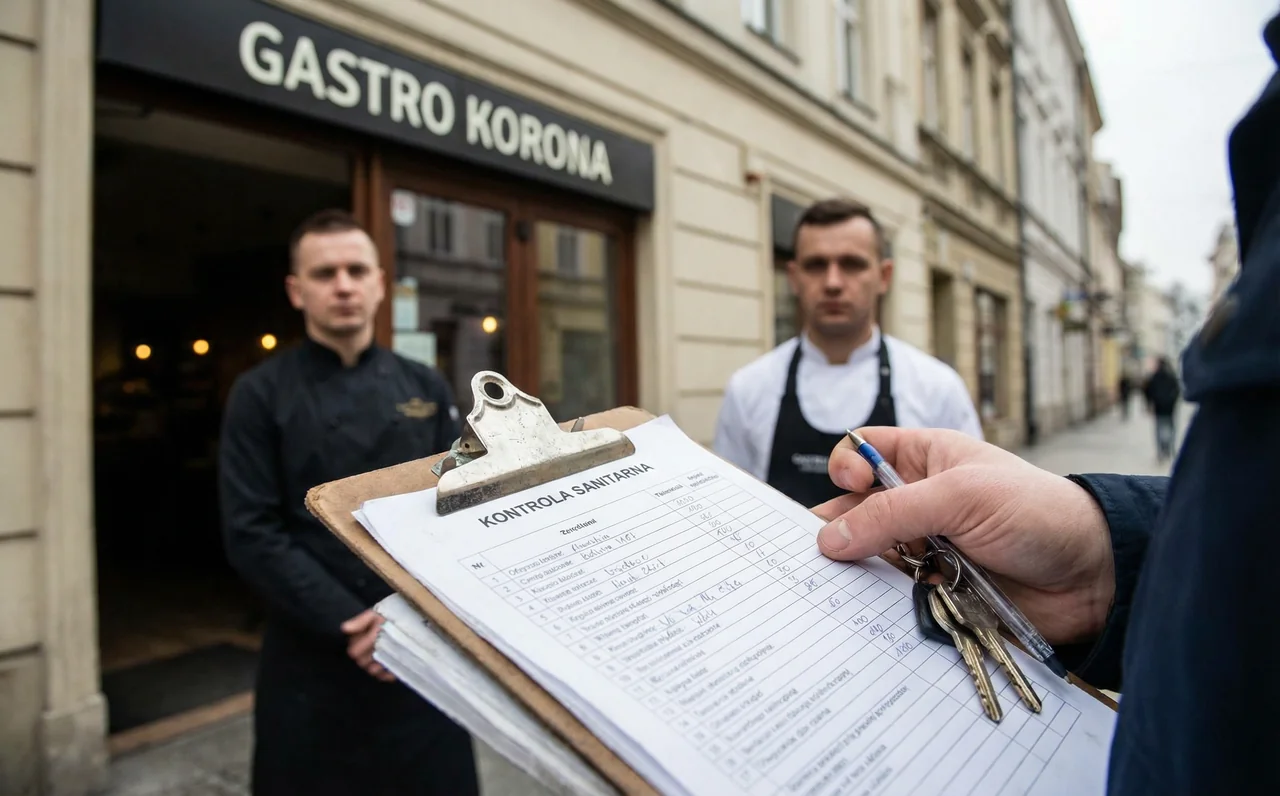
Health inspection coming? In 30 minutes you can fix the things the inspector notices fastest. Mini-checklist for today plus typical traps.
This is not a guide on "how to outsmart the inspector." This is a guide on "how not to trip over the obvious." And importantly: this post does not replace our full checklist from the Tarcza (Shield) Package - its purpose is to give you a quick plan for today and show you why the full checklist makes sense.
Rule #1: The inspector is not looking for paper. They are looking for consistency.
The most common owner mistake: "the binder is there, so we will be fine." Inspections work differently: they compare paper to the kitchen and ask questions like "who does this?" and "where is the record?" If the paper says one thing, the kitchen says another, and the employee says something else - you have a problem. And it is not a documentation problem. It is a system problem.
Inspector's authority: what they can do, what they cannot, and your rights
Before you go into "30 minutes of prep" mode, you need to know who you are dealing with. A sanitary inspector has specific powers and specific limits.
What the inspector CAN do:
- enter the premises without prior notice (yes, without notice - this is legal)
- inspect all rooms related to food (kitchen, storage, cold room, changing room, restrooms)
- review documentation: HACCP, records, staff health certificates, approvals
- take food samples and surface swabs
- talk to employees and ask them questions about procedures
- photograph and document any non-conformities found
- issue a closure order (in extreme cases - immediately)
Your rights during an inspection:
- you have the right to know who is conducting the inspection (ID, authorization)
- you have the right to be present during the inspection (or designate an authorized person)
- you have the right to add comments to the inspection report
- you have the right to refuse to sign the report (but this does not stop the inspection)
- you have the right to appeal the inspector's decision
Important: do not argue with the inspector during the inspection. Be professional, cooperate, and if you disagree - add your comments to the report and appeal formally. Aggression or obstruction is a separate offense.
3 documents that should always be on top
Not all documents are equally important in the first minutes of an inspection. These three should be accessible immediately - literally within 30 seconds:
1. Premises approval certificate (or registry entry). This is your business "ID card" as a food establishment. Without it, the inspector has question number zero: "does this place even have the right to operate?"
2. Current HACCP plan with CCPs and procedures. Not a binder with 200 pages. A summary: what hazards you have, what are the critical control points, how you monitor them, what you do when there is a deviation. The inspector wants to see that you understand your system - not that you bought a document.
3. Records from the last 7 days. Temperatures, cleaning, delivery acceptance - whatever you maintain. The inspector first looks at dates. If the last entry is from a month ago - the binder is decoration.
30 minutes - mini-checklist
0-10 min: Documents "at hand"
- Do you know where the documents are (and does the team know too)?
- Do records have entries from the last few days (not "empty for a month")?
- Do you have a space for "deviation/corrective action" (and has it ever been used)?
- Is the premises approval certificate accessible within a minute?
- Are staff health certificates kept in one place?
10-20 min: Kitchen - 5 things visible right away
- Zones and work organization: raw vs ready-to-eat (are they actually separated in practice?)
- Cleaning/disinfection: is there visible evidence of a system, not random effort?
- Thermometers / measurements: can you show that you monitor key conditions?
- Labels and habits: cutting boards, containers, allergens - does the team have clear rules?
- Trash/waste: is there no "embarrassment in the corner" (this is often a simple trigger for questions)
20-30 min: Team - test questions
Ask quick questions during the shift and check whether answers are consistent:
- "Where do we record temperatures?" (will everyone point to the same place?)
- "What do you do if the fridge temperature is too high?"
- "When do you wash your hands?" (they should give specific situations, not "often")
- "Where are the HACCP documents stored?"
- "What do you do with a delivery that looks suspicious?"
If answers are vague - you do not have a system. You have a PDF.
Typical inspector questions and good answers
The inspector does not ask random questions. They follow a pattern. Here are the most common questions and answers that show you have a system:
"Who is responsible for the HACCP system?"
Good answer: "I am, as the owner/manager, and during shifts the shift leader [name] is responsible." Bad answer: "The company that set it up for us."
"What are your critical control points?"
Good answer: "Goods receiving - temperature check, thermal processing - minimum 75 degrees at the core, serving - time and temperature." Bad answer: "It is in the binder, I need to check."
"What do you do when the fridge temperature is too high?"
Good answer: "We check since when, assess the product, transfer to a backup fridge, log the deviation and corrective action, and notify the manager." Bad answer: "We close the door and wait."
"When was the last training?"
Good answer: "Two weeks ago, topic: proper handwashing, I have the log with signatures." Bad answer: "Sometime last year, I think, but I do not remember."
What if the inspector finds a problem - how to respond professionally
The inspector found something. Maybe it is a dirty fridge, maybe an expired product, maybe a missing entry in the log. What now?
Step 1: Do not make excuses. Do not say "this never happens" or "it was probably the new person." The inspector has heard this a thousand times. Say: "Thank you for pointing that out. We will address it immediately."
Step 2: Take action on the spot. If it is something you can fix right away (throw out the expired product, clean the surface, fill in the log) - do it. The inspector will appreciate that you act, not just listen.
Step 3: Record the corrective action. This is gold. If the inspector sees that you have a "deviation - corrective action" procedure and that you actually use it - it shifts their perception from "this place is a mess" to "this place has a system that sometimes stumbles but self-corrects."
Step 4: Read the report carefully before signing. You have the right to add comments. If you disagree with the description - write your version in the comments section. Signing the report does not mean you agree with everything - it means you have reviewed its contents.
3 traps that ruin a "good impression"
- Records that are empty or filled in bulk (7 days of entries in one color, on the same day - the inspector sees this)
- Procedures that are generic and lack accountability ("who is supposed to do this?" - if there is no name/role, then nobody)
- The team does not know the rules (or everyone says something different - this is the worst signal for an inspector)
Why the full "Pre-Inspection" checklist makes sense
The blog mini-checklist is like a flashlight - it gives you light for 30 minutes. The full checklist from the Tarcza (Shield) Package is a flashlight + map + someone to answer the phone (figuratively speaking): the Tarcza includes a "Pre-Inspection" checklist with over 40 items, deviation response procedures, corrective action templates, and support so you are not left alone when the inspector asks difficult questions.
Where GastroReady comes in
GastroReady gives you a full pre-inspection checklist, ready answers to typical inspector questions, non-conformity response procedures, records with filling instructions, and training materials for the team. It is not about "outsmarting" the inspection. It is about having the inspection confirm what you already do well - because you have a system, not just a binder.
Frequently Asked Questions
How far in advance should I prepare for an inspection?
Sanepid inspections happen without notice, so there's no real "advance warning" in the classic sense (you'll find more tips in our Sanepid inspection without stress series). That's why the best strategy is keeping things in order every single day. The 30-minute checklist is an emergency tool that helps you quickly verify the most important points.
What does the inspector check first?
They usually start with a general walkthrough of the premises: cleanliness, layout of zones, access to water, condition of the restrooms. Then they move on to documentation, logs, and conversations with staff. First impressions carry a lot of weight for the tone of the whole inspection.
Can I refuse to let the inspector in?
No. A sanitary inspector has a statutory right to enter a food business premises without notice and without your consent. Refusing entry is a legal violation and can lead to serious consequences, including a fine.
What should I do if the inspector finds a problem?
Stay calm and cooperate. The inspector may issue recommendations with a deadline for correction, impose an on-the-spot fine, or open formal proceedings. It's important to note down every remark and implement corrections as quickly as possible. Documenting your corrective actions works in your favor at the next inspection.
Need complete HACCP documentation?
Don't wait for the inspector's knock to find your gaps. The GastroReady Tarcza package includes the full pre-inspection checklist, ready answers to typical inspector questions, and records with filling instructions - so the inspection confirms what you already do well. From 299 PLN, with PL/EN instructions.