HACCP Records: Keeping Them Inspection-Ready
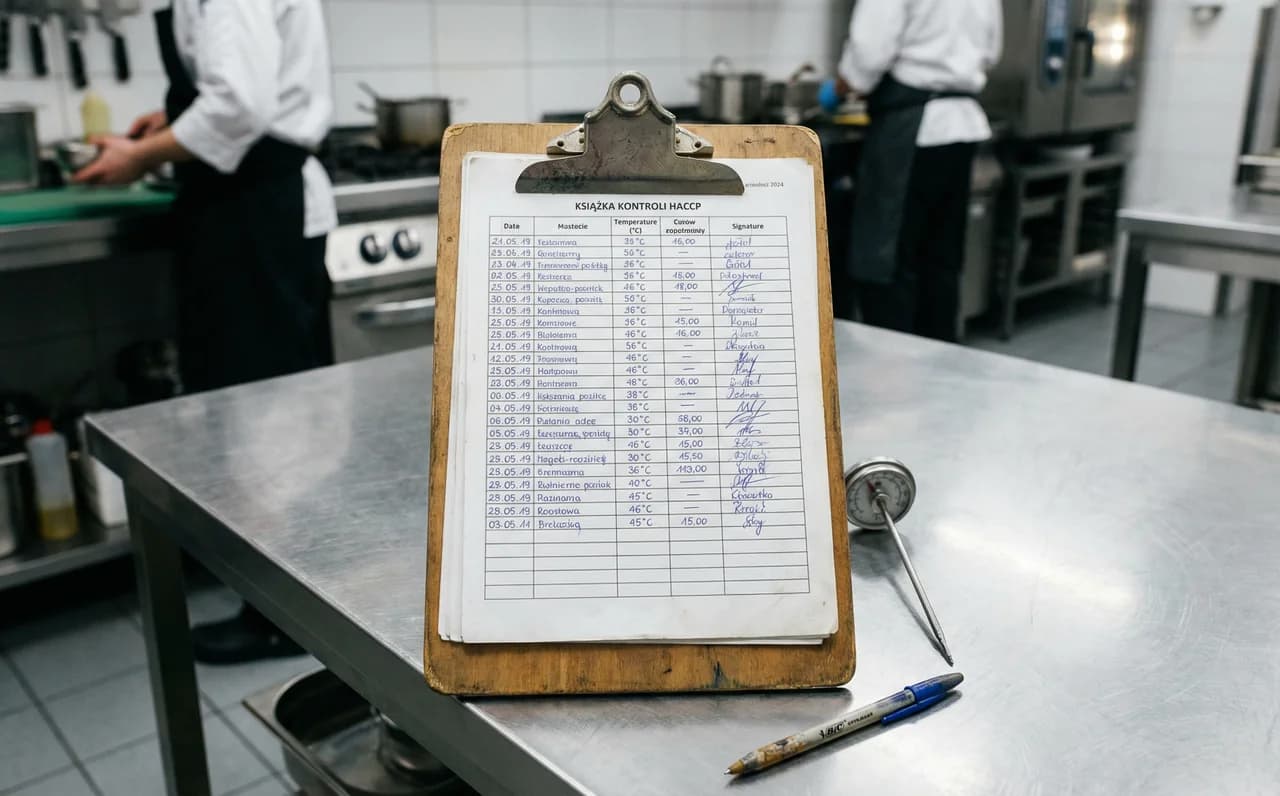
Rules for maintaining temperature, cleaning and disinfection logs and other required records. See how to keep them simple and inspection-proof.
Got a binder? Great. Got records maintained in real time? Now that is actually great. Because in practice, HACCP without logs is like a gym membership without workouts: you have the commitment, but no results. And during an inspection, records are not a "nice extra" - they are evidence that your procedures actually work (and that you respond when something goes wrong). The HACCP-based approach and hygiene requirements come directly from EU regulations for food businesses. This article is meant to give you orientation and a healthy system, but it will not replace the ready-made records, procedures, and "pre-inspection" checklist from GastroReady (more on that below). GastroReady is built on the Care as a Product philosophy: understanding instead of fear, a common language for the team, and a real shield for inspections. Why records are the point where people stumble
Owners tend to fall into one of two extremes:
- "I will not keep records because nobody reads them anyway"
- "I will record everything" (and then they record nothing because it is too much)
Meanwhile, EU guidelines strongly emphasize the principle of flexibility and proportionality: the system should fit the scale and type of business, not be an encyclopedia.
7 red flags the inspector sees immediately
- Empty records (or gaps lasting weeks)
- "Bulk" entries the day before an inspection (same times, same handwriting, "perfect"
temperatures)
- No record owner: nobody knows who fills in what and when
- Meaningless entries: you measure something but do not know why or what to do if there is a deviation
- No corrective actions: there is a problem, but on paper "nothing happened"
- Inconsistency with the kitchen: the log says one thing, practice says another
- Records so elaborate that they are impossible to maintain (so ultimately they are
not maintained) This is exactly "paper armor" that looks like a system but works against you. Minimum set of records that makes sense in most restaurants We are not providing ready-to-copy tables here (that is what the system is for), but here is your map: what is practically needed so records serve as a defense, not a burden. In small to mid-size foodservice, this set usually does the job:
- Temperature monitoring (storage / refrigeration and freezer units;
sometimes processing)
- Cleaning and disinfection (when, what, with what product - and confirmation of completion)
- Goods receiving / deliveries (conformity, condition, basic parameters)
- Pest control / pest management (if applicable; external contractor or internal
monitoring)
- Training and staff hygiene (minimum confirmations + health certificates if
required)
- Incidents and corrective actions (meaning "what we do when something goes wrong" + a record)
- Allergens and cross-contact risk (depending on the menu and declarations)
EU and official guidelines do not expect "volumes" - they expect you to monitor what matters for safety and hygiene in your process. Golden rule: a record must be "doable under stress"
If a record cannot be filled in:
- during a shift,
- on the fly,
- when someone is missing,
- on delivery day,
- on the day something breaks down,
...then it is just decoration.
That is why an effective record has 3 qualities:
- A clear moment for completion
Not "sometime." Only: start of shift / end of shift / upon delivery.
- One location and one person responsible
Records have a "home" (binder/shelf), and each shift has a designated person.
- Always includes a response to a deviation
Not just "I measured it," but also: "what I did when it was off" - this is the heart of the HACCP-based approach. Micro-routine that makes a difference (without eating up half your day) If you want this to work without a revolution - implement the 5-minute ritual: Start of shift (2 min):
- quick check "do I have what I need to measure / record"
- one critical item (e.g., cold storage)
During the shift (1 min):
- delivery = entry right away (not "after lunch")
End of shift (2 min):
- confirmation of cleaning / closing procedures
- if there was a problem: a brief note in "corrective actions"
This is not a "full system." This is how to stop records from being fiction.
The most common trap: missing "corrective actions" This is a classic. Everything in the log looks perfect, but in the kitchen everyone knows that sometimes:
- the refrigerator breaks down,
- a delivery is late,
- disinfectant runs out,
- someone mixes up a cutting board / tongs,
- an allergen complaint comes in.
If you do not have a place for a simple entry: what happened and what you did about it, then your records are just a "pretty diary." And EU guidelines clearly emphasize that procedures must be implemented and documented proportionally to the risks.
Quick test: do your records actually protect you? Answer YES/NO:
- Does the team know where the records are?
- Is it clear who fills them in on each shift?
- Are entries made in real time, not "before an inspection"?
- Can you point to the last deviation and what you did about it?
- Do records match your actual processes and menu?
- Does filling them in take less than 5-10 minutes a day?
- Can a new team member understand what to do?
- Are records simple enough for a PL/EN team?
If you have 3 or more NOs - the problem is not "lack of discipline." The problem is a poorly designed system.
Where GastroReady comes in At GastroReady, records are not "included as an extra." They are designed to be practical and consistent with procedures - along with instructions that explain the "why." The packages include a complete set of records and procedures, and the Tarcza (Shield) Package adds a "pre-inspection" checklist and support so you are not left alone when the inspector asks a tough question. Important: GastroReady delivers templates built on current requirements, but the final quality depends on how you customize them and whether you follow the procedures in practice.
FAQ Do I need "tons" of records? No. You need ones that are appropriate to your processes and are actually maintained. Can I update records once a week? You can try, but updating records only makes sense when it is done at the "moment of the event" (delivery, start/end of shift, deviation).
Are records more important than the HACCP manual itself? In an actual inspection: the manual is the description, records are the proof of action.
Frequently Asked Questions
Which HACCP records are mandatory in food service?
The minimum set of records includes: a storage temperature log, a goods receiving log, a cleaning and disinfection log, and a corrective actions log. The exact list depends on the type and scale of your business. The key rule: your records need to match the actual processes in your location.
Can HACCP records be kept electronically?
Yes. The regulations don't require a paper format. Records can be kept electronically, provided they're easily accessible during an inspection, include dates and signatures (or another way to identify the person), and are protected against unauthorized changes.
What do you do when a record shows a deviation from the norm?
Record the deviation, take a corrective action (e.g. pull the product, lower the temperature), and document that action in the record. An inspector doesn't expect perfect results, but wants to see that you respond to problems and can prove it.
Does the inspector check records from the past few months?
Yes. Inspectors usually review records from the last few weeks or months - for more on what to expect, see our Sanepid inspection without stress series. They look for consistent entries, responses to deviations, and alignment with your procedures. Blank pages or "batch" entries made right before an inspection are an immediate red flag.
Need complete HACCP documentation?
GastroReady offers ready-made HACCP, GMP, and GHP templates for every type of food business. From 299 PLN, with PL/EN instructions.