Food Truck Health Requirements Explained
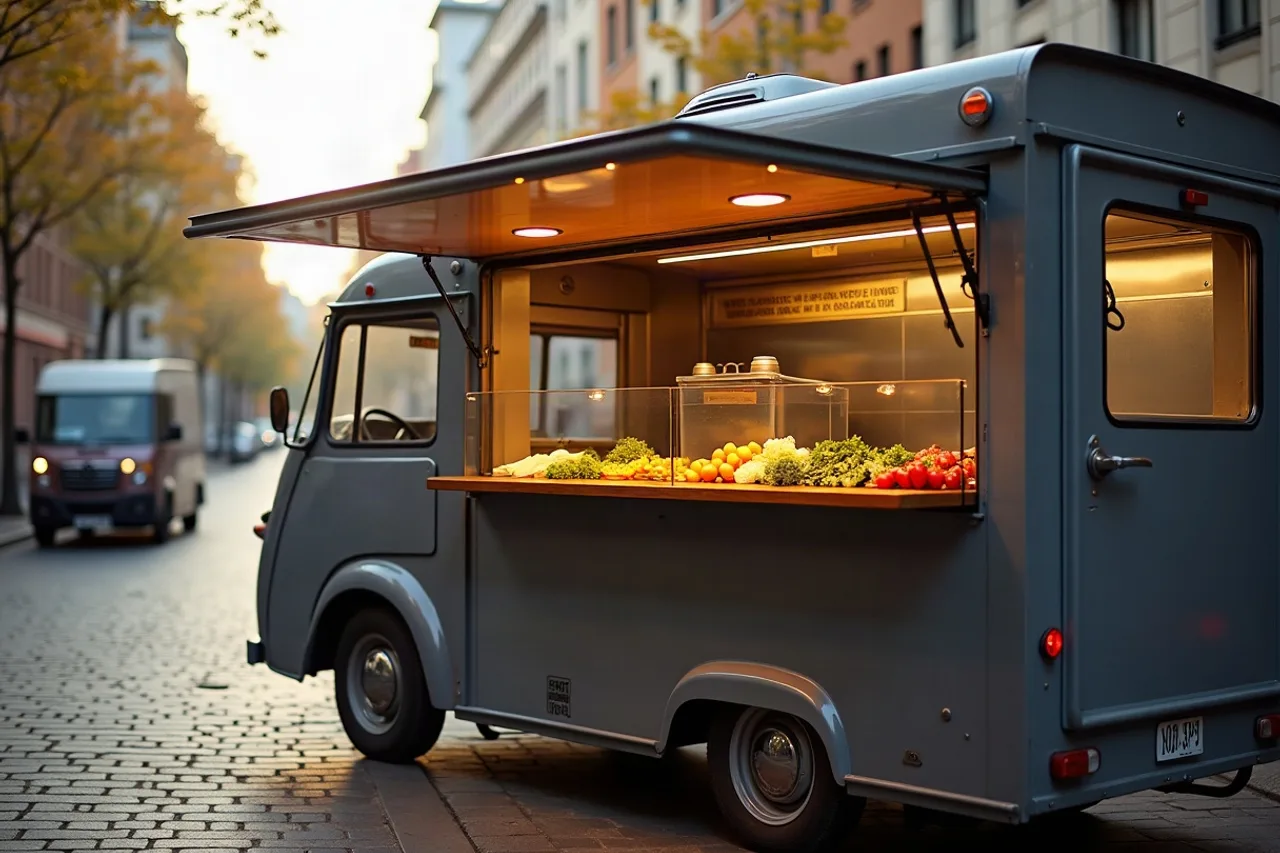
Running a food truck or planning a mobile food point? Check what sanitary requirements apply and how registration with the health authority works.
A food truck is a food business. Not "almost a food business," not "a lighter version" - a fully-fledged operation involving the production and service of food. And that's where the problem starts, because many food truck operators assume that since they don't have a permanent premises, the requirements are somehow different, lighter, or optional. They're not. The law treats a food truck exactly the same as a restaurant when it comes to food safety. The differences are in infrastructure and logistics - but not in standards.
What the law says - a food truck is a food establishment
The legal basis is the same as for restaurants: the Food Safety and Nutrition Act and Regulation (EC) No 852/2004. A food truck is classified as a mobile food establishment - but still as an establishment producing or placing food on the market. This means:
- Mandatory registration with the health authority - just like a restaurant
- Obligation to implement and maintain HACCP-based procedures
- Obligation to follow GHP/GMP (good hygiene and manufacturing practices)
- Obligation for staff to hold medical clearances
- Obligation to keep records (temperature, cleaning, goods receiving)
In short: if you produce and sell food - the same regulations apply to you, regardless of whether you do it in a 200-square-meter kitchen or in a van with 6 square meters of space.
Where to register a food truck
This is the question that causes the most confusion. The answer: you register your food truck at the district sanitary station responsible for the location where you conduct your business - meaning where your company is headquartered or where you garage the vehicle.
You don't register in every city you travel to. Registration is one-time, at one health authority. But - and this is important - if you travel to an event in another region, the local health authority has every right to inspect you. And they'll check exactly the same things: documentation, records, hygiene, temperatures.
The registration process looks similar to a restaurant:
- Submit an application for establishment approval and registration (at least 14 days before starting operations)
- Vehicle inspection - the inspector comes to look at the food truck
- Verification of HACCP/GHP/GMP documentation
- Approval decision + registration
Practical tip: schedule a specific time with the health authority for the vehicle inspection. A food truck doesn't stay in one place, so the inspector needs to know when and where they can see it. This is usually done at the garage location.
What the inspector checks in a food truck
A food truck inspection looks different from a restaurant premises inspection - because the space is smaller and the infrastructure is mobile. But the inspector checks the same risk categories. Here's what they pay attention to:
Water supply:
- Clean water tank - what capacity, what material, how it's filled and cleaned
- Whether the water is safe to drink (if you use it for food preparation or hand washing)
- Whether you have hot water for hand washing - this is not optional
Wastewater and waste:
- Wastewater (grey water) tank - must be at least the same capacity as the clean water tank
- Solid waste disposal system - sealable containers, emptying logistics
- How often you empty the tanks and where you do it
Hand washing:
- Sink or dispenser for hand washing with soap and disposable towels
- Must be accessible without leaving the vehicle - not "I'll go to the restroom at the gas station"
- Hot water - a water heater or tank with warm water
Temperatures and cooling:
- Fridge or cooler in the vehicle - functioning, with a thermometer
- Method of maintaining the cold chain during transport of raw materials to the site
- Temperature monitoring - records kept up to date
Work surfaces:
- Counters made of stainless steel or other material that's easy to clean and disinfect
- No wood or porous materials in the food contact zone
- Technical condition of the vehicle - no rust, gaps, or damage
General organization:
- Zone separation (even in a small space) - raw from ready-to-eat, clean from dirty
- Cleaning products stored separately from food
- Protective clothing for staff (apron, hair net/cap)
HACCP for food trucks - simplified but mandatory
Here's the good news: HACCP for a food truck can be simplified compared to a large restaurant. Regulation 852/2004 explicitly mentions "flexibility" in applying HACCP principles - especially in small establishments. But "simplified" doesn't mean "skipped."
What food truck HACCP documentation must include:
- Business description - what you do, what dishes, what raw materials, where you source them
- Hazard analysis - what risks are associated with your processes (biological, chemical, physical)
- Critical control points - e.g., storage temperature, heat treatment temperature
- Monitoring procedures - who checks what and how often
- Corrective actions - what you do when something goes wrong (e.g., fridge breakdown)
In addition to HACCP, you need GHP/GMP procedures describing:
- How you wash your hands and how often
- How you clean and disinfect the vehicle and equipment
- How you receive and store raw materials
- How you manage water and wastewater
- How you handle waste
- What training staff undergo
The key difference from a restaurant: your food truck procedures must account for mobility. Meaning: what do you do with food during transit? How do you maintain temperature during transport? How do you refill water and empty wastewater? Where do you wash the vehicle? These are questions that don't exist in standard restaurant documentation - and that's why "copy-paste" from the internet won't work here.
Most common violations in food trucks
Inspectors who check food trucks see the same problems over and over. Here's a list of things that most commonly result in citations and fines:
- No hot water for hand washing - "cold water is enough" isn't enough. The law requires hot water. A 5-liter water heater costs 200-400 PLN and solves the problem.
- Missing or empty wastewater tank - water from the sink has to go somewhere. If it's draining onto the ground, that's a violation.
- No temperature records - "I check by eye" is not a form of monitoring. You need a thermometer and a written record.
- HACCP documentation from a restaurant, not a food truck - the inspector sees that the procedures describe a dishwasher, two storage rooms, and three cold rooms, but you have a van with one fridge. That's a classic "paper armor."
- Missing medical clearance - a seasonal worker, a friend "helping out" - everyone who has contact with food must have a current medical clearance.
- Storing chemicals together with food - in a small space, it's tempting. But cleaning products must be physically separated from food products.
- Unable to prove supplier sources - "I buy at the market" is not traceability. You must know who you buy from and have some trail (receipt, invoice, note).
Changing locations - do you need to re-register?
No. This is one of the most common myths. Food truck registration is a one-time process - at the health authority responsible for your business location. You don't need to register in every city, at every event.
But you should know that:
- An inspector in any city can check you - and has every right to do so
- During an inspection, you must show the approval decision from your "home" health authority
- HACCP documentation and records must be in the vehicle - not "at home" or "at the office"
Practical tip: make a copy of your approval decision and keep it in the food truck. Leave the original at home/office. Inspectors understand this and accept copies.
Events and festivals - temporary permits
If you attend food festivals and events, additional requirements may apply. Many events require:
- A current establishment approval decision (your registration from the health authority)
- Liability insurance (some events require this)
- A declaration of compliance with sanitary requirements
Event organizers often inform the local health authority about the planned event - and an inspector may visit the festival grounds, checking all vendors. This is standard practice, especially at large events.
Sometimes situations arise where the municipality requires permission to trade at a specific location - but that's not a sanitary issue, it's administrative (permission to use a road, land lease, etc.). The health authority deals with food safety, not the location of your vehicle.
Seasonal food truck - what about winter?
Many food truck operators work seasonally - from spring to fall. What happens to the documentation in winter?
- Registration doesn't expire - you don't need to re-register for a new season
- HACCP documentation should be updated before the new season starts - especially if you're changing the menu
- Staff training - if you have a new team for the season, they need medical clearances and training
- Equipment should be checked after the winter break - thermometers, fridge, water tanks
Best practice: before the season starts, do a "mini-audit" of the vehicle and documentation. 30 minutes of review can save you stress on the first inspection of the season.
Mini-test: Is your food truck ready for inspection?
Answer YES/NO:
- Do you have an approval decision from the health authority, with a copy in the vehicle?
- Do you have a clean water tank and a separate wastewater tank?
- Is there hot water for hand washing with soap and disposable towels?
- Do you have a fridge with a thermometer and do you keep a temperature log?
- Does your HACCP documentation describe your food truck, not a restaurant?
- Are cleaning products stored separately from food?
- Do all staff have current medical clearances?
- Can you identify your raw material suppliers (invoices, receipts)?
Have 3+ NO answers? Better sort it out before the health inspector knocks on the serving window. The fines are the same as for restaurants - and a food truck's reputation can take a hit even faster, because on social media, news about a "shut-down food truck" spreads like wildfire.
Where GastroReady comes in
HACCP documentation "for restaurants" doesn't fit a food truck. Different conditions, different infrastructure, different risks. But the legal requirements are the same. And that's the problem: most ready-made templates from the internet describe a stationary kitchen with two storage rooms and a tunnel dishwasher - not a van with one counter and a 20-liter water tank.
The Fundament (Foundation) package (299 PLN) from GastroReady gives you a base set of GHP/GMP/HACCP documents that you can adapt to food truck specifics - with procedures for water management, mobility, limited space, and changing locations. This isn't copy-paste from a restaurant template. It's a system that accounts for the realities of working on wheels.
Because a food truck is a fully-fledged food business. And it deserves documentation that understands that.
Frequently Asked Questions
Does a food truck need HACCP documentation just like a restaurant?
Yes, the law doesn't distinguish between a food truck and a restaurant when it comes to food safety. The same regulations apply: the Food Safety and Nutrition Act and Regulation (EC) No 852/2004. A food truck must have an implemented HACCP system, GHP/GMP procedures, and must keep records.
Where do I register a food truck with the health authority?
You register your food truck at a single district sanitary station - the one responsible for your company's registered address or the place where you garage the vehicle. You don't need to register in every city you travel to. However, the health authority in any region has the right to inspect you during an event.
How does a health inspection of a food truck differ from one at a restaurant?
The inspector checks the same risk categories: HACCP documentation, temperature logs, hygiene, and staff health clearances. The differences come down to infrastructure - in a food truck, the inspector pays particular attention to your water supply, wastewater disposal, how you store food in a limited space, and working conditions across changing locations.
What penalties does a food truck face for not having HACCP?
The penalties are identical to those for restaurants: an on-the-spot fine of up to 500 PLN for a single violation, an administrative fine of up to several thousand PLN, and in extreme cases a suspension of operations. For a food truck, an additional risk is how quickly negative reviews can spread on social media.
Looking for HACCP documentation for your food truck?
GastroReady has ready-made HACCP templates designed for food trucks: mobility, food transport, changing locations.