Allergic Reaction in a Restaurant: What to Do
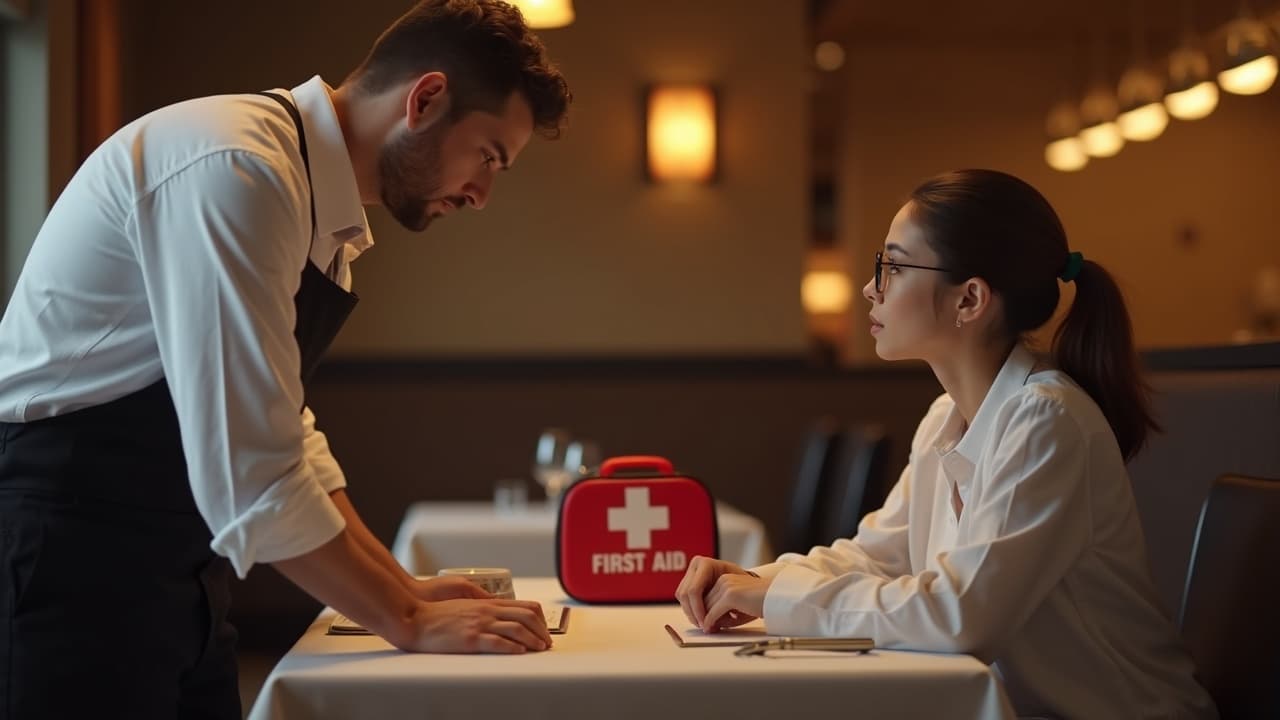
Mild reaction or anaphylaxis: how to tell them apart, the 6-step emergency response, your duties under Regulation 1169/2011, and what follows.
An allergic reaction in your restaurant is a legal, financial, and human emergency. The first 10 minutes determine whether the outcome is a manageable incident or a tragedy. Most restaurant owners have never rehearsed this scenario. This article gives you the emergency response steps, the prevention procedures that reduce risk before service begins, and the legal framework you need to understand as a food business operator in Poland.
Recognising the Severity: Three Levels You Must Know
Not all allergic reactions look the same. Your team needs to recognise the difference between a mild reaction and anaphylaxis, because the response is completely different.
Mild Reaction
- Localised itching or hives on one area of the body
- Runny nose, watery eyes
- Swelling limited to a small area, such as the lips or around the eyes
- Mild stomach discomfort
Moderate Reaction
- Hives spreading across the body
- Vomiting or abdominal cramps
- Swelling that is spreading beyond the initial contact area
- Increasing discomfort or distress
Severe Reaction: Anaphylaxis
- Throat tightening or a sensation of the throat closing
- Difficulty breathing, wheezing, or stridor
- Sudden drop in blood pressure
- Pale or bluish skin
- Loss of consciousness or near-collapse
Anaphylaxis is life-threatening. It can develop within minutes of allergen exposure. Call 112 immediately if you see any of these severe symptoms. Do not wait to see if it resolves on its own.
6-Step Emergency Response
Train your front-of-house staff to follow these steps in sequence. Post a laminated version at the service station and in the manager's office.
- Ask the guest what they ate and what they are allergic to. Stay calm and speak clearly. Panic spreads and makes it harder for the guest to communicate. Your goal in this first step is information: you need to know what allergen may have been consumed and what the guest's known allergy is.
- If symptoms are mild: remove the allergen source from the table, offer the guest water, and monitor the situation closely. Offer to call a doctor. Do not leave the guest alone. Ask whether they have antihistamines or other medication with them.
- Epinephrine auto-injectors: if the guest has their own EpiPen or adrenaline auto-injector, help them access it and support them in using it according to their instructions. You should not administer the device yourself unless you have received specific first aid training to do so. Some restaurants keep an EpiPen on the premises: if yours does, ensure your team knows where it is and that only trained staff use it.
- If symptoms are moderate or progressing: call 112 immediately. Do not adopt a "wait and see" approach with a moderate reaction. Allergic reactions can escalate from moderate to severe within minutes. Your job is not to diagnose the severity: if in doubt, call.
- If you suspect anaphylaxis: call 112, keep the guest calm, and lay them down with their legs elevated to maintain blood pressure, unless breathing is difficult, in which case keep them sitting upright. Do not give food or drink. Be prepared to start CPR if the guest loses consciousness and stops breathing. Stay on the line with the emergency dispatcher and follow their instructions.
- Document everything immediately after the incident: what was ordered, what the guest stated their allergy was, what symptoms appeared and when, who from your team responded, what actions were taken, and what time emergency services arrived. This documentation is critical for both legal and insurance purposes.
Your Legal Obligations Under Regulation 1169/2011
EU Regulation 1169/2011 on food information to consumers applies to your restaurant. It requires you to provide accurate allergen information for every dish you serve. This is not optional and it is not a formality.
If a guest suffers an allergic reaction because you failed to disclose a known allergen in a dish, your legal exposure includes:
- Civil liability: the guest can claim compensation for medical costs, lost earnings, and pain and suffering. Polish courts have awarded significant sums in allergen-related personal injury cases.
- Administrative sanctions: Sanepid can impose fines for failure to provide allergen information, and can order the suspension of your operation.
- Criminal liability: in cases of serious harm or death, criminal charges under Polish law may apply to the operator and the responsible individuals in the kitchen.
"They did not tell us clearly about their allergy" is not a defence. Under Regulation 1169/2011, the obligation to provide allergen information rests with you, not with the consumer to volunteer it unprompted. If your menu does not identify the 14 major allergens, you are already non-compliant.
Kitchen Prevention Procedures
Prevention is more effective than emergency response. These procedures reduce the probability of an allergic reaction occurring in the first place.
Allergen Matrix for Every Dish
Maintain an up-to-date allergen matrix covering every dish on your current menu - a blank matrix template is included in the ready-made HACCP documentation packages from GastroReady. The matrix must list all 14 major allergens and clearly indicate which are present in each dish. Update the matrix every time the recipe changes, a substitute ingredient is used, or a new dish is added to the menu.
Staff Training Before Any Customer Contact
Every food handler in the kitchen and every member of front-of-house staff must know the 14 allergens by name, must be able to read the allergen matrix accurately, and must know who to escalate an allergen query to. A guest asking "does this contain nuts?" must receive a definitive, accurate answer, not a guess. See our full training guidance at Staff Hygiene and Safety Training in Catering.
Separate Utensils for Allergen-Free Preparation
Dedicated utensils, chopping boards, and cookware for allergen-free orders must be physically separated from standard kitchen equipment. Colour-coding is an effective system. Cross-contact through shared utensils is a direct allergen transfer route.
Written Protocol for Allergen-Free Orders
When a guest requests an allergen-free dish, your kitchen must follow a written protocol: separate pan, separate preparation surface, fresh gloves, fresh utensils, and a verbal confirmation from the chef to the server before the dish leaves the kitchen. No shortcuts. The protocol exists in writing so that a different team member can follow it correctly on any shift.
Shared Cooking Oils
If a guest requests an allergen-free dish, do not use shared cooking oil that has been used to cook allergen-containing products. Frying oil is a cross-contact vector for peanut, sesame, and fish allergens, among others. Use a separate, clean oil or a separate fryer.
Civil Liability and Insurance
Your OC (odpowiedzialnosc cywilna) business liability insurance should cover allergen-related incidents. Check your policy now, before an incident occurs, and confirm the following: whether allergen-related claims are explicitly covered, what the per-incident and annual limit is, and what documentation the insurer requires in the event of a claim. Insurers may reduce or refuse a claim if you cannot demonstrate that you had documented allergen procedures in place and that staff were trained.
For a full overview of the 14 major allergens with examples from common dishes, see The 14 Allergens: List and Examples from Restaurant Menus.
Post-Incident Steps
After any allergic reaction incident in your restaurant, regardless of severity, take these steps:
- Review what happened: which dish, which preparation step, which staff members were involved.
- Identify whether the incident resulted from a procedure failure, a training gap, or a supplier change.
- Update your procedures and retrain affected staff.
- Notify your OC insurer and provide your incident documentation.
- Keep all documentation on file: the incident record, the allergen matrix at the time of the incident, and any communications with the guest.
Frequently Asked Questions
Do I need to keep an EpiPen on the premises?
There is no specific legal requirement in Poland for food businesses to stock epinephrine auto-injectors. However, having one on the premises and training selected staff in its use is a recognised risk reduction measure, particularly for restaurants that regularly serve guests with known severe allergies. If you do stock an EpiPen, ensure it is within its expiry date, stored at the correct temperature, and that trained staff know its location.
What if the guest did not tell us about their allergy?
Your obligation to provide allergen information is not conditional on the guest declaring their allergy first. Under Regulation 1169/2011, allergen information must be available for every dish, proactively. If a guest asks and your staff cannot answer accurately, that is a compliance failure. If a guest does not ask but your menu or verbal communication did not disclose a known allergen, you remain liable. The guest's failure to ask does not transfer the legal obligation to them.
Can I just say "we cannot guarantee allergen-free"?
A general disclaimer does not discharge your legal obligation to provide accurate allergen information for each dish. You can accurately state that a specific dish may contain trace amounts of an allergen due to shared kitchen equipment, and this should be noted in your allergen matrix. But a blanket "we cannot guarantee anything" statement does not satisfy the requirements of Regulation 1169/2011 and will not protect you from liability if a guest is harmed by an undisclosed allergen in a dish where the allergen was a known ingredient.
What if the supplier changes the recipe without telling me?
This is a real risk and one your HACCP allergen procedure must address. Require written allergen declarations from all suppliers, updated at every product reformulation. Include a clause in supplier contracts requiring notification of any recipe or ingredient change. Check supplier declarations at every goods receiving inspection. If a supplier changes a recipe without informing you, you bear the liability for the allergen information you provided to guests, which is why ongoing supplier management is part of your allergen control.
How do I train staff on allergens?
Allergen training for catering staff should cover: the names and common sources of all 14 major allergens, how to read your allergen matrix, what to say when a guest asks an allergen question, who to escalate to when they are unsure, and what happens during an allergen-free order from kitchen to table. Training should be completed before any food handler or server works an unsupervised shift, and refreshed annually or when the menu changes significantly. Keep a signed training register as evidence.
GastroReady Allergen Documentation
GastroReady allergen documentation includes allergen matrices, customer information cards, and a staff training register. From 299 PLN, with PL/EN instructions. The pack covers all 14 major allergens across a standard restaurant menu format, with a blank matrix template you can complete for your specific dishes on day one.
See GastroReady Documentation