Sanepid Tests: Scope and Stool Samples
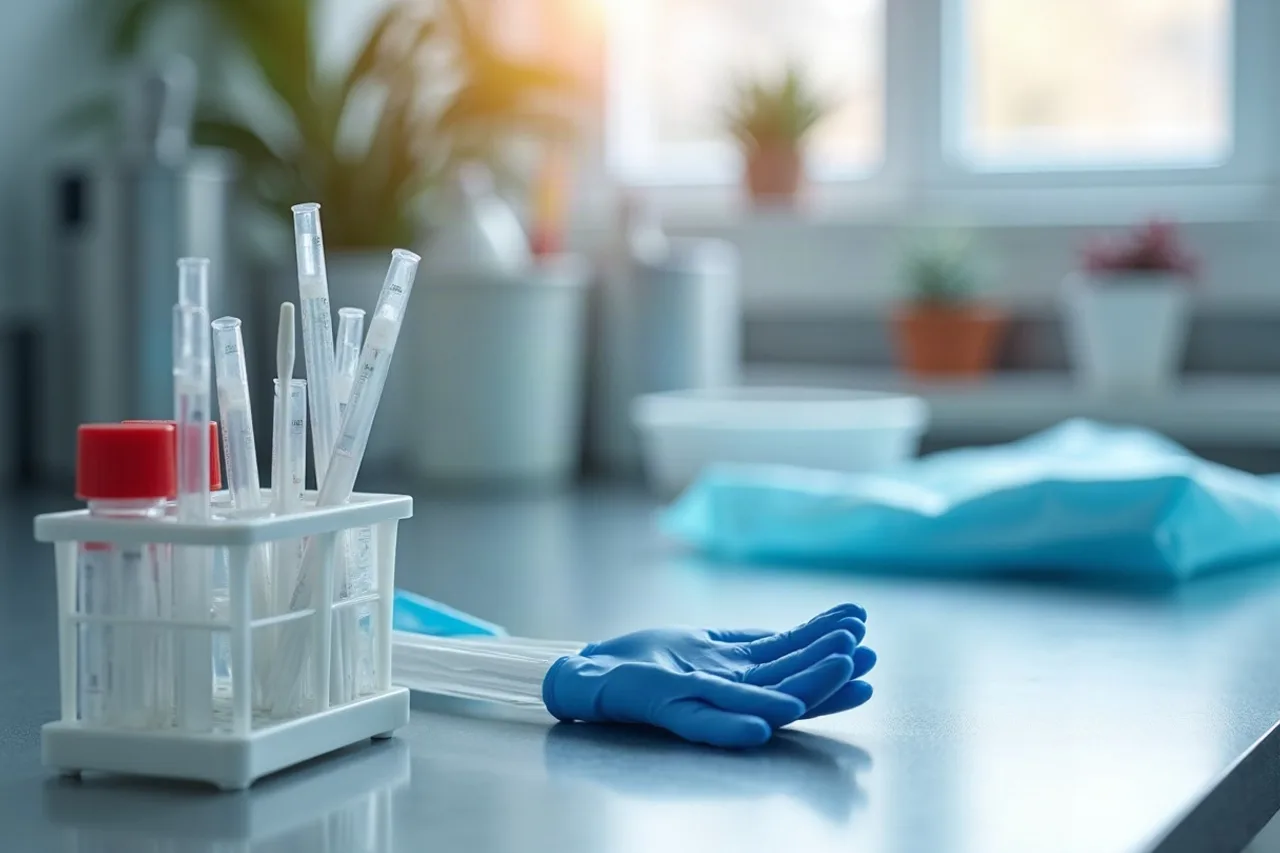
What Sanepid examinations cover, how to collect a stool sample, how much material to hand in and what to do after a positive result. A guide for owners.
Sanepid examinations (sanitary-epidemiological examinations required for the sanitary-epidemiological health card, "książeczka sanepidowska") consist of two parts: a visit to the doctor and a laboratory stool test. The first is simple. The second can block the whole process, because the laboratory rejects samples for no label, the wrong date or too little material, and then you start again. Below you have the scope of the examinations, step-by-step instructions for collecting a sample and a list of mistakes that cost a week.
In brief
- The standard scope is three stool samples and a medical examination. The samples come from three consecutive days, and the laboratory looks for carriage of Salmonella and Shigella bacilli.
- Stations define the amount of stool differently. With a swab, a trace visible on the cotton tip is enough, while the instructions from Konin give the size of a hazelnut.
- Instructions differ between stations. Storage, the hour limit and the reception days are set by the particular station, so read its website, not a general guide.
- The sample must be labelled and sealed. First name, surname, date and time of collection. Stations reject unlabelled or leaking containers.
- A positive result means removal from work with food (Art. 10(1) of the Act of 5 December 2008), without delay and with confidentiality.
Sanepid examinations: what they cover
The Act of 5 December 2008 does not list the examinations. The authorisation to issue a regulation on the types and dates of examinations (Art. 10(2)(2)) has not been exercised. The scope therefore follows from the practice of sanitary stations and doctors. You will find the full context in the article on sanitary-epidemiological examinations in foodservice. Here we focus on what happens in the doctor's office and in the laboratory.
Examinations for sanitary-epidemiological purposes are meant to protect third parties, that is, guests, and not the employee. That is why the Ministry of Health, in its reply to a parliamentary question of August 2025, pointed to infections that often run without symptoms, such as intestinal bacilli infections and tuberculosis. This is where the emphasis on carriage comes from.
What the doctor does
The medical examination is carried out by a primary care (POZ) doctor or an occupational medicine doctor (Art. 7(1)). The spokesperson of the Chief Sanitary Inspector said in 2023 in Prawo.pl that the examination should include an interview and a physical examination. The doctor asks about past illnesses, digestive tract symptoms, wounds and skin lesions, and then issues a certificate of fitness or of contraindications (Art. 7(2)).
What the laboratory does
Laboratory tests are performed by the laboratories of the State Sanitary Inspection (Sanepid) or other accredited laboratories with an agreement (Art. 7(4)). The standard is a bacteriological stool test for carriage of Salmonella and Shigella. The Act also mentions tests for tuberculosis (Art. 7(4)(2)), but in official sources we found no list of additional mandatory tests for foodservice employees. If a clinic asks for more, ask on what basis.
Health card: which examinations in practice
| Element | Who performs it | What it is |
|---|---|---|
| Stool test | laboratory of the sanitary-epidemiological station | 3 samples from 3 consecutive days, carriage of Salmonella and Shigella |
| Medical examination | primary care (POZ) or occupational medicine doctor | interview, assessment of health, certificate |
| Additional examinations | at the doctor's decision | there is no statutory list, the doctor gives the justification |
We present the order in the guide how to get a health card step by step, and the prices of the elements in the article how much a health card costs in 2026.
How to collect a stool sample for a Sanepid examination
The instructions below combine the common elements from the official websites of the stations in Ełk, Bytom, Rybnik, Konin and Puck. If your station states otherwise, its instructions take precedence.
- Collect the kit and the order form. Stations hand out tubes with a transport medium (swabs), and some make you buy them at a pharmacy. Fill in the order form and pay for the examination if the station requires this before accepting the samples.
- Plan three consecutive days. One sample a day for three days in a row. The last collection day should fall on a day when the station accepts material.
- Pass the stool into a clean container and wash your hands. The station in Konin describes the container as clean, sterilised and dry.
- Collect the material. Dip the cotton tip of the swab into the stool so that a trace is visible on it (Ełk). The station in Puck describes this as inserting the stick and turning it several times in the material.
- Put the swab into the tube with the medium and close it tightly.
- Label the tube: first name, surname, date and time of collection.
- Store in the refrigerator, do not freeze. The station in Rybnik gives 4-8 °C.
- Deliver the samples according to the station's rules, usually all three together on the reception day, with proof of payment or a referral.
How much stool for a Sanepid examination
Stations rarely give the amount in grams. With a swab, the point is such a portion that material is visible on the cotton tip (Ełk). The instructions from the station in Konin give the size of a hazelnut, and for liquid stool about 2-5 ml. With too little material the sample is rejected: this is what Bytom and Konin write. Ask the station which collection method it uses, and stick to its description.
Time limit and storage
The hour limits differ in a way that is easy to mix up:
- Ełk: at the latest 72 hours from collecting the first sample, all three on the same day
- Bytom: delivery within 48 hours of collection
- Olkusz: the first sample no older than 60 hours on the day of delivery
- Konin: samples in transport medium up to 24 hours at ambient temperature, and when that is not possible up to 72 hours in the refrigerator
The difference between 48 and 72 hours changes the plan of the week. An employee who collects on Friday, Saturday and Sunday, when the station accepts on Tuesday, will not fit within any of these limits.
Medicines and antibiotics
The instructions of the station in Myślibórz (a document published on gov.pl) indicate not to collect stool during antibiotic therapy, during other medicines affecting the intestinal flora, or before 7 days have passed since its end. Not all stations write about this. If the employee is taking an antibiotic, ask the station whether to postpone the collection.
The most common mistakes when handing in samples
| Mistake | Consequence |
|---|---|
| An unlabelled tube | The station rejects the sample. Bytom also rejects soiled containers, leaking ones and ones with an inappropriate amount of material |
| Delivery on the wrong day | Rybnik accepts samples only on Tuesdays and says plainly that it will not accept on other days |
| No proof of payment or referral | The station will not accept the samples. Radom requires the company's referral with a stamp and signature |
| A wrong combination of samples at delivery | Ełk requires all three on the same day, Gryfino accepts one sample per reception day, unless they were collected on swabs with gel |
| Freezing or no refrigeration | The stations' instructions require a refrigerator, without freezing |
| Too little material | Konin and Bytom reject the sample |
An employee who does not read Polish most often gets lost in the instructions. Give them the instructions in their language, for example as part of the bilingual instructions for the team. Also help with setting the reception days, because this is the only element that requires coordination with the schedule.
What if the result is positive: removal from work
The sanitary station in Gryfino states on its website that a positive result means the person is considered infected with the given pathogen. On this basis the doctor determines contraindications, temporary or permanent. From that moment Art. 10(1) applies: the person may not perform that work, and the employer or the party commissioning the work is obliged to remove them without delay, with confidentiality.
In practice:
- On the same day you change the schedule. You tell the team about the schedule change, not about the reason.
- You do not move the person to the dishwashing station. Clean dishes are still contact with what will touch the food.
- The further course is set by the doctor: treatment, follow-up examinations and return to work. In the sources we reviewed we found no statutory timetable, so ask the doctor and, if necessary, the station.
- There is no appeal against the content of the certificate. The station in Gryfino states that you can ask the doctor for a repeat examination or go to another doctor.
If the problem concerns guests, not only the employee, go to the procedure in the article on suspected food poisoning at a venue. We described typical gaps in staff hygiene in the article staff hygiene: the most common non-conformities. And the validity of the certificate and lost documents in the article how long a health card is valid.
Frequently asked questions
What examinations does a health card include?
A medical examination and a laboratory stool test for carriage of Salmonella and Shigella bacilli from three consecutive days. The doctor may order more, but we found no statutory list of additional examinations for foodservice employees. On the basis of the result and the interview, the doctor issues the certificate.
How do I collect a stool sample for a Sanepid examination?
Pass the stool into a clean container, dip the cotton tip of the swab into the stool so that a trace is visible on it, put it into a tube with a transport medium and close it tightly. Label it with first name, surname, date and time. Keep it in the refrigerator and deliver it on the reception day.
How much stool for a Sanepid examination?
With a swab, such a portion that material is visible on the cotton tip. The station in Konin gives in its instructions the size of a hazelnut, and for liquid stool about 2-5 ml. Too small an amount is a reason for rejecting the sample.
How many stool samples must be handed in?
Three samples from three consecutive days. The delivery rules depend on the station: some require all three to reach the laboratory on the same day, another accepts one sample per reception day.
What happens if the stool test result is positive?
The doctor determines temporary or permanent contraindications, and the employer, without delay and with confidentiality, removes the employee from work with food (Art. 10(1)). The further course of treatment and return to work is set by the doctor.
Legal status as of: 2 November 2026
Legal basis: Act of 5 December 2008 on the Prevention and Control of Infections and Infectious Diseases in Humans (Art. 7(1)-(4); Art. 10(1) and (2); consolidated text: Journal of Laws (Dz.U.) 2025, item 1675, checked in the ELI version). Sampling instructions, hour limits, reception days and reasons for rejection come from the websites of sanitary-epidemiological stations of 2 November 2026 and differ between stations. The information on antibiotics comes from one document published on gov.pl (Myślibórz) and we did not check whether other stations apply the same rule. We did not check a statutory timetable for dealing with a carrier, because we found no such act.
Last review: 2 November 2026
Need complete HACCP documentation?
The procedure for removing a sick employee and the certificate register should be written down before the first person goes for the examinations. GastroReady offers a ready-made package of HACCP, GMP and GHP documentation, together with staff hygiene procedures and registers for your team. You edit the documents yourself, without commissioning a study from a food technologist. From 299 PLN.