Gluten-Free and Vegan Claims: Staying Safe
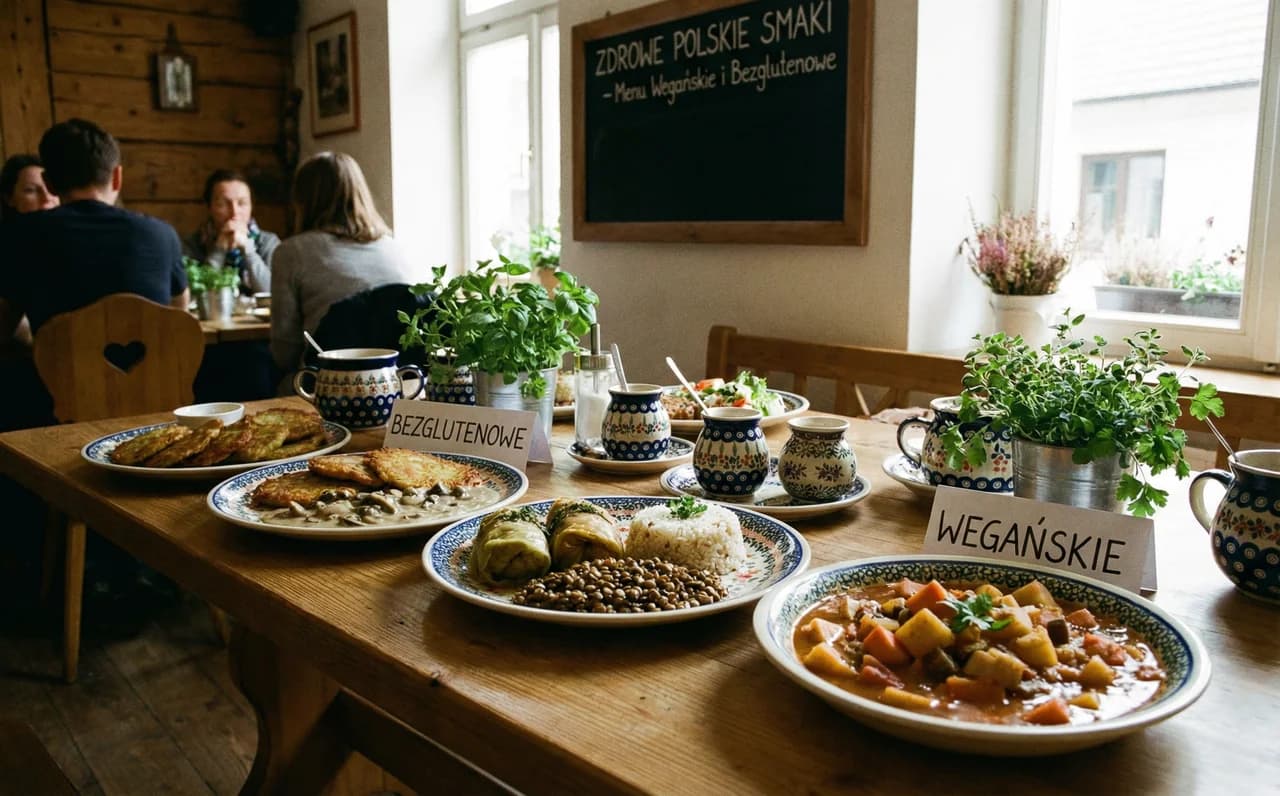
'Gluten-free' and 'vegan' aren't just marketing - they're a liability if your kitchen has no system. See how to phrase descriptions and protect against claims.
"Gluten-free" and "vegan" sell. But only when the kitchen has a system to back it up.
Without a system, you're asking for trouble:
- a customer with an allergy treats the label as a guarantee,
- the kitchen treats the label as marketing,
- and the truth happens on the cutting board and at the pass.
This post won't tell you how to "legally work around the issue". It will tell you how to communicate honestly and safely - and when it's better to drop a strong claim.
Legal framework - what the law says about dietary claims
Before you write "gluten-free" on the menu, you need to know what the law says:
- EU Regulation No 1169/2011 - requires allergen information in food. Also applies to foodservice.
- Regulation (EC) No 41/2009 (replaced by Regulation 828/2014) - defines when you can use the term "gluten-free": the product must contain below 20 mg of gluten per kg. That's a specific standard - not "less than usual", but a concrete limit.
- "Vegan" has no single EU-wide legal definition, but if you declare "vegan" and the dish contains animal-derived ingredients - that's misleading the consumer. And that falls under unfair commercial practices legislation.
- Trade Inspection and health authorities can verify whether claims match reality. If you write "gluten-free" but have no control procedure in the kitchen - that's a problem.
Bottom line: dietary claims are not a marketing issue. They are a legal issue. And if something goes wrong, you'll be liable not for "bad advertising" but for misleading the consumer.
Rule number 1: don't claim what you can't back up with a process
If you can't control cross-contact, then a "free from" claim is a risk. This is especially true for gluten, because:
- it's in flour (and in the air),
- it likes to stay on surfaces,
- it's often hidden in sauces and semi-finished products.
3 communication levels that save your skin
Level A: "In ingredients"
Sensible example: "gluten-free in ingredients" / "plant-based in ingredients". This tells the truth about the recipe but doesn't promise sterility. This is the best choice for most establishments.
Level B: "Prepared with a procedure"
This is strong, but it requires a system (zones, tools, rules at the pass, team training). If you have the system - you can communicate this. If you don't - it's a promise without backing.
Level C: "Guaranteed"
This is the highest level of responsibility. If you don't have process control, don't go there. This level is for establishments that have dedicated zones, trained staff, and documentation. For 90% of foodservice - it's too risky.
"May contain traces" - when and how to use it
Many establishments avoid this statement because it sounds "weak". But it's your best protection.
- When to use it: when you work in a kitchen where a given allergen is present, even if it's not in the ingredients of a specific dish. E.g. "gluten-free in ingredients - prepared in a kitchen where we use wheat flour".
- How to phrase it: not "may contain traces" (that's vague). Better: "prepared in a kitchen where we use [specific allergen]". That's honest and specific.
- Where to place it: at the bottom of the menu, next to each "free from" dish, or in a separate "Allergen information" section.
- Note: a "may contain traces" disclaimer does not exempt you from cross-contact control. It's not a legal shield that lets you do whatever you want. It supplements your procedure, it doesn't replace it.
Real incidents - what can go wrong
Without naming names or locations - here are scenarios that actually happen in foodservice:
- Scenario 1: A restaurant labeled a dish as "gluten-free". A customer with celiac disease ordered it. The dish was prepared on the same cutting board as bread sandwiches. The customer ended up in the hospital. The health inspection found no cross-contact control procedure. Fine + proceedings.
- Scenario 2: A restaurant labeled a sauce as "vegan". The cook added butter "for better taste" - didn't know the sauce was labeled vegan. A customer with a milk allergy had a reaction. Problem: no training + no consistency between menu and kitchen.
- Scenario 3: A restaurant had a disclaimer "may contain traces of nuts", but the server told the customer "no, this dish is safe". The customer with a nut allergy experienced anaphylaxis. Liability: on the establishment, because the staff wasn't trained.
Common thread: it's not about "bad ingredients". It's about a lack of system, lack of training, lack of consistency between what you write and what you do.
Most common "vegan" pitfalls
- "Vegan" on the menu, but in the kitchen: butter on the pan "for better taste"
- "Vegan", but the sauce has cream / cheese / honey / meat stock
- Shared tools and shared pass without a procedure
- Lack of consistency: front of house says one thing, kitchen does another
- Purchased semi-finished products - not verified (margarine that actually contains traces of milk)
Most common "gluten-free" pitfalls
- Flour in the air and no zone separation
- Shared cutting boards/knives for bread and everything else
- Same oil/deep fryer
- Gluten in semi-finished products (sauces, batters, spice blends)
- No procedure at the pass (that's where mistakes happen)
Menu design - how to communicate allergens visually
The menu is your first point of contact with the customer. How you present allergen information matters:
- Allergen icons: use standard 14-allergen icons next to each dish. The customer shouldn't have to read the entire description to check if they can eat it.
- Legend: at the bottom of the menu or on a separate page - clear, legible, with allergen names.
- Declaration levels: if you use "in ingredients" vs "guaranteed" - explain the difference on the menu. The customer needs to understand what they're buying.
- Font and contrast: allergen information must be readable. Fine print on a grey background = nobody reads it.
- Digital menu: if you use QR codes - make sure the digital version also has allergens. Not "only the paper menu has them".
- Updates: every recipe change = menu update. If you added a nut sauce to a dish that was "nut-free" - the menu must change THAT SAME DAY.
Team script - how to respond to dietary questions
Your team needs ready-made answers. Not improvisation. Here's a template:
Customer: "Is this dish really vegan?"
- Good answer: "Yes, this dish is prepared exclusively from plant-based ingredients. However, we work in a kitchen where we also use dairy products and eggs. Is that acceptable for you?"
- Bad answer: "Yes, it's vegan." (no context about the kitchen)
Customer: "I have celiac disease - can I eat safely here?"
- Good answer: "We have dishes that are gluten-free in ingredients. I need to let you know, though, that we work with flour in the kitchen and can't guarantee the absence of trace contact. Would you like me to point out the best options?"
- Bad answer: "Yes, we have gluten-free options, go ahead and choose." (no risk information)
The rule: always inform about what you control and what you DON'T control. Honesty is not weakness - it's professionalism.
Insurance and liability
A topic few people think about until something happens:
- Foodservice liability insurance: check whether your general liability policy covers damages resulting from allergens / incorrect labeling. Many standard policies do NOT cover this automatically.
- Documentation as protection: if an incident occurs, your documentation (procedures, training records, logs) is your line of defense. A court looks at whether you had a system and followed it. No system = heightened liability.
- Personal liability: liability falls on the owner / manager, not on the server who gave the wrong answer. You are responsible for ensuring the team is trained and has the tools for safe work.
Practical advice: talk to your insurer about liability coverage in the context of allergens. If your policy doesn't cover it - extend it. It costs significantly less than one compensation claim.
A simple "menu code" that works
- Don't promise what you can't control.
- If you communicate "free from", have a procedure for "how we handle special orders".
- Ensure consistency: menu -> kitchen -> pass -> team response.
- Use disclaimers wisely - not as an excuse, but as a supplement to the system.
- Update the menu with every recipe change - that same day.
Mini-test: can you safely write "gluten-free" / "vegan"? YES/NO:
- Do you have rules that the team can repeat?
- Do you have control over the pass and order assembly?
- Are semi-finished products verified, not just assumed?
- Can you fulfill such an order during rush hours?
- Does your menu have clear allergen labels?
- Does the team know what to say to a customer with an allergy (and what not to say)?
- Do you have a cross-contact disclaimer on the menu?
If the answer is "NO" - it's better to communicate cautiously than to promise too much.
Where GastroReady comes in
GastroReady turns communication into a process: procedures, instructions, an allergen matrix, rules for delivery and the pass, ready-made disclaimers, and team scripts. You also get menu labeling templates and training materials that teach your team how to talk about allergens safely and professionally. The blog shows the risk. The system gives you the control to communicate more confidently - without playing roulette.
Frequently Asked Questions
Can I write "gluten-free" on a restaurant menu?
You can, but only if your process actually backs it up. Under EU Regulation 828/2014, a "gluten-free" product must contain less than 20 mg of gluten per kg. If you don't control cross-contact in the kitchen, it's safer to say "no gluten in the ingredients" and add a note that you work with flour on-site.
Is the "vegan" label on a menu legally regulated?
There's no single EU legal definition of "vegan", but if you label a dish "vegan" and it contains ingredients of animal origin, that's misleading the consumer. It falls under unfair market practices legislation, and the business owner is the one held liable.
What does "may contain traces" mean on a menu?
It's a warning about cross-contact risk - the allergen is present somewhere in the kitchen, even if it's not an ingredient in that specific dish. A more precise note works better than a generic "may contain traces", for example "prepared in a kitchen that uses nuts". That kind of disclaimer, though, doesn't remove your obligation to control cross-contact.
Who's liable if a customer with an allergy has a reaction after eating at a restaurant?
Liability falls on the owner or manager, not the server. A court will look at whether the business had an allergen management system and whether it actually used it. Missing procedures, training, and documentation makes that liability worse. It's worth checking whether your liability insurance covers allergen-related claims.
Need complete HACCP documentation?
Before you put "gluten-free" or "vegan" on the menu, make sure your kitchen system can actually back the claim. GastroReady gives you the procedures, allergen matrix, and safe communication scripts that let you make claims you can defend during an inspection. From 299 PLN, with PL/EN instructions for the whole team.