Christmas Market Stall
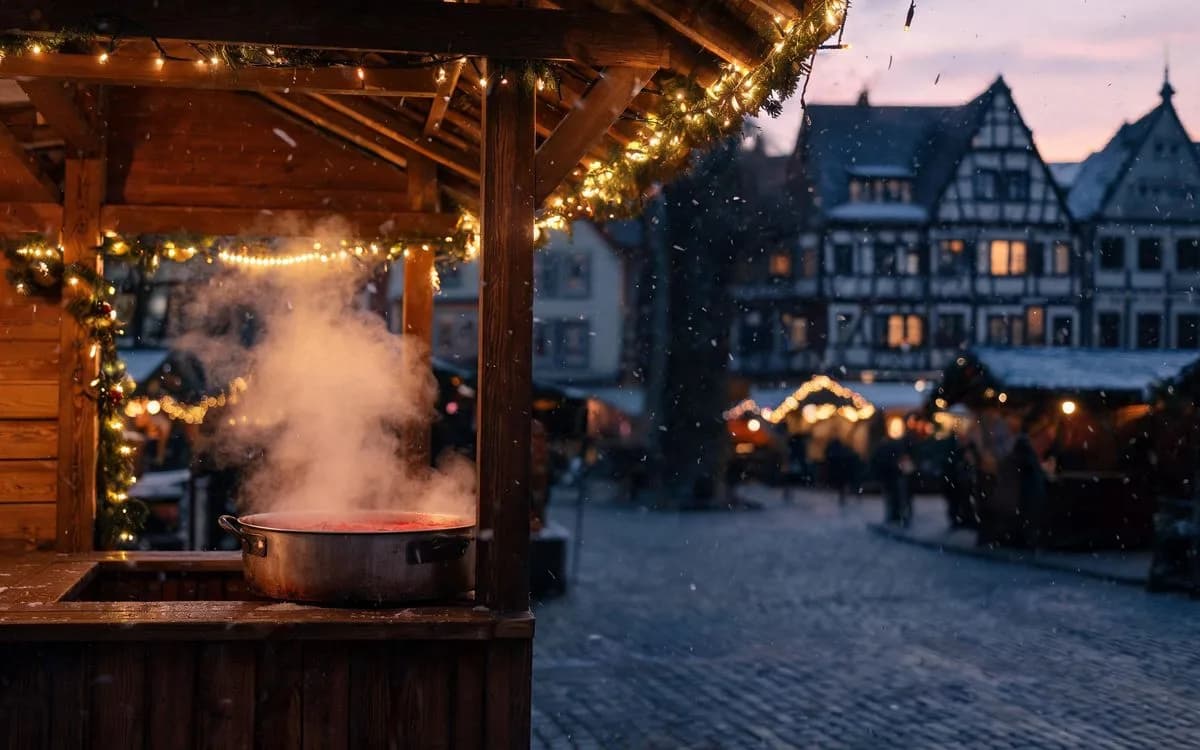
A one-off alcohol permit lasts 2 days while the market runs for weeks. Registering the stall, water below zero, and temperatures in the other direction.
A Christmas market stall looks like a food truck in winter clothing, but formally it is something else, and that is exactly where people come unstuck. The stall stands for weeks, not two days. Mulled wine contains double-digit alcohol, not three and a half percent. Water freezes. Each of those three facts has its own administrative consequence, and it pays to know them before you put the hut up.
Registering the stall with Sanepid
Selling food at a market is food trade activity, so the same rules apply as to fixed premises: the establishment must be notified and entered in the register kept by the district sanitary inspector.
If you already have registered premises or a registered food truck, check the scope of that entry. Registration covers a defined type and place of activity - setting up a stall in a different location with a different range of products is often a material change that must be notified. Do not assume that an entry reading "restaurant" automatically covers a mulled wine hut in the town square.
Market organisers usually ask to see the decision or certificate of entry at the contract stage. That is the moment to check your paperwork, not the week before opening.
Mulled wine and the two-day permit trap
Selling alcohol at a market requires a permit. For a business that already holds a standing permit to sell alcoholic beverages, the route is a one-off permit issued by the municipality under the Act of 26 October 1982 on upbringing in sobriety and counteracting alcoholism.
Here is the catch that surprises people most: a one-off permit is issued for a period of up to 2 days, while a Christmas market runs for three, four or six weeks. Municipal practice varies - some offices issue a bundle of permits matching the number of days, separately for each type of alcohol. Before you calculate your margin on mulled wine, call your local authority and ask directly how they handle continuity across a multi-week event.
The fee is 1/12 of the annual fee for the relevant category: 43.75 PLN for beverages up to 4.5% and beer, 43.75 PLN for the band above 4.5% up to 18%, and 175 PLN above 18%. Mulled wine usually falls into the middle band.
Check the event's legal status separately. If the event qualifies as a mass event under the Act on the safety of mass events, additional alcohol restrictions apply - including a strength limit that mulled wine does not meet. A typical city Christmas market is usually not classified as a mass event, but that depends on scale and on the organiser's decision, so get the classification confirmed with them in writing.
Water when it is below zero
The requirements match mobile trading in summer: running water fit for drinking, a separate hand-washing station with hot water, cleaning agents and single-use towels, and a waste water tank. We set out the detail in our guide to water and hand washing in a food truck, and none of it changes in winter.
What does change is the physics. At sub-zero temperatures:
- tanks and hoses freeze if the stall is shut down overnight - you need either heating or a documented draining procedure,
- hot water at the hand-washing station is not optional "because it is cold" - it is a requirement, not a comfort,
- disinfectants have a working temperature range, and some lose effectiveness below a certain threshold, which is worth checking on the label.
Temperatures in the other direction
In summer you guard against heat. In winter the problem is frost and hot-holding at the same time.
- Chilled products left in the frost can partially freeze, and a freeze-thaw cycle is a genuine quality hazard. A chiller must hold its range, not simply "be outside, so it is cold".
- Mulled wine and hot dishes held for hours require control of serving temperature and a record. A pot standing all day is a classic critical point.
- Temperature records are kept exactly as in fixed premises - see our guide to refrigerator temperature logs.
Documentation an inspector expects at the stall
An inspection at a market tends to be shorter than in a restaurant, but the checklist is predictable: confirmation of entry in the register, medical certificates for sanitary-epidemiological purposes for everyone handling food, GHP/GMP and HACCP documentation matched to trading in the field, temperature and cleaning logs, delivery records, and allergen information for what you sell.
The most common mistake is bringing documentation that describes fixed premises. A hand-washing procedure referring to a sink in the back kitchen does not describe a hut with two water tanks in the town square, and an inspector will see that in the first minute.
Frequently asked questions
Do I need a separate Sanepid notification for a market stall?
Food trading is subject to registration, and the entry covers a defined type and place of activity. If the stall falls outside the scope of your current entry - different location, different product range, different form of trading - notify the change to the district sanitary inspector before you start selling.
How long does a one-off alcohol permit last?
It is issued for a period of up to 2 days. For a multi-week market, municipal practice varies - some authorities issue a number of permits matching the days of sale, separately for each type of alcohol. Settle the question of continuity directly with the municipality covering the market location.
How much does a one-off alcohol permit cost?
The fee is 1/12 of the annual fee for the relevant category: 43.75 PLN for beverages up to 4.5% and beer, 43.75 PLN for beverages above 4.5% up to 18%, and 175 PLN above 18%. Mulled wine usually falls into the middle band.
Do I need hot water at the stall in winter?
Yes. The requirement for hot water at the hand-washing station does not depend on the season. At sub-zero temperatures you additionally need to protect the system against freezing or plan a procedure for draining the tanks after closing.
Documentation for trading in the field
A market stall needs documentation describing field trading, not a fixed kitchen. GastroReady prepares HACCP, GMP and GHP documentation matched to your form of activity, with PL/EN instructions. From 299 PLN.