Poland's Deposit Return System 2026
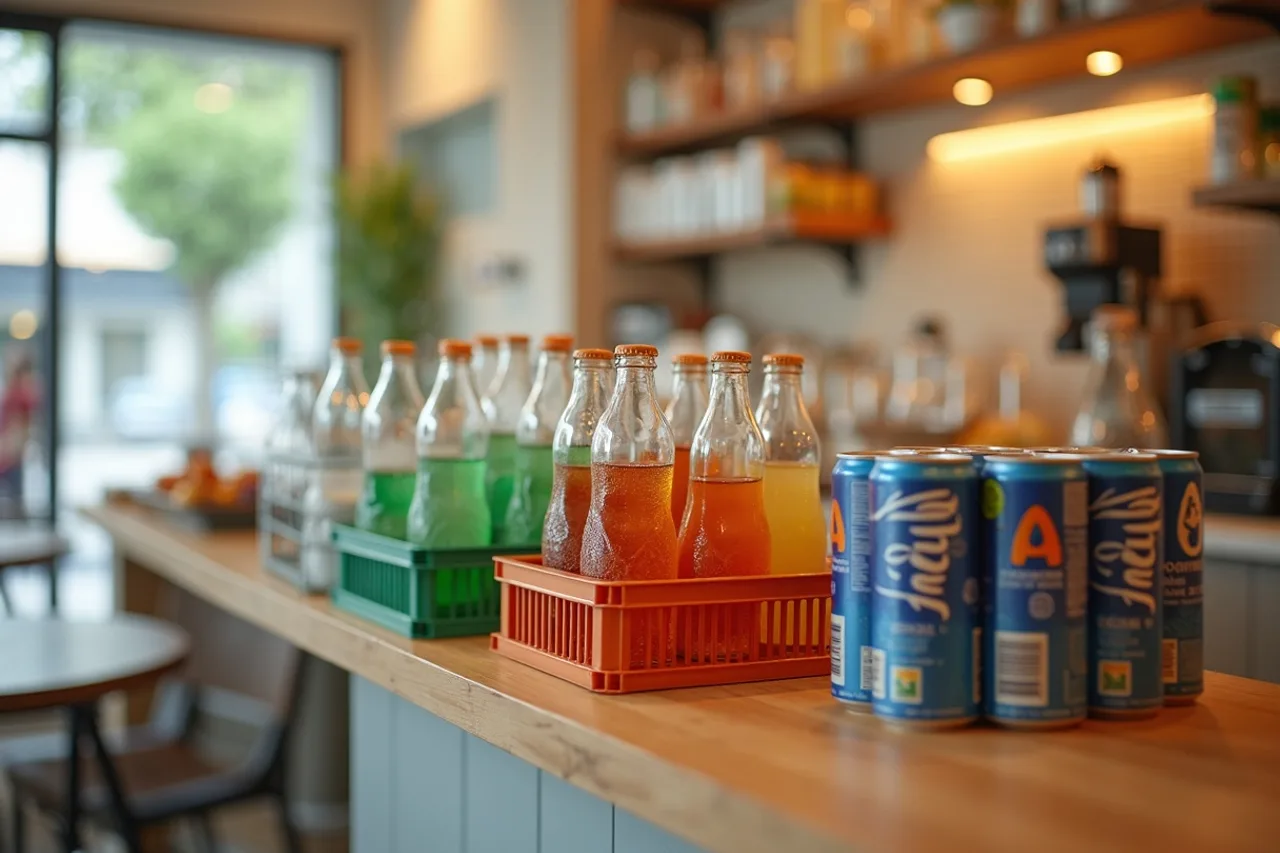
How Poland's deposit return system works for restaurants and cafes: when to charge the deposit, dine-in vs takeaway, receipts, records and rollout.
Since 1 October 2025, Poland has a nationwide deposit return system (system kaucyjny) for beverage packaging. If your restaurant, bar, cafe, or food truck sells drinks in PET bottles, metal cans, or reusable glass bottles, the system applies to you too - regardless of the size of your business. In 2026 the deposit is part of everyday operations: customers ask about it at the till, suppliers add it to invoices, and you need to know how to charge it, record it, and settle it. It is another environmental obligation alongside the BDO waste register, which also covers foodservice businesses. This guide explains what the deposit system means in practice for a food business in Poland: when you charge the deposit, how on-site and takeaway sales differ, what to do about your cash register, and how to implement it step by step.
What the deposit return system is and which packaging it covers
The deposit return system is a national collection scheme for beverage packaging. The principle is simple: when a drink in covered packaging is sold, a deposit is added to the price, and the customer gets it back when they return the empty packaging at a collection point. The deposit is not a tax and not an extra fee for your business - it is a refundable amount that "travels" with the packaging through the whole supply chain: from the producer, through the wholesaler and your business, to the customer.
Deposit rates
| Packaging type | Capacity limit | Deposit |
|---|---|---|
| Single-use plastic (PET) bottle | up to 3 litres | 0.50 PLN |
| Metal can | up to 1 litre | 0.50 PLN |
| Reusable glass bottle | up to 1.5 litres | 1 PLN |
Note that single-use glass bottles (for example non-returnable beer bottles) are not covered - the deposit applies to reusable glass bottles that go back to the producer for refilling. If you are not sure whether a specific product is covered, check the label: packaging in the system carries a dedicated deposit marking.
Who runs the system - operators
The system is run by operators - entities representing beverage producers that organise collection, transport, and deposit settlements. In practice this means your settlement partner is not a government office but a system operator working with your beverage supplier. Detailed rules on settlements, reporting, and packaging pick-up are agreed with the operator - conditions can vary, so always verify the current requirements with your operator or in the applicable regulation.
Does your food business fall under the system?
If you sell drinks in covered packaging, you charge the deposit
There is no foodservice exemption here: every point of sale that hands covered beverage packaging to a customer must charge the deposit. If a customer buys a canned cola to take away, you add the 0.50 PLN deposit. If you sell PET-bottled water from the fridge by the till - same rule. The size of your premises does not matter.
The obligation to accept returns - the 200 m2 threshold
Accepting returns works differently. Retail units with a sales area above 200 m2 are obliged to take back empty packaging and refund deposits. Smaller outlets - which means the vast majority of food businesses - may accept returns voluntarily but do not have to. For a typical restaurant or cafe the setup is asymmetric:
- You always charge the deposit when you hand a customer a drink in covered packaging.
- You do not have to accept returns if your sales area does not exceed 200 m2 - the customer can return the packaging at a supermarket or a reverse vending machine.
- You may accept returns voluntarily - in that case you sign an agreement with an operator and settle the refunded deposits with them.
Key rule: The deposit follows the packaging, not the receipt. You charge it whenever covered packaging physically goes to the customer. When the drink is poured into a glass and the bottle or can stays in your business, you are the last link in the chain - and you recover the deposit by returning the packaging yourself.
Drinks on site vs takeaway - how it works in practice
Takeaway sales
The simplest scenario: the customer buys a canned or bottled drink and leaves with it. The packaging goes to the customer, so you charge the deposit and show it at the point of sale. The customer recovers the deposit by returning the packaging at any collection point - not necessarily yours.
Consumption on site
If you serve the drink on site - you open the bottle, pour it into a glass, and the packaging stays in the business - the customer does not receive the packaging, so there is no basis to charge them a deposit. Remember, though, that you paid the deposit when buying stock from your supplier. You get that money back by returning the collected packaging under the rules agreed with your operator or supplier. Empty bottles and cans from drinks served on site are therefore no longer ordinary waste - they are real money worth collecting, sorting, and returning.
The in-between case: a customer drinks part of the beverage on site but takes the bottle with them. Formally you are handing the packaging to the customer, so the safer approach is to treat it as a takeaway sale and charge the deposit. Set one consistent house rule and train your staff on it.
Delivery
With delivery orders the packaging goes to the customer, so the rule is the same as for takeaway: the deposit should be added to the order. If you sell through delivery platforms, check how the platform handles the deposit line in the basket and in its settlements - practice varies between operators and platforms, so verify with your account manager or the current guidelines.
The deposit on your cash register and in your records
Fiscal cash register
The deposit is not part of the product price - it is a refundable amount. In practice businesses show the deposit as a separate line at the point of sale, clearly split from the drink price, so the customer sees it on the receipt. Talk to your cash register technician and your accountant about configuring the deposit line correctly on your device - setups differ between registers and POS systems.
Packaging records
Regardless of the register, it is worth keeping a simple record of deposit packaging flows. The minimum that will make settlements and margin control easier:
- Deposits paid to suppliers - deposits added on beverage purchase invoices.
- Deposits charged to customers - deposits collected on takeaway and delivery sales.
- Packaging returned - how many items were returned and how much deposit was recovered.
- Packaging on hand - empties awaiting return (from drinks served on site).
Without such records you risk a silent loss: deposits paid to suppliers add up while the packaging ends up in general waste. At a few hundred drinks a month, that is real money.
VAT and taxes - talk to your accountant
The tax treatment of deposits has its nuances - including how to handle deposits that were charged but never refunded, and how to book deposits from purchase invoices. Do not rely on generic guides here: the rules are refined in tax rulings and implementing regulations. Book a short consultation with your accountant and agree one consistent booking method before the volume grows.
Implementing the deposit system step by step
- Review your beverage range. List all drinks sold in PET bottles up to 3 l, cans up to 1 l, and reusable glass bottles up to 1.5 l. Check the deposit markings on the labels.
- Check supplier invoices. Make sure the deposit is itemised and you know where you can return empties from drinks served on site.
- Configure your cash register or POS. Add a deposit line for takeaway drinks - with help from your technician and accountant.
- Set house rules for dine-in and takeaway. One simple rule for staff: packaging leaves the premises = deposit charged; packaging stays = it goes into the returns bin.
- Organise storage for empties. Separate containers for PET, cans, and reusable glass, outside the production area - so it does not conflict with the hygiene rules that Sanepid (the State Sanitary Inspection) checks anyway during sanitary inspections of food businesses.
- Train your team. Waiters and till staff must be able to explain to customers what the deposit is and where packaging can be returned. Note the briefing in your training register.
- Decide on accepting returns. If you are under 200 m2, returns are voluntary - work out whether accepting them makes operational sense for you and contact a system operator if needed.
Treat the deposit rollout like any other procedure in your business: write it down, assign responsibility, and file it with the rest of your documentation. As with HACCP, a procedure that exists only "in the owner's head" stops working the moment staff change. We covered what documentation gaps really cost in our article on the real cost of missing HACCP documentation.
Frequently asked questions
Does a small cafe have to charge the deposit?
Yes, if it sells drinks in covered packaging and hands them to customers - for example as takeaway. The obligation to charge the deposit applies to every point of sale regardless of size. The 200 m2 threshold concerns only the obligation to accept returns, not charging the deposit.
Do I have to accept bottle and can returns in my venue?
No, if your sales area does not exceed 200 m2. Mandatory take-back applies to retail units above that threshold. A smaller business can accept returns voluntarily, after agreeing terms with a system operator.
What about drinks served on site, in a glass?
If the packaging stays in your business, you do not charge the customer a deposit. You already paid the deposit when buying from your supplier and recover it by returning the collected empties. Collect bottles and cans from dine-in service separately - that is your money.
How much is the deposit in 2026?
0.50 PLN for a PET bottle up to 3 litres and for a metal can up to 1 litre, and 1 PLN for a reusable glass bottle up to 1.5 litres. Always verify the current rates and the list of covered packaging in the applicable regulation or with a system operator.
How do I show the deposit on the receipt?
The deposit should appear as a separate line, split from the drink price, because it is a refundable amount rather than part of the price. Agree the exact cash register or POS configuration with your technician and accountant, as technical details differ between devices.
Is the deposit subject to VAT?
The tax treatment depends on details such as whether the deposit was refunded. Do not settle this yourself based on generic guides - agree the booking method with your accountant and stick to one consistent practice.
The deposit return system is one more obligation every food business in Poland needs to have under control in 2026 - alongside HACCP, waste records, and sanitary requirements. The good news: it takes one written procedure, a short staff briefing, and a place in your compliance binder. If that binder needs sorting out, take a look at our HACCP and GHP/GMP documentation packages - ready-made templates you fill in with your own business details.