Pest Control (DDD) in Polish Foodservice
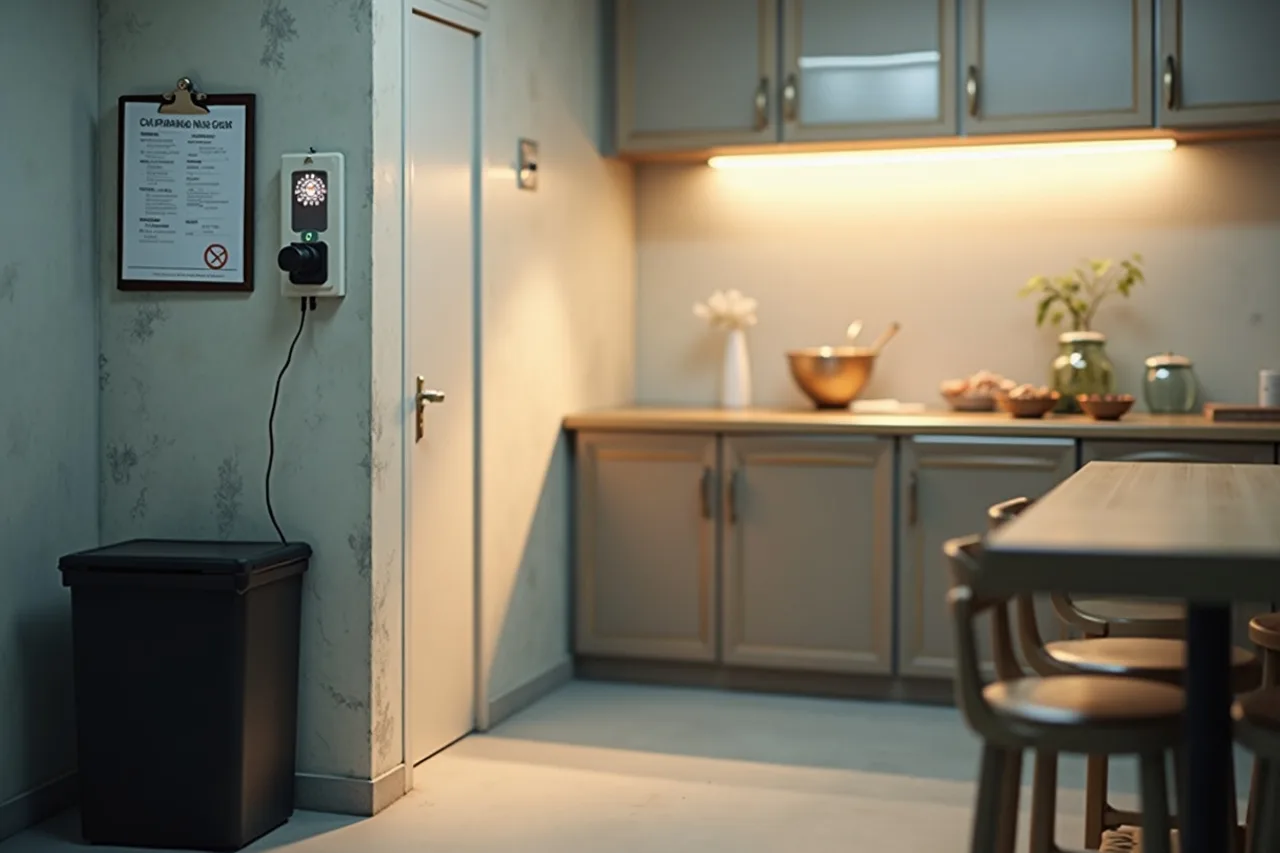
Pest monitoring in a foodservice business: legal duty, bait stations, insect light traps, DDD records and when to hire a pest control company.
Rodent droppings in the storeroom are one of the fastest ways to have a food business shut down in Poland - an active pest infestation in the production area is a direct health hazard and gives the Sanepid inspector grounds for an immediate suspension decision. That is why pest control, known in Poland under the acronym DDD (deratyzacja, dezynsekcja, dezynfekcja - rodent control, insect control, disinfection), is not a "peace of mind" service but a legal obligation and a standing element of the Sanepid requirements for food businesses. This guide explains where the obligation comes from, how to organise pest monitoring, which documents belong in your binder, and when a pest control contract makes more sense than an in-house programme.
What DDD means and where the obligation comes from
The DDD acronym covers three types of activity:
- Rodent control (deratyzacja) - controlling mice and rats and preventing them from entering the premises.
- Insect control (dezynsekcja) - controlling flies, cockroaches, pharaoh ants, stored-product moths and other pests.
- Disinfection (dezynfekcja) - destroying microorganisms on surfaces and equipment, carried out daily under your GHP cleaning and disinfection procedures.
The legal basis is Regulation (EC) No 852/2004, specifically Annex II, which requires food premises to be maintained so that pests cannot gain access and adequate procedures to be in place for their control. The regulation applies directly in Poland: an inspector does not need any national act to challenge missing safeguards.
In practice the obligation has two layers:
- Technical prevention - a sealed building: insect screens on windows, sealed pipe and cable penetrations, door thresholds and brushes, floor drains with traps, no cracks in walls or floors.
- Monitoring and control - a system of permanent observation (monitoring stations, insect light traps, pheromone traps) and a response whenever monitoring detects pest activity.
Key principle: Sanepid does not expect that a mouse or a fly will never appear in your premises. It expects a working system that detects the problem early, and documentation that proves it. Missing monitoring records are treated as missing monitoring.
Mandatory rodent control campaigns ordered by municipalities
Beyond the standing obligation from Regulation 852/2004 there is a local layer. Polish municipalities may, in their cleanliness and order regulations, order mandatory rodent control campaigns on their territory - usually in two windows, spring and autumn. They cover specified categories of properties, and food businesses and premises where food is stored almost always fall within them.
What this means for you:
- check your municipality's cleanliness and order regulation - you will find it in the local office's public information bulletin (BIP),
- note the dates of mandatory campaigns and add them to your DDD schedule,
- keep proof that rodent control was carried out in the set window: the pest control company's report or documentation of your own actions (date, product used, bait placement),
- remember that the municipal campaign does not replace permanent monitoring - it is an additional obligation, not an alternative.
Pest monitoring in practice: stations, lamps, traps
The heart of a DDD programme is permanent monitoring: control points placed around the premises that detect pest activity before it becomes an infestation. Food businesses use three basic tools.
Rodent monitoring and bait stations
- Monitoring stations (with a non-toxic bait or bait dummy) - used to detect rodent presence; you check whether the bait has been disturbed and whether droppings or tracks have appeared.
- Bait stations (with rodenticide) - used for control; inside production areas, mechanical traps or non-toxic stations are preferred to rule out any risk of food contamination.
- Placement - along walls and rodent runways: storerooms, back-of-house areas, goods entrances, waste rooms, and outside along the building line.
- Marking - every station carries a number matching the placement plan; stations containing product must be lockable and labelled.
Insect light traps
- Catch flying insects; in production areas glue-board models are used instead of electric-grid ones, so insect fragments do not fall onto food.
- Location: near entrances and on the insects' route into production, but never directly above open food or workstations.
- Servicing: glue boards and tubes replaced on schedule, with a record in the documentation; during inspection rounds the number and type of trapped insects are assessed as a trend indicator.
Pheromone traps
- Detect stored-product pests, such as food moths, in dry stores (flour, grains, nuts, spices).
- Act as an early warning system: trapped specimens flag a problem in a specific zone before you can see it in the products.
- Like all control points, they are numbered on the plan and inspected regularly.
Monitoring is backed up by daily staff observation: droppings, gnawed packaging, dead insects on windowsills or an odd smell in the storeroom are signals every employee should recognise and report. The DDD procedure should state who receives such reports - it is part of hygiene training, alongside the other personal hygiene rules.
Pest control company or in-house monitoring: which to choose
The law does not require a contract with an external pest control company. It requires effective protection of the premises and pest control procedures - which you can deliver in-house or outsource. Both models are accepted by Sanepid, as long as they are documented.
| Criterion | Pest control contract | In-house monitoring (internal procedure) |
|---|---|---|
| Who performs inspections | The company's technician at agreed intervals, e.g. monthly | A designated, trained employee |
| Documentation | Inspection reports, station plan and safety data sheets supplied by the company | You create and maintain the plan, inspection register and safety data sheets yourself |
| Biocidal products | Selected and applied by the company under its qualifications | Limited choice: some products are for professional use only |
| Response to infestation | Intervention under the contract, control experience | A serious problem usually ends with calling in specialists anyway |
| Who it suits | Restaurants, catering, production, premises with storerooms, older buildings or those next to pest sources | Small outlets with a simple profile, limited storage and a well-sealed building |
In practice most food businesses choose a mixed model: a contract for periodic inspections and interventions, plus daily staff vigilance described in an internal procedure. The documentation must clearly show the split of roles: what the company does, what your team does, and who reacts to a monitoring signal.
DDD documentation: what belongs in the binder
The pest control programme is one of the GHP procedures required in every establishment - alongside cleaning and disinfection, goods receiving and waste handling, covered in our article on GHP and GMP in a food business. A complete DDD file contains:
- The pest protection procedure - a description of the system: technical prevention, types of control points, inspection frequency, how observations are reported, and actions after activity is detected.
- The station placement plan - a floor plan with numbered control points: rodent stations, insect light traps, pheromone traps. The plan must match reality - station no. 4 has to stand where it is drawn.
- Inspection reports - for every round: date, points checked, activity found (or none), actions taken, signature. With a contract these are the technician's service reports.
- Safety data sheets of the products used - for every biocidal product applied on the premises, kept available for inspections and emergencies.
- The contract or internal procedure - a document showing who is responsible for monitoring and control; in the in-house model, also a record that the designated employee was trained.
- Corrective action records - if monitoring detected activity: what was done, when, with what result, and when the follow-up check took place.
Practical rule: An inspection report that has said "no activity" in every box for a year, while fresh droppings lie in the storeroom next door, weighs against you more heavily than an honest record of a detected problem and the intervention that followed. DDD documentation is meant to show a working system, not a perfect picture.
What the Sanepid inspector checks in the DDD area
During an inspection, pest control is verified on two tracks: in the paperwork and on the floor. A typical inspector's path:
- Signs of pests - droppings, gnawed packaging, damaged goods, dead insects; the inspector looks behind equipment, under shelving, into storerooms and waste rooms.
- Building integrity - screens on opening windows, door condition (gaps at thresholds), sealed pipe and cable penetrations, floor drains.
- Condition of control points - stations positioned as on the plan, marked and undamaged; insect light traps working and serviced.
- Documentation - the procedure, placement plan, inspection reports (regularity and completeness), safety data sheets, contract or internal procedure.
- Consistency between system and practice - realistic inspection dates, corrective actions recorded after detected activity, staff who know whom to tell when they spot signs of pests.
Consequences depend on scale. Documentation and technical shortcomings usually end with an order to remedy them by a deadline, but an active infestation in a production or food storage area is a direct health hazard - and the inspector can then suspend the operation of the establishment until the hazard is removed and a re-inspection passes. Worth remembering when you are tempted to save on monitoring: this is one of the few areas where a single lapse can stop the whole business overnight. Our pre-inspection checklist shows how to prepare step by step.
How to set up a DDD programme: an action plan
- Sealing audit - walk the premises like a rodent would: gaps under doors, unscreened windows, service penetrations, vents. Fix the technical gaps first - no number of stations replaces a sealed building.
- Choose the model - pest control company, in-house monitoring or a mix; with a company, agree the scope: number of points, inspection frequency, intervention terms.
- Placement plan - draw the floor plan with numbered control points; keep a copy where the person doing the rounds can use it.
- Procedure and register - write the pest protection procedure and open an inspection register; decide who inspects and how often.
- Staff training - every employee should know what pest signs look like and whom to report them to; log the training in the training register.
- Municipal dates - check your municipality's regulation and add the mandatory campaigns to your schedule.
Frequently asked questions
Is a pest control contract mandatory in Poland?
No. Regulation 852/2004 requires effective protection of the premises against pests and adequate control procedures, but does not dictate the form. You may run monitoring in-house under an internal procedure, provided it is documented: a placement plan, regular recorded inspections and safety data sheets for the products used.
How often should stations and traps be inspected?
The law does not set a single frequency - you define it in your procedure, proportionate to the risk. In practice pest control companies inspect at fixed intervals and staff observe daily. What matters is that the declared frequency is actually kept: a schedule that leaves no trace in the reports will be treated by the inspector as a dead provision.
What happens if the inspector finds rodent traces?
It depends on the scale. Isolated technical or documentation shortcomings usually end with a remediation order and a deadline. An active pest infestation in a production or food storage area, however, is a direct health hazard and can result in a decision suspending the establishment's operation until the hazard is removed and a re-inspection passes.
What are the mandatory municipal rodent control campaigns?
Municipalities may order rodent control on specified areas and dates in their cleanliness and order regulations, usually in spring and autumn. If your premises fall under such an obligation, you must carry out the treatment in the set window and keep proof. The municipal campaign does not replace the permanent monitoring required by food law.
Can I put down rodenticide myself in the kitchen?
Inside rooms where you handle food, rodenticides are a contamination risk - which is why production areas rely on mechanical traps and non-toxic monitoring stations, with biocidal products used mainly outside and in areas without food contact. Some products are available to professional users only. Every product you use must have its safety data sheet in your documentation.
Where does the DDD programme sit in HACCP documentation?
Pest control is a GHP procedure - one of the prerequisite programmes the HACCP system is built on. In the binder it sits alongside cleaning and disinfection, goods receiving and waste handling, together with the placement plan, the inspection register and the safety data sheets.
The pest protection procedure, station placement plan, inspection registers and the rest of the GHP/GMP documents do not have to be written from scratch - you will find them in the ready-made HACCP and GHP/GMP documentation packages from GastroReady, prepared in line with Regulation 852/2004 and ready to fill in with your establishment's data.