HACCP for bakeries: guide and documentation
How to implement HACCP in a bakery: implementation stages, typical CCPs, documents required by Sanepid and temperature and delivery registers.
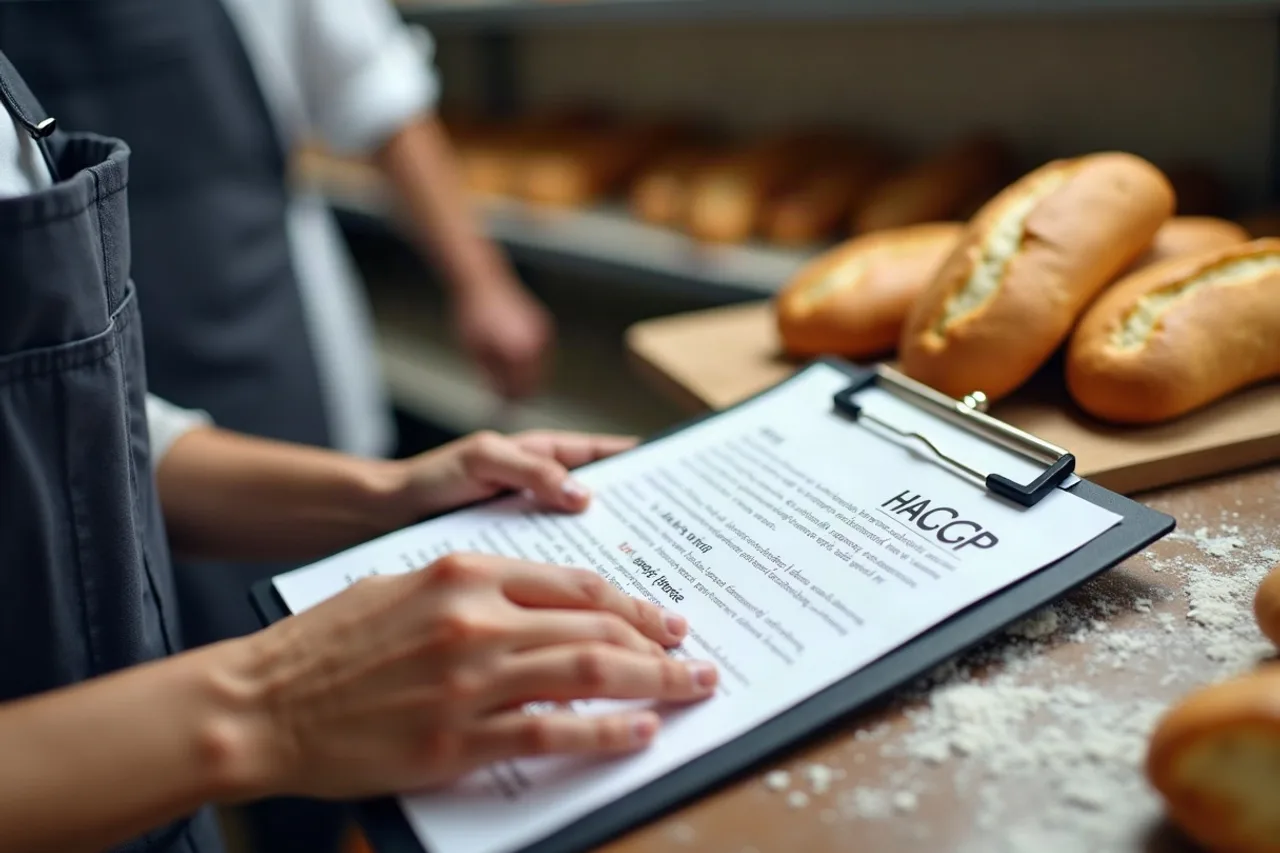
For a small or medium-sized bakery in Poland, a proportionate HACCP system is enough, based on solid GHP (Good Hygiene Practice) and GMP (Good Manufacturing Practice) procedures, a few well-identified critical control points (CCPs) and a complete set of editable registers (records). Regulation (EC) No 852/2004 and the guidelines of the Chief Sanitary Inspectorate (GIS) explicitly provide for the flexible application of the principles - you do not have to build an industrial system to pass an inspection by Sanepid (the State Sanitary Inspection).
Three actions worth starting with:
- Describe the processes and determine the CCPs - draw up a flow diagram from receiving the flour to handing over the finished bread and mark the stages at which a hazard may reach an unacceptable level (e.g. baking temperature, cooling of creams).
- Introduce the basic registers - oven and cold room temperature logs, a cleaning and disinfection register, a raw material receipt register; every entry must have a date and a signature.
- Carry out training with signatures - every employee confirms completing training on GHP/GMP principles and HACCP procedures; this attendance list is one of the first documents an inspector reaches for.
If you want to reduce the preparation time, consider a ready, editable documentation package such as the one offered by GastroReady - a set of templates adapted to GIS and EU law requirements, which you fill in with your bakery's details and print.
Table of contents
- What HACCP in a bakery covers - mandatory elements and definitions
- How to implement HACCP in a bakery step by step
- Which CCPs most often occur in a bakery?
- What documents does Sanepid require from a bakery?
- What does Sanepid check during a bakery inspection?
- How to prepare staff and document training?
- How much does HACCP implementation in a bakery cost and how long does it take?
- What mistakes does Sanepid most often detect in a bakery?
- A 7-day plan before a Sanepid inspection
- Why is simple HACCP enough for a small bakery?
- Key takeaways
- Simple systems work - if they are applied consistently
- A ready HACCP documentation package for your bakery
- Useful sources and links for bakeries in Poland
What HACCP in a bakery covers - mandatory elements and definitions
Regulation (EC) No 852/2004 requires every food business operator to develop and implement procedures based on the seven HACCP principles. In the practice of a bakery this means seven specific elements:
- Hazard analysis - identifying biological hazards (e.g. Salmonella in creams), chemical hazards (cleaning products, pesticides in flour) and physical hazards (glass fragments, metal).
- Determining CCPs - a critical control point is a stage at which applying a control measure is essential to eliminate a hazard or reduce it to an acceptable level. Example: the internal temperature of rolls during baking.
- Critical limits - measurable limit values for each CCP, e.g. a minimum baking temperature of 75°C in the centre of the product (an example value from practice; the rules do not give a figure).
- Monitoring - regular measurements and observations confirming that the CCP is under control; every measurement goes into a log with a date and a signature.
- Corrective actions - steps planned in advance and taken when monitoring shows that a critical limit has been exceeded (e.g. re-baking the batch, withdrawing the product).
- Verification - periodic checking that the system works as intended (internal audits, thermometer calibration, review of logs).
- Documentation - registers confirming that the above steps are actually carried out.
The principle of flexible application of HACCP, confirmed by GIS, means that a small bakery does not have to implement an extensive industrial system. Where a hazard is effectively controlled by good hygiene practices (GHP/GMP), it is enough to document those practices as so-called OPRPs (operational prerequisite programmes) instead of a formal CCP. The EU guidance (C 355/01) explains this relationship between GHP, OPRPs and HACCP procedures in detail.
For bakeries aiming for ISO 22000 certification, the HACCP system is a foundation that can be extended into full food safety management. For most small establishments, however, certification is not required - compliance with Regulation (EC) No 852/2004 is enough.
How to implement HACCP in a bakery step by step
The standard implementation model has eight stages, which you can carry out yourself or with the help of ready templates. Below is a practical action plan with an estimated time for each step.
-
Appoint a HACCP team. In a small bakery the owner or the production manager as coordinator and at least one member of the production staff are enough. Record the composition of the team and the assigned roles in a document describing the establishment's activity.
-
Describe the product and the processes. Draw up a list of products (breads, rolls, cakes with cream, filled products) together with their intended use and the target group of consumers. Then draw a flow diagram: from receiving raw materials, through storage, dough preparation, shaping, baking, cooling, packing, to handing over the product.
-
Carry out a hazard analysis. For each stage of the flow diagram, identify biological, chemical and physical hazards. Assess the likelihood of their occurrence and the potential severity. Record the result in a hazard analysis matrix.
-
Determine CCPs or apply GHP/OPRPs. Use a decision tree to decide whether a given stage requires a formal CCP or whether control through GHP/GMP is enough. Products with creams and fillings require particular attention - a CCP is usually necessary here.
-
Set critical limits and monitoring procedures. For each CCP define a measurable limit (e.g. temperature, time) and the way to measure it (thermometer, timer, visual assessment). Decide how often to take the measurement and who is responsible for it.
-
Develop corrective action procedures. Every CCP must have a scenario described in advance: what to do when a measurement shows a deviation, who makes the decision and how to document the event.
-
Introduce a verification system. Plan regular internal audits (e.g. once a quarter), thermometer calibration and a review of logs. Record the verification results in protocols.
-
Collect and store the documentation. Keep the complete set of documents in a binder or in electronic form for at least a year (or longer if specific regulations require it). Every register must have a date and the signature of the responsible person.
Indicative implementation time:
- On your own from scratch: 1-4 weeks
- With the help of an external consultant: 1-2 weeks
Which CCPs most often occur in a bakery?
Industry examples of CCPs for bakeries concentrate on the stages where a microbiological or chemical hazard may reach an unacceptable level. Below are the six most common critical points with a description of monitoring.
| CCP | What to monitor | How often | Evidence |
|---|---|---|---|
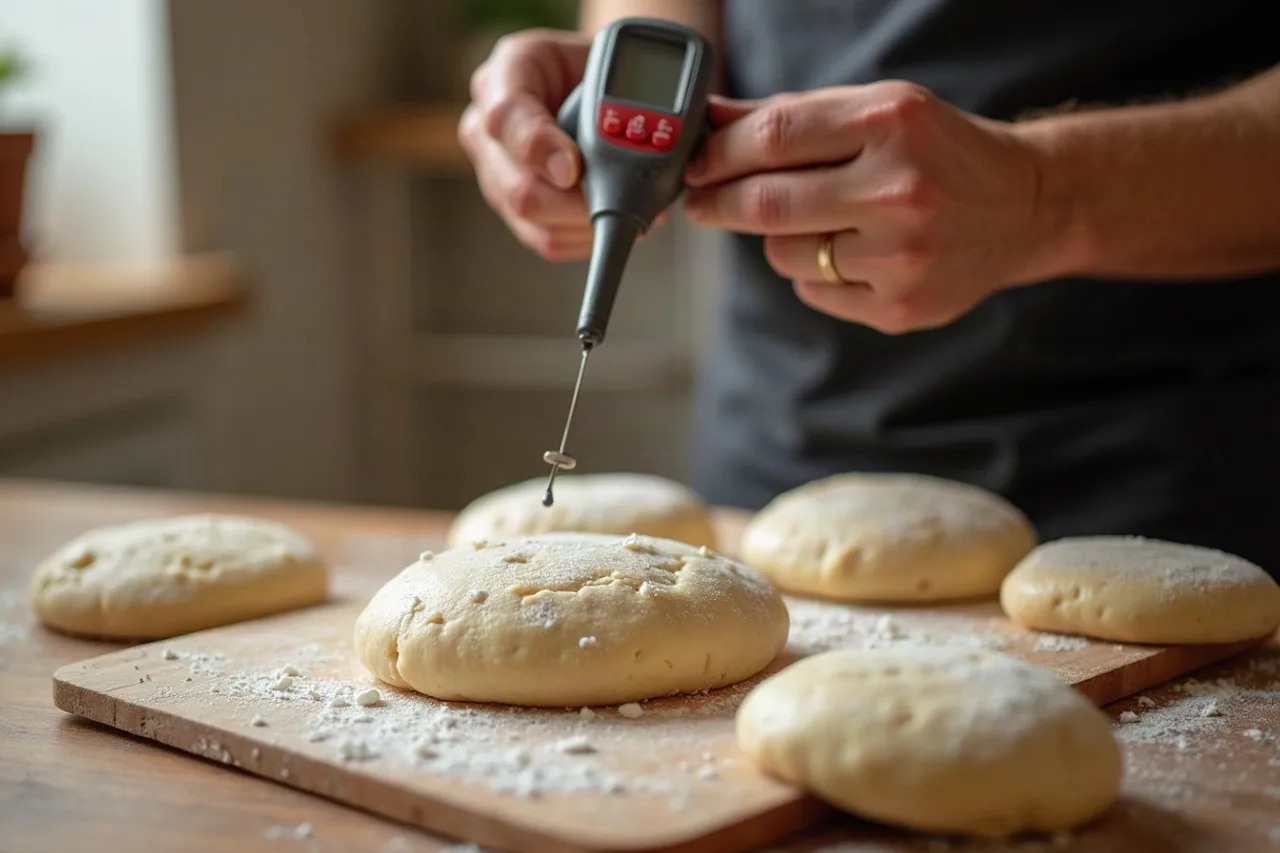
| Baking temperature | Internal temperature of the product: min. 75°C | Every batch | Temperature log, thermometer calibration |
| Cooling of creams and fillings | Cooling temperature: max. 4°C within 2 hours | Every batch | Cold room log, cooling time |
| Receiving raw materials | Delivery temperature, condition of packaging, expiry date | Every delivery | Raw material receipt register |
| Allergen control during portioning | Segregation of tools and surfaces, labelling | Every shift | Allergen checklist |
| Cleanliness of the packing line | Visual assessment of cleanliness, disinfection results | Before every shift | Cleaning and disinfection register |
| Storage of finished products | Storeroom temperature, humidity conditions | Daily | Storeroom temperature log |
A few important caveats. Products with raw fillings or egg-based creams require a separate approach - the microbiological risk here is higher and it may be necessary to carry out microbiological tests or to introduce additional OPRPs. For dry products (bread, rolls without filling) the main hazards are usually physical contamination and allergens, and baking temperature remains the key CCP.
Thermometer calibration is an element often overlooked, and inspectors check it regularly. A thermometer without a current calibration certificate undermines the credibility of all temperature logs.
What documents does Sanepid require from a bakery?
Complete HACCP documentation is not one document, but a set of linked registers and procedures. Below is a list of what Sanepid usually expects during an inspection, with a short description of the content of each element.
| Document | Content | Format |
|---|---|---|
| Description of activity and products | Profile of the establishment, list of products, consumer groups | .doc / .pdf |
| Process flow diagram | Diagram of production stages with the CCPs marked | .doc / .pdf |
| Hazard analysis and CCP/OPRP matrix | Table of hazards, risk assessment, assignment of a CCP or OPRP | .xlsx / .doc |
| Critical limits and monitoring procedures | Limit values for each CCP, description of measurement | .doc |
| Temperature logs (oven, cold room, storeroom) | Daily entries with date, time, signature | .xlsx / paper form |
| Cleaning and disinfection register | Plan and records of tasks carried out | .xlsx / paper form |
| Staff training register | Dates, modules, signatures of participants and the trainer | .doc / .pdf |
| GHP/GMP procedures | Instructions on personal hygiene, handwashing, clothing | .doc |
| Corrective action procedures | Scenarios for each CCP | .doc |
| Verification and audit protocols | Results of reviews, calibrations, internal audits | .doc |
| Allergen handling instruction | List of allergens, segregation procedures, labelling | .doc |
| Register of withdrawals and recalibrations | Non-conformity events, actions taken | .xlsx / .doc |
How does Sanepid assess these documents? Inspectors pay attention to three things: consistency of entries (whether dates and signatures match), continuity of registers (no gaps in the logs) and evidence of actual performance (e.g. whether the thermometer has a current calibration certificate). A document without signatures or with gaps in the dates is treated as no document at all.
Keep documents in editable formats (.doc, .xlsx or PDF forms) and always have an electronic copy. Keep paper registers in a binder available during the inspection - the inspector may ask to see them immediately after entering the establishment. You will find a detailed description of the required registers in the guide HACCP documentation - what it must contain.
What does Sanepid check during a bakery inspection?
A Sanepid inspector verifies both the documents and whether the procedures are actually applied in daily work. Below is a typical checklist worth reviewing before every inspection.
Documentation and registers:
- A complete set of HACCP documents (hazard analysis, CCPs, critical limits)
- Current temperature logs with signatures and no gaps
- Cleaning and disinfection register with the dates of performance
- Evidence of staff training (attendance lists, signatures, dates)
- Verification and internal audit protocols
Technical condition of the premises:
- Separation of clean and dirty zones (production zone vs. raw material receipt)
- Proper working order of refrigeration equipment and ovens (thermometers, seals)
- Free-flowing drains, condition of floors and walls (no damage that allows dirt to accumulate)
- Effectiveness of ventilation and lighting
Staff hygiene:
- Current sanitary-epidemiological examinations of employees
- Protective clothing (aprons, head coverings, gloves where required)
- Availability and condition of handwashing basins (soap, disposable towels)
- Evidence of training in hygiene procedures
Storage of raw materials and finished products:
- Correct temperatures in cold rooms and storerooms
- Separation of raw materials from finished products
- Legible labels with expiry dates and allergen information
- No expired products or damaged packaging
Allergen management:
- Allergen handling instruction available at the place of production
- Segregation of tools and contact surfaces
- Correct labelling of finished products
How to prepare staff and document training?
Well-trained staff is one of the most important elements of the HACCP system - and one of the most often checked during inspections. Industry practitioners confirm that signed attendance lists and evidence of training often decide the outcome of an inspection more than perfect but unused procedures.
The scope of induction training should include:
- GHP/GMP principles: personal hygiene, handwashing, protective clothing
- The establishment's HACCP procedures: CCPs, critical limits, what to do in the event of a deviation
- Allergen handling: segregation, labelling, communication with the customer
- Cleaning and disinfection procedures: products, concentrations, frequency
- Corrective actions: who decides, how to document the event
Carry out induction training before an employee is allowed to work independently. Organise refresher training at least once a year or after every change of procedures. Document every training session in the register: date, modules, name of the participant, signature of the participant and the trainer.
Pro tip: A short knowledge test after training (even 5 questions on a sheet of paper) significantly strengthens the evidence that the employee has actually become familiar with the procedures. Inspectors appreciate such an audit trail - it is something most bakeries do not do, and which sets a well-prepared establishment apart.
If you employ staff from abroad, make sure to provide training materials in their language - this helps avoid a situation in which an employee signs the attendance list without understanding the content of the training. You will find more in the post on training staff from abroad in foodservice.
How much does HACCP implementation in a bakery cost and how long does it take?
The costs and the implementation time depend mainly on three factors: the scale of production, the type of products (products with creams and fillings require a more extensive system) and the available staff resources.
Option 1: Preparing it yourself from scratch Low financial costs, but a significant investment of your own time. Requires knowledge of the regulations and the ability to create documents. Time: 1-4 weeks. Risk: formal errors, incomplete documentation.
Option 2: Buying editable templates A one-off fee for a ready package of documents. You fill the templates in with your establishment's details - product names, CCPs, limits, staff. Risk: minimal, if the templates comply with the current GIS and EU requirements.
Option 3: Consultations with an external expert or personalising the package A higher cost, but the expert adapts the documentation to the specifics of your establishment and verifies completeness. Time: 1-2 weeks. An option justified for complex production or after a negative inspection.
The principle of flexible application of HACCP, which GIS explicitly confirms, means that a small bakery producing standard bread without creams does not need documentation tailored to a large industrial establishment. A proportionate approach reduces both the costs and the complexity of the documentation - without compromising compliance with the regulations.
The decision criterion is simple: the riskier the products (creams, fillings, products with raw egg), the more detailed a system is justified. For a bakery producing mainly bread and rolls, a solid set of GHP/GMP with a few well-documented CCPs is enough.
What mistakes does Sanepid most often detect in a bakery?
Most non-conformities detected during inspections are not a lack of knowledge, but a lack of consistency in keeping records. Below are the most common mistakes and specific corrective actions.
-
No signatures in registers. An entry without a signature is, for the inspector, proof that the task was not carried out. Action: introduce a rule that every entry is signed by the person who carried out the task, on the same day. Appoint a person responsible for checking the completeness of the registers at the end of each shift.
-
No evidence of training. Verbal training without an attendance list does not exist in the inspector's eyes. Action: complete the missing attendance lists for past training (with the date it was actually held) and plan refresher training with full documentation.
-
Gaps in temperature logs. Missing days in the register suggest that monitoring was not carried out. Action: appoint a specific person responsible for the daily entries and set a reminder (e.g. a phone alarm). Filling in logs retroactively is unacceptable.
-
Inadequate storage of raw materials. Flour stored next to cleaning products or finished products not separated from raw materials are typical non-conformities. Action: mark the storage zones, photograph the layout of the storeroom and attach the description to the GHP documentation.
-
No allergen procedures. Unlabelled allergens in finished products or no instruction on segregating tools. Action: develop or update the allergen handling instruction and make sure it is available at the place of production.
-
Out-of-date thermometer calibration. A thermometer without a valid certificate undermines all temperature logs. Action: check the calibration dates and commission recertification before the inspection.
Document every corrective action in the non-conformity register: date of detection, description of the problem, action taken, closing date and the signature of the responsible person.
A 7-day plan before a Sanepid inspection
A week before an inspection is enough time to fill in the gaps and make sure the documentation is complete. Below are the priorities for each day.
-
Day 7. Review all the HACCP documentation: check that the hazard analysis, the CCP matrix and the critical limits are current and signed. Identify gaps in the temperature logs from the last 3 months.
-
Day 6. Fill in the missing register entries (only those that can be completed truthfully). Check the thermometer calibration dates - if they are out of date, commission calibration immediately.
-
Day 5. Carry out a technical review of the premises: condition of floors, walls, seals in refrigeration equipment, free flow of drains. Draw up a list of defects and take corrective action where possible.
-
Day 4. Organise refresher training for staff. Go through the HACCP procedures, allergen handling and corrective actions. Collect signatures on the attendance list.
-
Day 3. Check the cleaning and disinfection register for the last 4 weeks. Fill in any missing entries and make sure the disinfectants have current safety data sheets.
-
Day 2. Carry out an internal audit: walk through the establishment with the inspector's checklist and assess each point. Record the results in an internal audit protocol with a date and signature.
-
Day 1. Check the labels on finished products (allergens, expiry dates), the order in the clean zones and the availability of documents. Put together a binder to show the inspector: hazard analysis, temperature logs, training register, cleaning register, internal audit protocol, thermometer calibration certificates.
Why is simple HACCP enough for a small bakery?
Many bakery owners assume that HACCP is a multi-page system reserved for large industrial establishments. This is a misconception that leads either to excessive implementation costs or to giving up entirely - because "it is too complicated".
Regulation (EC) No 852/2004 and the EU guidance (C 355/01) explicitly confirm that HACCP implementation should be proportionate to the scale and nature of the activity. For small establishments, GHP/GMP can effectively replace the monitoring of formal CCPs where the hazard is controlled by good hygiene practices. GIS stresses that small businesses do not have to implement an overly complicated system.
In practice this means that a bakery producing standard bread can base its system on a solid set of GHP/GMP procedures with one or two formally designated CCPs (baking temperature, cooling of creams). The remaining hazards are controlled by rigorous compliance with hygiene procedures and by documenting them.
Sanepid inspectors verify not only what is written in the documents, but above all whether the procedures are actually applied. Signed attendance lists from training, complete temperature logs and a cleaning register without gaps tell the inspector more than an elaborate hazard analysis that nobody reads day to day.
For establishments aiming for ISO 22000 certification, a simplified HACCP system is a good starting point that can be extended in stages. GastroReady offers editable templates that meet the requirements of GIS and Regulation (EC) No 852/2004, which make it easier to prepare documentation and help reduce the risk of formal non-conformities - especially important for owners who do not have the resources for a full implementation from scratch. You will find more about the simplified approach to a food safety system in the article HACCP for small foodservice.
Key takeaways
A proportionate HACCP system based on GHP/GMP, a few well-documented CCPs and complete registers with signatures is a sufficient basis for passing a Sanepid inspection in a small or medium-sized bakery.
| Point | Details |
|---|---|
| Flexible application of HACCP | GIS and Regulation (EC) No 852/2004 allow a simplified system proportionate to the scale of the establishment. |
| Key CCPs in a bakery | Baking temperature, cooling of creams and allergen control are the most important critical points to monitor. |
| Documentation with signatures | Temperature logs, the cleaning register and training attendance lists must have dates and signatures - without them the document does not exist for the inspector. |
| Implementation time with templates | A ready, editable package of documents reduces the preparation time compared with several weeks of working on your own. |
| GastroReady | A package of editable HACCP/GMP templates that meet the requirements of GIS and the EU. |
Simple systems work - if they are applied consistently
A common mistake in the industry is not a lack of documentation, but documentation detached from reality. A beautifully bound binder with a hazard analysis that lies in a drawer, while the temperature logs are filled in once a week from memory - that is a recipe for a negative inspection.
Simple systems work. A bakery with a one-page hazard analysis, a temperature log kept daily and signed attendance lists from training has a system that actually works, unlike an establishment with extensive documentation that nobody uses. Inspectors know how to tell a living system from paper decoration.
Start with the most important records: the oven temperature log, the cleaning register, the training attendance list. Complete the documentation in stages, adapting it to the actual processes in your bakery. Every further document that you implement and actually use strengthens your position during an inspection.
A ready HACCP documentation package for your bakery
Preparing HACCP documentation from scratch takes weeks and requires knowledge of regulations that change more often than most bakery owners have time to follow. GastroReady solves this problem differently.
The GastroReady package is ready-made HACCP and GMP documentation in editable formats that you adapt to the specifics of your establishment.
Instead of weeks of your own work, you fill in the ready templates with your bakery's details and build your bakery's documentation on them. Review the contents of the package and order the documentation at gastroready.pl - with no long-term commitments, a one-off fee with a lifetime licence for use.
Useful sources and links for bakeries in Poland
Below is a list of authoritative sources worth having at hand during implementation and when updating the HACCP system.
Legal and regulatory sources:
- Hygiene requirements - the HACCP system (Chief Sanitary Inspectorate) - official GIS guidelines on the obligations of food business operators, the principle of flexible application of HACCP.
- Regulation (EC) No 852/2004 of the European Parliament and of the Council - the legal basis for the obligation to implement HACCP across the EU food sector.
- EU guidance on implementing food safety management systems (C 355/01) - practical guidance from the European Commission, including an explanation of the relationship between GHP, OPRPs and CCPs.
Practical and industry materials:
- The seven principles of the HACCP system on the example of a bakery industry enterprise (Scientific Papers of Poznan University of Technology) - an academic study with examples of HACCP implementation in a bakery, available free of charge.
- Analysis of the functioning of the HACCP system in a selected bakery - a case study with practical conclusions on documentation and monitoring.
- Difficulties in operating a HACCP system (Lower Silesian Digital Library) - an analysis of the most common implementation problems, useful for identifying risk areas.
- HACCP manual for bakeries (Scribd) - a practical manual with document templates and examples of registers.
Download the legal documents and compare their requirements with your own documentation - it is the fastest way to identify gaps before a Sanepid inspection.