Used cooking oil disposal: BDO, KPO and rules
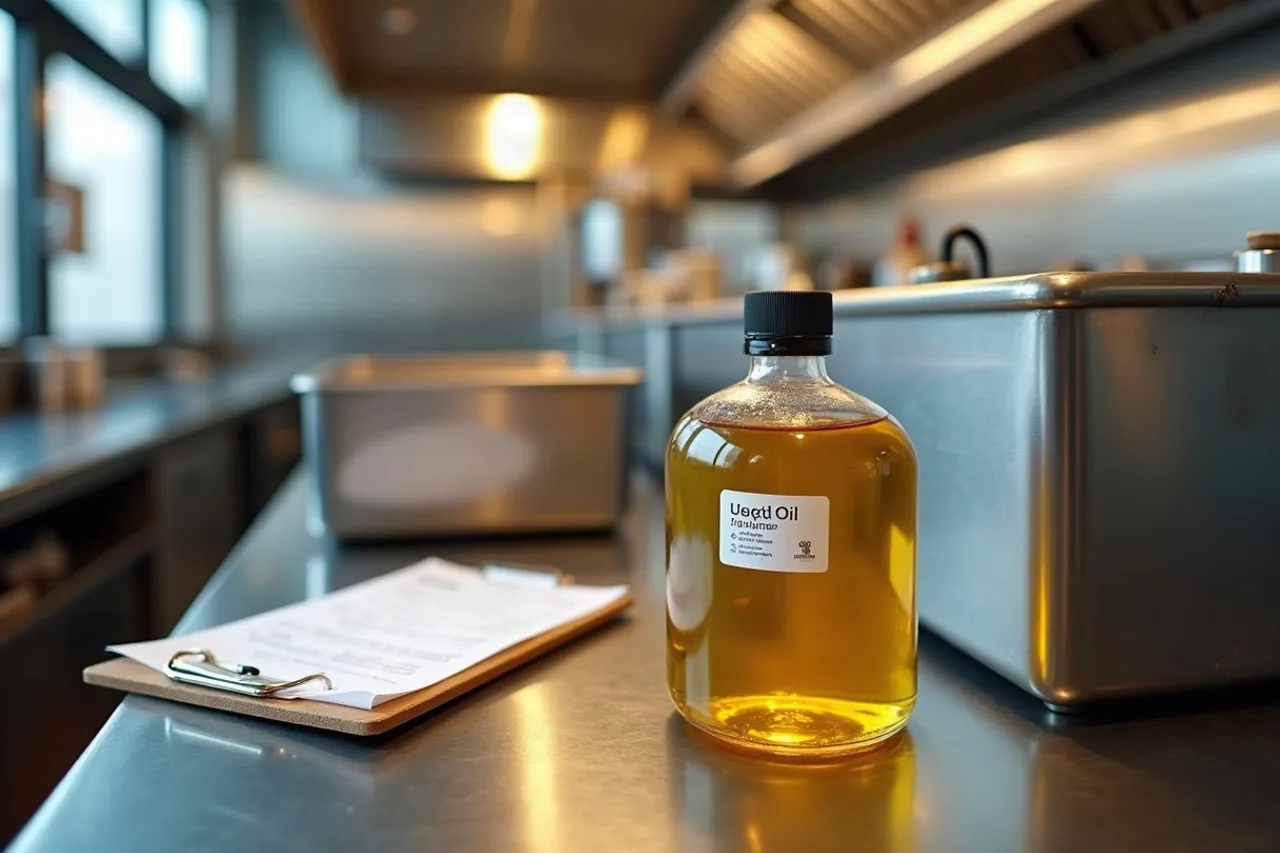
Does a restaurant need a BDO entry and a KPO for fryer oil? We explain based on the BDO announcements and suggest which documents to keep.
"The oil collection company says we will be fined without a KPO and a BDO account" - business owners ask about this a lot. The short answer: according to announcements published on the BDO website, used fryer oil produced while providing foodservice is municipal waste with code 20 01 25. Producers of municipal waste do not keep records of it, so the oil alone does not require a restaurant to register in BDO (Poland's waste database register) or to issue a waste transfer card (KPO). The records are kept by the entity that collects the oil. The exception is waste from edible oils used for industrial purposes.
Below: what this position is based on, when things look different and what is still worth having in your business's documentation.
Key points
- Code 20 01 25 (edible oil and fat) is the classification indicated for oil from foodservice in the announcement of 30 December 2020 on the BDO website.
- No KPO and no registration because of the oil. Producers of municipal waste are exempt from keeping waste records (Art. 66(4)(1)(a) of the Act on Waste), and registration on application applies to producers who are obliged to keep records (Art. 50(1)(5)(e)).
- The collector keeps the records. The supplement to the announcement of 9 March 2021 states that when a specialised entity collects the oil, the records belong to the collecting entity, and transport alone does not require a KPO in BDO.
- Exception: industrial use. Then the code is different (e.g. from group 02 03), and BDO registration and record keeping are mandatory.
- Hygiene still applies. As food waste, the oil is subject to the requirements of Regulation (EC) No 852/2004: closable containers and quick removal from rooms where food is handled.
What the BDO announcements say about used oil
On 30 December 2020 the Ministry of Climate and Environment published on the bdo.mos.gov.pl website an answer to the question of how to classify used edible oils from non-residential properties, such as catering outlets. The ministry found that oil produced while providing foodservice is municipal waste with code 20 01 25. Such waste can be handed over within the municipal system (if the municipality has included non-residential properties in it) or to an entity collecting municipal waste that is entered in the register of regulated activity.
The same announcement states that producers of municipal waste do not need to obtain an entry in the BDO Register or submit reports in this respect, provided they produce only municipal waste. The records are kept by the entity that takes over the waste.
The supplement of 9 March 2021 concerns companies that collect the oil only. The ministry treats this as one-off collection of separated waste, not as collection of municipal waste from a property owner. The duty to keep records lies with the collecting entity, which notes that it took the waste over from a holder exempt from record keeping. Transport alone does not require generating a KPO in BDO.
Note: the exemption concerns the oil. A business may be subject to BDO registration for other reasons, e.g. placing products in packaging on the market or single-use plastic packaging. We cover this in the article on BDO obligations in foodservice.
When oil is treated differently
The announcement of 30 December 2020 distinguishes the use of edible oils for industrial purposes. Waste from such activity is classified under a code other than 20 01 25, e.g. from group 02 03 (waste from the preparation and processing of food products). In that case an entry in the BDO Register is required, records via KPO (and, above the quantity thresholds given in the announcement, also a waste record card) and an annual report.
For a typical restaurant, bar or food truck this variant usually does not apply. However, if the collector enters a code other than 20 01 25 on its documents, ask on what basis, because your obligations depend on the code.
Oil as catering waste in EU law
Commission Regulation (EU) No 142/2011 (Annex I, point 22) defines catering waste as all waste food, including used cooking oil, from restaurants, catering facilities and kitchens. Regulation (EC) No 1069/2009 classifies it as Category 3 material (Art. 10(p)), but at the same time excludes catering waste from its scope (Art. 2(2)(g)), unless it is destined for feed, for pressure sterilisation or other specified processing methods, for biogas or composting, or comes from means of transport operating internationally.
The practical conclusion for a business: do not give oil or leftovers away to feed farmed animals. Art. 11(1)(b) of Regulation 1069/2009 prohibits feeding farmed animals (other than fur animals) with catering waste. We did not check the requirements EU law places on the collector depending on what the oil is used for next.
Hygiene: what Regulation (EC) No 852/2004 requires
Annex II, Chapter VI of Regulation (EC) No 852/2004 deals with food waste in the establishment. It follows that waste:
- is removed from rooms where food is present as quickly as possible,
- is kept in closable containers that are easy to clean and, where necessary, to disinfect,
- is collected according to adopted rules, and the storage area is kept clean and protected against pests,
- is eliminated in a hygienic and environmentally friendly way, in line with the law, so that it is not a source of contamination.
Pouring oil down the sink does not meet the last condition. We did not check sewerage rules or local wastewater discharge regulations, so we do not give any penalties for this here.
In practice: what is worth having
No KPO does not mean no paperwork. These items keep the topic in order and show Sanepid (the State Sanitary Inspection) that waste is under control:
- Contract with the collector. Scope (oil only, code 20 01 25), how containers are supplied, collection arrangements. Check who the collector is and whether it appears in the public BDO register.
- Collection confirmations. A document from the collector with the date and quantity for each collection. It is not a KPO, but it lets you show where the oil went.
- Entry in the HACCP or GHP (Good Hygiene Practice) book. A procedure for handling oil (cooling, pouring into a closable container, storage area away from food, person responsible) and a register (record) of collections. We write about keeping registers in the article on HACCP registers.
- Oil change register. The polar compound content of frying fat must not exceed 25% (§ 2 of the Ordinance of the Minister of Health of 25 September 2012, Journal of Laws (Dz.U.) 2012, item 1096). How to measure and document oil changes is described in the article on changing frying oil.
- Team training. Everyone who operates the fryer should know the procedure. You will find a training template in the article on health, safety and hygiene training in foodservice.
Consistency matters: if the register shows regular oil changes but there are no collection confirmations for the same period, that is a gap you should be able to explain.
Frequently asked questions
Does a foodservice business need a BDO entry because of used oil?
According to the announcements published on the BDO website, no. Oil from foodservice is municipal waste with code 20 01 25, and producers of municipal waste are exempt from record keeping. A business may, however, need an entry for other reasons, e.g. packaging.
Is a KPO required when oil is collected?
Not for oil with code 20 01 25 collected by a specialised entity. The supplement to the announcement of 9 March 2021 states that transport does not require a KPO in BDO, and the records are kept by the collecting entity.
When does oil require a KPO and a BDO entry?
When edible oils are used for industrial purposes. In that case the announcement indicates a code other than 20 01 25, e.g. from group 02 03, together with the duty to register, keep records and report.
Is used oil from a restaurant Category 3 material?
Regulation (EC) No 1069/2009 classifies catering waste as Category 3 material, and under the definition in Regulation (EU) No 142/2011 it includes used cooking oil. However, Regulation 1069/2009 excludes it from its scope unless it is destined, among other things, for feed, biogas or composting. Feeding it to farmed animals is prohibited.
Legal status as of: 12 November 2026
Legal basis: Act of 14 December 2012 on Waste (consolidated text Dz.U. 2026, item 1328, legal status as of 24 August 2026), Art. 50(1)(5)(e) and Art. 66(4)(1)(a); announcement on the classification of used edible oils from catering outlets (code 20 01 25) published on the BDO website (bdo.mos.gov.pl) on 30 December 2020 (its content matches a document of the Waste Management Department of the Ministry of Climate and Environment available on gov.pl) and its supplement of 9 March 2021; Regulation (EC) No 1069/2009, Art. 2(2)(g), Art. 10(p), Art. 11(1)(b); Commission Regulation (EU) No 142/2011, Annex I, point 22; Regulation (EC) No 852/2004, Annex II, Chapter VI; Ordinance of the Minister of Health of 25 September 2012 (Dz.U. 2012, item 1096), § 2. The review of 12 November 2026 covered the content of both announcements on the BDO website, the cited provisions of the Act on Waste in the consolidated text, the original text of the cited EU provisions in the Official Journal of the EU and the status of the ordinance Dz.U. 2012, item 1096 in the Sejm's ELI register. We did not check amendments to the Act on Waste published after the consolidated text, consolidated versions of the EU provisions or the rules on wastewater discharge.
Last review: 12 November 2026
Need complete HACCP documentation?
With GastroReady you get a ready-made package of HACCP, GMP (Good Manufacturing Practice) and GHP documentation. Documents are sent by e-mail after payment. From 299 PLN.