HACCP for a Kebab Shop: Rotisserie and CCPs
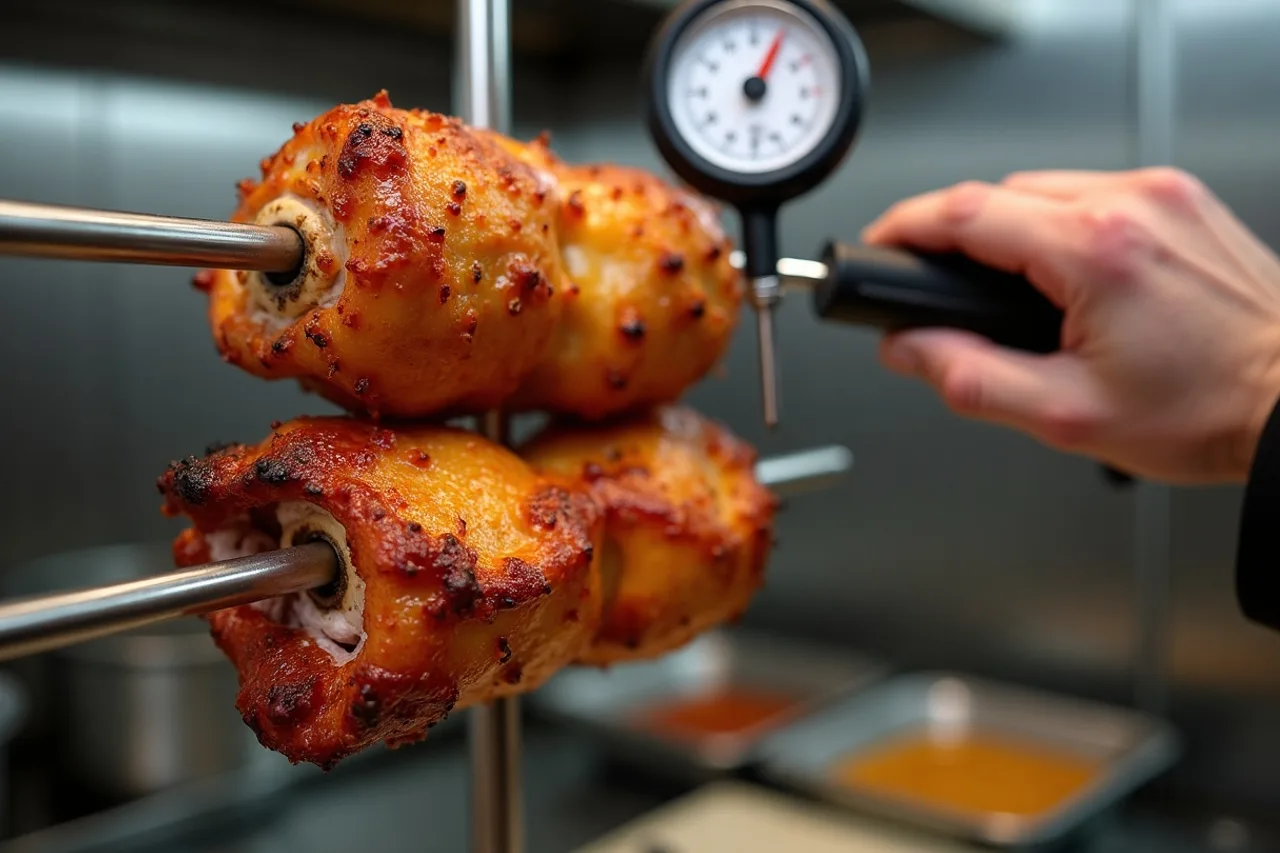
A kebab shop's whole HACCP revolves around the rotisserie. See where the CCP sits, what temperature to reheat meat to, and what to actually log.
HACCP for a Kebab Shop: Rotisserie, Temperatures and Critical Control Points
In a kebab shop the whole HACCP system revolves around one thing: the meat on the vertical rotisserie. It is an unusual process - the meat roasts in layers over many hours, the outer part is done while the core of the block is still raw. That makes the rotisserie a classic critical control point (CCP), and the inspector will want to know how you stay in control of it. This article shows how to build HACCP for a kebab shop: where the critical points are, which temperatures to watch, and what to actually write in the records.
If you are still opening the shop, start with how to open a kebab shop - Sanepid, premises inspection and documents. Here we go deeper into the documentation itself.
The essentials
- The rotisserie is a CCP - the control is the temperature inside the layer you slice, not how the meat looks.
- Slice only the outer, fully cooked layer - the core of the block stays raw until it is roasted.
- Reheated meat must reach ≥75°C at the coldest point - a safe reference value for poultry and minced meat.
- Salads and sauces are separate points - you control storage temperature and time since opening.
- A record with no entries means no system in the inspector's eyes, even if the documentation is perfect.
Why the rotisserie is a critical point
In a normal kitchen you cook a portion of meat as a whole - put it in, cook it, take it out. The rotisserie works differently. The block of meat turns by the heating element for hours while you slice thin layers off the outside. That means two hazards:
- Undercooking - slicing a layer that has not reached a safe temperature inside.
- Danger zone - parts of the block sitting too long at 5-60°C, where bacteria multiply fastest.
That is why the rotisserie comes out as a CCP in the hazard analysis: there is a step where you genuinely eliminate the hazard (heat treatment) and it can be measured. How critical points are determined in general is explained in CCP in foodservice - how to determine them.
The temperatures you need to know
Meat safety depends on a combination of temperature and time. In practice in a kebab shop you work with three values:
- ≥75°C at the coldest point - a safe temperature for fully cooked meat (poultry, minced meat). This is the value you reheat to and verify with a probe thermometer.
- below 5°C - storing raw meat, salads and sauces in the fridge.
- the 5-60°C zone - the range in which food should not sit longer than necessary; the shorter, the better.
A calibrated probe thermometer is the basic tool - without it a CCP is just theory. The full set of values is in the storage and processing temperature table.
How to control rotisserie meat - step by step
- Slice only the outer layer. Take slices off only once the outer part is golden and cooked through. The core of the block stays raw until its turn at the heating element.
- Check the temperature of the slices. From time to time (e.g. at the start and during the rush) measure the temperature of freshly sliced meat with a probe thermometer. That is your CCP measurement.
- Do not slice "in advance". Meat sliced and set aside in a container quickly drops into the danger zone. Slice to order or keep it in hot holding.
- Reheat to ≥75°C. If rotisserie meat is to be used later (e.g. finished on a pan or grill), it must reach ≥75°C inside - and you measure that too.
- End-of-day decision. Define in the procedure what happens to the meat on the rotisserie after closing. The simplest and safest: do not keep a partly roasted block until the next day.
Salads and sauces - the second front
Meat is not the only hazard. In a kebab shop the toppings matter just as much, because they are served cold and often prepared in advance.
Salads. Cabbage, cucumber, tomato, onion - sliced and kept in the fridge below 5°C. Set a shelf life (e.g. prepared the same day) and do not top up a fresh batch into an old one in the same container.
Sauces. Mayonnaise- or garlic-based sauces are a bacteria-friendly environment if they sit in the warmth. Keep them chilled, mark the opening date and discard them after a set time. A sauce left out on the counter "all day" is a typical non-compliance.
What to actually write in the records
The documentation describes what you do; the record proves you do it. For a kebab shop the minimum - all of it included in a professional HACCP documentation package - is:
- Fridge and freezer temperature log - daily. How to keep it without copy-pasting is covered in the fridge temperature log HACCP.
- Rotisserie CCP measurement - temperature of sliced/reheated meat, with date and signature.
- Cleaning and disinfection - slicer, knives, rotisserie, surfaces. The template and logic are in cleaning and disinfection - a procedure that works.
- Goods receipt - meat temperature on delivery, use-by dates.
The most common mistake is records filled in "in advance" with the same pen at the end of the week. The inspector spots it. One real measurement a day beats ten invented ones.
The most common HACCP mistakes in a kebab shop
- "Foodservice" documentation with no mention of the rotisserie. A generic internet template describes neither the vertical rotisserie nor reheating - and that is the heart of your process.
- No probe thermometer. A CCP without a measurement does not exist. "By eye" is not a verification method.
- Slicing in advance. A container of meat on the counter during the rush is a direct route to the danger zone.
- Sauces out of the fridge. A garlic sauce "to hand" all day is a classic non-compliance.
- Empty records. Perfect documentation and zero entries = a paper-only system.
FAQ
Is a kebab rotisserie a CCP?
Yes. The heat treatment of meat on the rotisserie is a step where you eliminate a biological hazard, and it can be measured (the temperature inside the layer you slice). In a kebab shop hazard analysis the rotisserie almost always comes out as a critical control point.
To what temperature should kebab meat be heated?
The safe reference value for fully cooked meat (poultry, minced meat) is at least 75°C at the coldest point. You verify this temperature with a probe thermometer when reheating the meat.
How long can salads and sauces be kept in a kebab shop?
Keep salads and sauces in the fridge below 5°C and set a shelf life for them (most often prepared the same day, sauces marked with the opening date). Write the specific times into the procedure and stick to them - those are the proof at an inspection, not declarations.
Ready-made HACCP tailored to a kebab shop
The hardest part of kebab documentation is describing the rotisserie, reheating and handling of sauces so it matches the real process - rather than being a copy of a generic template. The Fundament package from GastroReady gives you ready HACCP, GHP and GMP procedures plus records that you adapt to the rotisserie meat, salads and sauces on your menu.
Need HACCP tailored to a kebab shop?
GastroReady offers ready-made HACCP, GHP and GMP templates with records and instructions - you adapt them to the rotisserie, salads and sauces in a few hours instead of building from scratch.