How to Open a Kebab Shop in Poland 2026
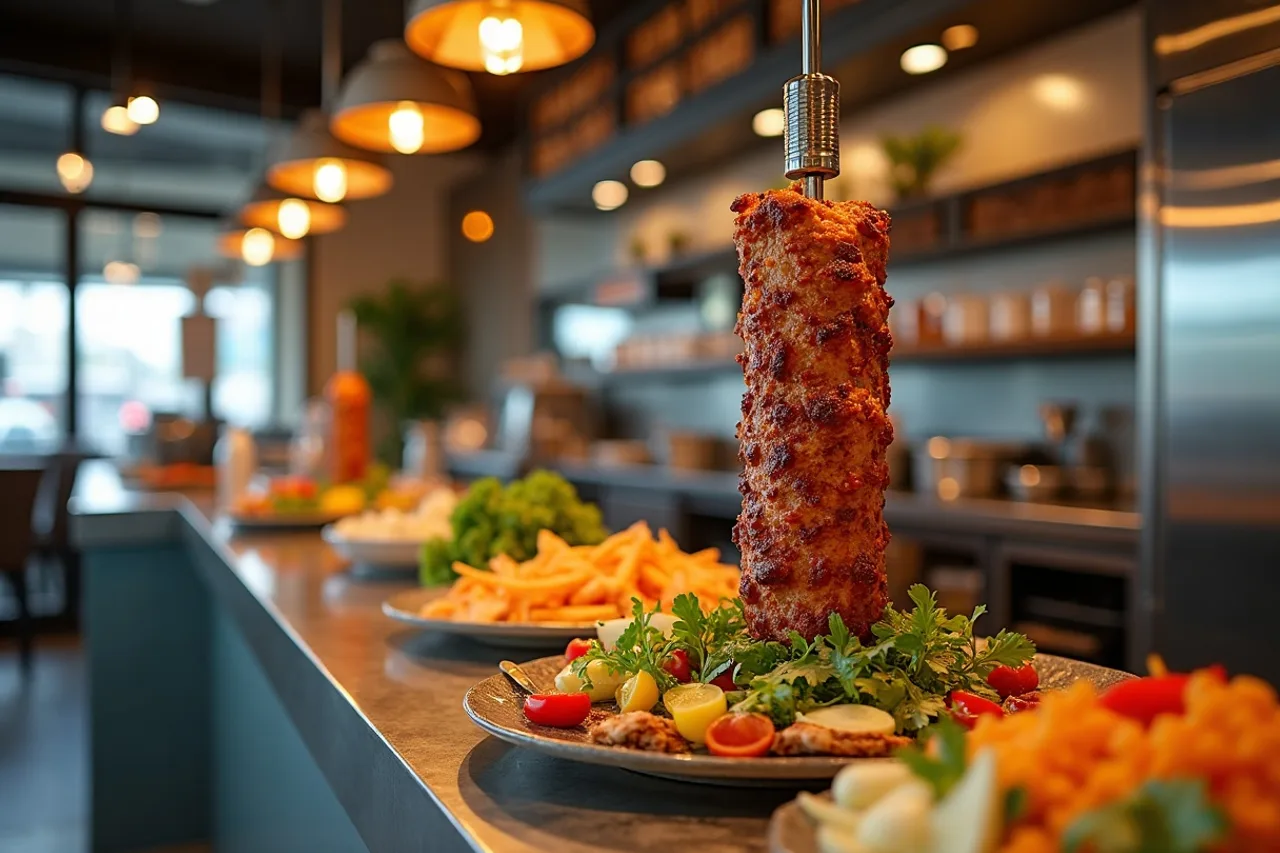
From CEIDG through the premises inspection to HACCP documentation. See what to arrange, in what order and how much opening a kebab shop legally costs.
How to Open a Kebab Shop in Poland 2026: Sanepid, Premises Inspection and Documents Step by Step
To legally open a kebab shop in Poland in 2026 you go through five stages: registering your business in CEIDG, adapting the premises to sanitary requirements, notifying Sanepid and passing the premises inspection, preparing HACCP documentation, and getting sanitary-epidemiological medical clearance for yourself and your team. A kebab shop has its own quirks - the vertical rotisserie, the salads, the cold sauces - that an inspector watches more closely than an average kitchen. This guide walks you through the whole thing in order: what to arrange, where, in what sequence, and how much it costs.
No filler and no scaremongering. Every one of these points is manageable - as long as you know what to expect at the premises inspection.
The essentials
- A kebab shop is a full food business - the same rules apply as to a restaurant: the Polish Food Safety Act and Regulation (EC) No 852/2004.
- You notify Sanepid at least 14 days before opening and wait for the premises inspection and the decision approving the establishment.
- HACCP documentation is mandatory from day one - the inspector wants to see it at the inspection, before you sell your first kebab.
- Rotisserie, extraction hood, hand-wash basins and back-of-house are the four things new shops most often fail on at inspection.
- Sanitary-epidemiological clearance is required for everyone who handles food - including you as the owner.
Step 1: Register the business and choose the right activity code
You start by registering your business in CEIDG. It is free and takes a day - you file online at biznes.gov.pl or at the municipal office.
For a fixed-location kebab shop the correct code is 56.10.A (restaurants and other fixed-location food outlets). If you also plan a mobile stand or trailer, add 56.10.B (mobile food outlets) - you can hold both. For a classic kebab shop, 56.10.A is enough.
The business address is the address of the premises where you will operate. This matters because Sanepid registers you by the location of the establishment, not your home address.
Step 2: The premises - what Sanepid checks at the inspection
This is the hardest stage because it costs the most and most often delays the opening date. The inspector does not judge whether the place looks nice - they check whether you can safely produce food in it. Here is what they look at most often in a kebab shop:
Rotisserie and meat handling
The vertical rotisserie for gyros/döner is the heart of a kebab shop and the point that raises the most questions. The inspector wants to know how you control the heat treatment of the meat and how you handle the meat that stays on the spit between portions. That deserves its own article - we cover it in HACCP for a kebab shop: rotisserie, temperatures and critical points.
Extraction hood and ventilation
The rotisserie and fryer produce a lot of heat, smoke and grease. You need a working extraction hood vented outside and ventilation that does not push smells into neighbouring units or flats. This is a common dispute at inspection, especially in tenement buildings.
Hand-wash basins and sinks
This is a classic failure point. You must have a separate basin used only for hand washing (with hot water, soap in a dispenser and single-use towels) - kept apart from the sinks where you wash produce and dishes. One "all-purpose" sink is a non-compliance.
Back-of-house, storage and zones
You need space for receiving and storing goods (dry storage separate from chilled/frozen), a staff area (a place to change), and a toilet. Work surfaces, walls and floors must be washable and easy to disinfect. In a small unit you often separate the "dirty" and "clean" zones in time rather than in space - and that has to be described in the documentation too.
We gathered the full list of premises requirements in sanitary requirements for food premises. Go through it before you sign a lease - walking away from a bad unit is cheaper than rebuilding it for Sanepid.
Step 3: Sanepid notification and premises inspection
Under the Polish Food Safety Act you must notify the district sanitary-epidemiological station at least 14 days before starting. You file an application to approve the establishment and enter it in the register of establishments subject to official food control.
What happens next:
- You file the application (company details, premises address, type of activity, description of the premises and menu).
- The inspector arranges a premises inspection - they come in person and check the points from Step 2.
- You show the premises and your prepared HACCP/GHP/GMP documentation with blank records.
- After a positive inspection you receive the approval decision - your official document that you may operate.
- If the inspector flags gaps, you get time to fix them. That is a normal part of the process, not the end of the world.
The most common mistake here: people notify at the last minute or only after opening. If you start serving kebabs without the approval decision, you are operating illegally - and an inspection at the start can order you to stop. When exactly to notify is explained in opening a food business and Sanepid - when to notify.
Step 4: HACCP documentation for a kebab shop
HACCP is not optional - it is a legal obligation for anyone who produces or serves food. The inspector wants to see the documentation at the premises inspection, even if you have not started selling yet.
For a kebab shop the documentation should include:
- A description of the premises and the activity (menu, processes, equipment).
- GHP procedures - hand washing, surface cleaning, staff hygiene, cleaning and disinfection.
- GMP procedures - goods receipt, storage, heat treatment of rotisserie meat.
- A hazard analysis and critical control points (CCP) - in a kebab shop the heat treatment and reheating of meat are key.
- Records - fridge and freezer temperatures, cleaning and disinfection, goods receipt.
- Workstation instructions for staff (often in PL and EN, as kebab-shop teams are frequently mixed).
It sounds extensive, but for a small shop with a few menu items the system is simpler than for a large restaurant. The most common mistake is downloading a generic "foodservice" document that describes neither the rotisserie nor your processes. The inspector spots it instantly. A ready-made HACCP documentation package for small foodservice gives you a base built to be adapted to your menu instead. How the critical points look specifically for rotisserie meat is laid out in HACCP for a kebab shop.
Step 5: Sanitary-epidemiological clearance
Everyone who handles food must hold a current medical certificate for sanitary-epidemiological purposes - you as the owner included.
- You go to an occupational-medicine doctor or the infectious-diseases unit of the sanitary-epidemiological station.
- Usually it is a stool test for Salmonella and Shigella carriage plus a general examination.
- Cost: typically PLN 80 to 200 per person.
- The stool test result can take a few days - do not leave it to the last minute.
Kebab specifics: rotisserie, salads and sauces
Three things set a kebab shop apart from an ordinary kitchen, and these are what the inspector watches most closely:
Rotisserie meat. The meat is cooked gradually, layer by layer, and part of it stays on the spit for many hours. That requires temperature control and a clear rule for handling meat not used by the end of the day.
Salads. Cabbage, cucumber, tomato - prepared in advance and kept in the fridge. Storage temperature and shelf life are a typical control point. The storage and processing temperature table will help.
Cold sauces. Mayonnaise- or garlic-based sauces are a bacteria-friendly environment if they sit in the warmth. The inspector will check how you store them and how long you keep opened packs.
We gathered the most common non-compliances during a kebab inspection - and how to avoid them - in a separate article: a kebab shop and the Sanepid inspection.
How much it costs to open a kebab shop
Costs split into official (small) and real (premises and equipment):
- CEIDG and Sanepid notification - free.
- Sanitary-epidemiological tests - PLN 80-200 per person.
- Adapting the premises - the most variable item: hood and ventilation, basins, washable surfaces, refrigeration. The amounts depend on the state of the unit.
- Equipment - rotisserie, fryer, fridges, refrigerated display.
- HACCP documentation - if you do not write it yourself, ready-made templates are many times cheaper than a bespoke job by a consultant.
How the options for preparing documentation compare, and what actually pays off, is laid out in how much HACCP implementation costs - a comparison.
The most common mistakes when opening a kebab shop
- Signing the lease before checking the premises against Sanepid rules. A missing hood, a single basin or no back-of-house can eat a budget you never planned for.
- Starting without the approval decision. "I'll earn first and register later" is the costliest mistake. An inspection at the start can halt the business.
- HACCP documentation downloaded from the internet. A generic file that describes neither the rotisserie nor your menu is recognised instantly.
- Empty records. You have the documentation, but nobody logs the temperatures. That signals a system that exists only on paper.
- No hot water at the hand-wash basin. A surprisingly common problem - a tank or heater that was never switched on.
FAQ
Which activity code for a kebab shop?
For a fixed-location kebab shop the correct code is 56.10.A (restaurants and other fixed-location food outlets). If you also run a mobile stand or trailer, add 56.10.B (mobile food outlets). You can hold both at once.
Does a kebab shop need HACCP?
Yes, absolutely. A kebab shop is a food business, so the same rules apply as to a restaurant - including the obligation to implement and maintain a HACCP system (the Polish Food Safety Act and Regulation (EC) No 852/2004). The inspector wants to see the documentation at the premises inspection.
How long does it take to open a kebab shop?
Registering the business is one day. The longest part is adapting the premises and the Sanepid procedure - you notify at least 14 days before starting, then wait for the inspection and the approval decision. Realistically, if the premises need work, allow from a few weeks to a few months.
Can I open a kebab shop in premises previously used by another food business?
Yes, and it is often the quickest route - such premises usually already have a hood, back-of-house and washable surfaces. Remember, though, that you still have to notify your own establishment to Sanepid and pass the inspection; the previous tenant's decision does not transfer to you.
Ready-made HACCP documentation for a kebab shop
Building HACCP documentation from scratch is several days of work and the risk of missing something exactly where the inspector looks. The Fundament package from GastroReady is a ready set of HACCP, GHP and GMP documents for small foodservice - with records, workstation instructions and a hazard analysis you adapt to the rotisserie, salads and sauces on your menu.
Instead of building the system from scratch, start from a proven base and focus on what you do best.
Opening a kebab shop and need HACCP documentation?
GastroReady offers ready-made HACCP, GHP and GMP templates for small foodservice - with records and instructions you adapt to your premises and menu. From 299 PLN, with PL/EN instructions.