HACCP for School and Preschool Canteens
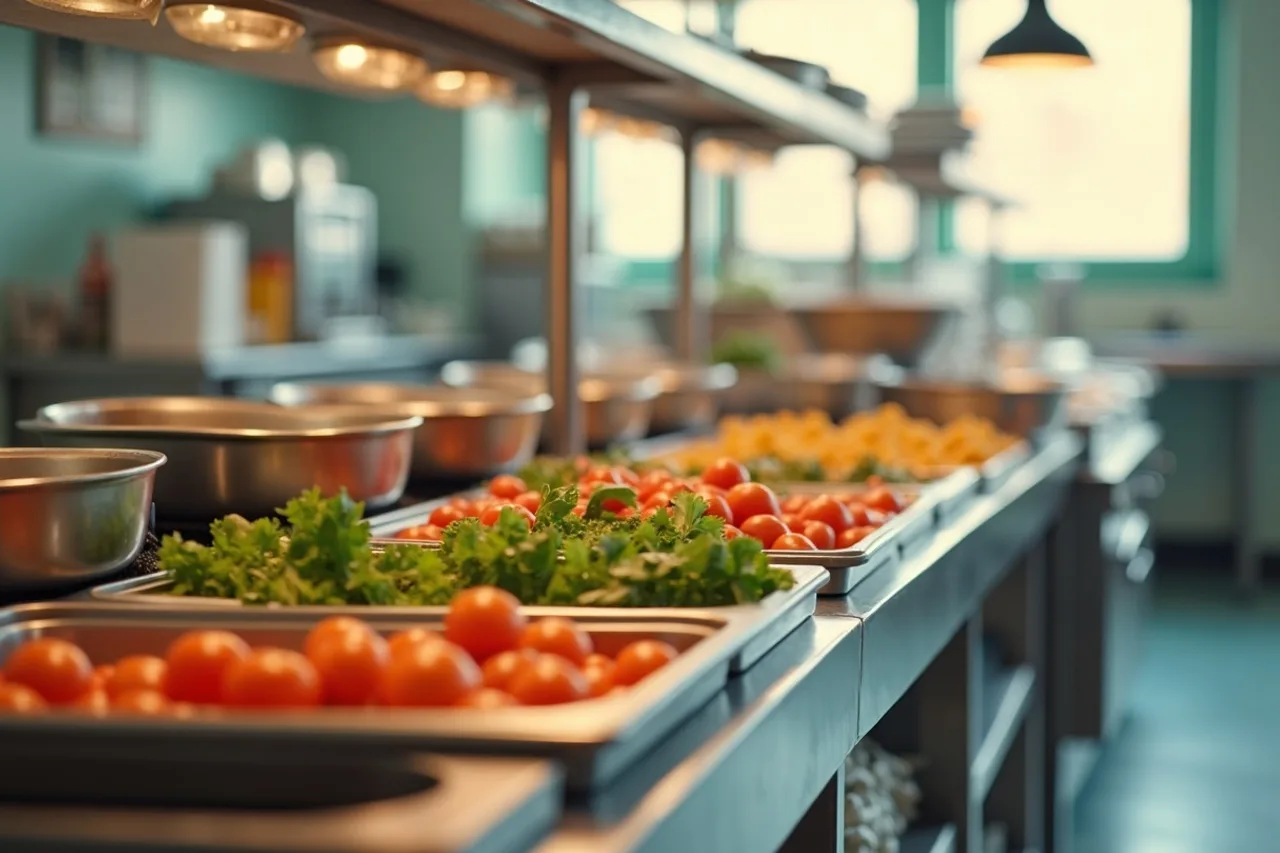
HACCP for school and preschool canteens in Poland: 72-hour control samples, allergens in menus, Sanepid requirements and working with the intendent.
For school and preschool canteens in Poland, September is what December is for retail: the busiest moment of the year. Children come back, mass catering starts up again, and with it comes heightened attention from Sanepid (the State Sanitary Inspection). Feeding children means feeding a particularly vulnerable group, which is why the sanitary requirements that apply to all foodservice are enforced especially strictly in school and preschool kitchens. This guide covers the essentials: who is responsible for HACCP in an educational institution, which regulations govern feeding children, how to take and store control food samples correctly, how to handle allergens in the menu, and how to split duties between the kitchen and the intendent (the school's catering administrator).
Who is responsible for HACCP in a school or preschool canteen
The obligation to implement a HACCP system comes from Regulation (EC) No 852/2004 and applies to every food business operator - including a school canteen, a preschool kitchen, and a meal distribution point. It does not matter that the institution is public or that meals are not sold commercially: mass catering is a food activity under food law.
Own kitchen vs external catering
- Own kitchen - the institution is a full mass catering establishment: it must be registered and approved by Sanepid, keep full HACCP and GHP/GMP documentation, take control samples of dishes, and answer for the whole process from goods receipt to serving.
- External catering - the catering company is responsible for production and its own HACCP, but the institution is not off the hook. A meal distribution point is also a food activity: you must document meal receipt (temperature, time, condition), storage and serving conditions, cleaning and disinfection, and the hygiene of serving staff.
- Mixed model - for example catering for lunch plus in-house breakfasts and snacks in a preschool. Documentation must then cover both processes, and the line of responsibility between the institution and the caterer should be written into the contract.
Director, intendent, head cook - who does what
Formally, food safety is the responsibility of the operator of the establishment - in practice, the institution's director. Day to day, however, the system is carried by two people: the intendent (purchasing, suppliers, storeroom, menus, documentation) and the head cook (production processes, temperatures, hygiene, samples). A well-implemented HACCP system assigns every procedure and every register to a named person - the first thing an inspector asks about.
The legal basis for feeding children in institutions
- Regulation (EC) No 852/2004 - the obligation to implement HACCP and GHP/GMP in every mass catering establishment.
- Regulation (EC) No 178/2002 - general food law principles, including traceability ("one step back, one step forward").
- The Polish Food Safety and Nutrition Act - registration and approval of establishments, Sanepid's powers, sanctions.
- The Regulation of the Minister of Health of 26 July 2016 - defines the groups of foodstuffs that may be sold to children and used in mass catering in educational institutions. This act determines what a school shop may sell and how canteen meals are composed.
- The regulation on taking and storing food samples in mass catering establishments - the basis for the obligation to keep control samples of dishes.
- Regulation (EU) No 1169/2011 - allergen information for food, including food served in mass catering.
Control food samples - the obligation you must not forget
Control samples are the hallmark of mass catering - a regular restaurant does not keep them, a canteen must. The purpose is simple: if food poisoning is suspected, Sanepid needs laboratory material from the specific meal.
The rules you need to know
- Take a sample of every dish in the meal served to children - from the batch that actually reached the plates.
- Store samples for at least 72 hours - the minimum required by the regulation on taking and storing food samples in mass catering establishments. Only after that time may a sample be disposed of.
- Label every sample - dish name, date and time of sampling, signature of the person taking it. An unlabelled sample is worthless to an inspector.
- Set aside space in a refrigerator - keep samples in clean, closed, dedicated containers, chilled, separate from current food stock.
- Keep a sample register - a log with sampling and disposal dates. It proves the procedure runs daily, not just from inspection to inspection.
Detailed technical requirements (sample quantity, sampling method, storage temperature) are set out in the current regulation - and that regulation should be cited in your HACCP procedure as the legal basis.
Key rule: The control sample is your insurance policy. When a parent reports suspected food poisoning, a properly taken and labelled sample lets the laboratory establish the facts. Without a sample, the institution has nothing to defend itself with - regardless of whether the meal was actually the cause.
Menus and allergens in children's catering
The 14 allergens apply to canteens too
The allergen information duty under Regulation 1169/2011 also covers food served in mass catering. In practice, the menu must come with information on which of the 14 allergens requiring declaration are present in each dish - usually shown as allergen numbers next to dishes on the weekly menu displayed for parents. Our guide on labelling allergens in a menu shows how to prepare this step by step.
In institutions for children there is a second dimension: elimination diets. More and more preschools and schools feed children with food allergies based on medical certificates. Your documentation should include a diet-handling procedure: a list of children with allergies (kept in line with GDPR), how their meals are marked, and how cross-contact is prevented in the kitchen and at serving.
What may be served - the Regulation of 26 July 2016
The Regulation of the Minister of Health of 26 July 2016 defines the food groups that may be sold to and used in feeding children in educational institutions, and the requirements meals must meet. It is the basis on which the intendent composes menus and against which Sanepid assesses them during inspections. Verify the current wording in the applicable version of the regulation - and keep a printout in your compliance binder as a reference.
Temperatures and hygiene - the foundation of a canteen kitchen
The rules are the same as in any professional kitchen, but with children's catering inspectors check them with particular care:
- Cold chain - temperature checks at delivery, in storerooms and refrigeration units, with a daily register entry. See the full breakdown in our storage and processing temperature table.
- Heat treatment and serving - hot dishes must be held at a safe temperature until served; when transporting food from the kitchen to classrooms (typical in preschools), use thermal containers with temperature control.
- Process separation - keeping raw preparation (vegetables, raw meat, eggs) apart from the clean zone; in small kitchens, time-based separation described in procedures is acceptable.
- Staff hygiene - valid medical certificates for sanitary-epidemiological purposes for all kitchen staff and everyone serving meals, including kitchen helpers.
All of this is tied together by the HACCP system: hazard analysis, critical control points, limits, monitoring, and corrective actions. See how it works in practice in our article on the 7 HACCP principles with foodservice examples.
Working with the intendent - a division of duties that works
The most common problem in institutions is not missing documents but blurred responsibility: the cook assumes the intendent keeps the registers, the intendent assumes the kitchen does. A proven split looks like this:
| Area | Intendent | Kitchen (head cook) |
|---|---|---|
| Suppliers and purchasing | supplier selection and evaluation, delivery documents, complaints | goods checks at receipt (temperature, dates, packaging condition) and register entry |
| Menus and allergens | menus compliant with the Regulation of 26 July 2016, allergen labelling, elimination diets | reporting ingredient substitutions that change a dish's allergens |
| Storeroom | stock levels, FEFO rotation, storage conditions | daily temperature readings of refrigeration units |
| Production | - | CCP monitoring, control samples, cleaning and disinfection registers |
| HACCP documentation | binder completeness, procedure updates, contact with Sanepid | day-to-day register entries, reporting deviations |
Write this split directly into your documentation - with names and cover arrangements for holidays and sick leave. September, with new contracts and staff changes, is the natural moment to update it.
September: the documentation review before the new school year
- HACCP documentation - does the establishment description, flow diagrams, and hazard analysis match the current menu and post-summer kitchen organisation.
- Registers - start fresh sheets for the new school year: temperatures, goods receipt, cleaning and disinfection, control samples.
- Medical certificates - check validity for all staff, including new hires and kitchen helpers.
- Training - a short refresher on hygiene and procedures before the first meal is served, recorded in the training register.
- Allergens and diets - update the list of children on elimination diets based on new medical certificates and refresh the menu labelling.
- Technical check - refrigeration units, thermometers, condition of surfaces and equipment after the summer break.
- Catering contract - if you use a caterer, verify the clauses on responsibility, delivery temperatures, and the documents handed over with each delivery.
Frequently asked questions
Does a preschool using external catering need HACCP documentation?
Yes. The caterer is responsible for producing the meals, but the institution serves food, so it runs a food activity. It needs documentation appropriate to its scope: meal receipt and serving procedures, temperature checks, cleaning and disinfection, staff hygiene.
How long must control food samples be stored?
At least 72 hours from the moment of sampling, as required by the regulation on taking and storing food samples in mass catering establishments. Keep samples chilled, in labelled containers, with a register of sampling and disposal.
Do allergens have to be labelled in a canteen menu?
Yes. Regulation 1169/2011 requires allergen information in mass catering as well. In practice, allergens are marked next to dishes on the menu available to parents, and the kitchen additionally runs a cross-contact prevention procedure.
Who is responsible for HACCP - the director or the intendent?
Formally the operator of the establishment, which in practice means the institution's director. Operationally, tasks are split between the intendent and the kitchen, and that split should be written into the documentation with named people assigned to specific registers and procedures.
What does the Regulation of 26 July 2016 cover?
The Regulation of the Minister of Health of 26 July 2016 defines the food groups allowed for sale to children in educational institutions (for example in school shops) and the requirements for mass catering in those institutions. It is the primary reference when composing menus.
Does Sanepid inspect canteens more often than restaurants?
Inspection frequency depends on the establishment's risk category, and feeding children as a vulnerable group receives heightened attention. The practical rule: documentation and registers must be ready to show at any moment, because inspections require no advance notice.
A school canteen or preschool kitchen does not need documentation for its own sake - it needs a complete set of procedures and registers that staff actually keep every day: from goods receipt, through control samples, to allergens in the menu. If you are starting the school year with an incomplete binder, take a look at our HACCP and GHP/GMP documentation packages - ready-made templates for procedures and registers you can fill in with your institution's details in a few evenings, not a few months.