Water in Foodservice: 2026 Rules
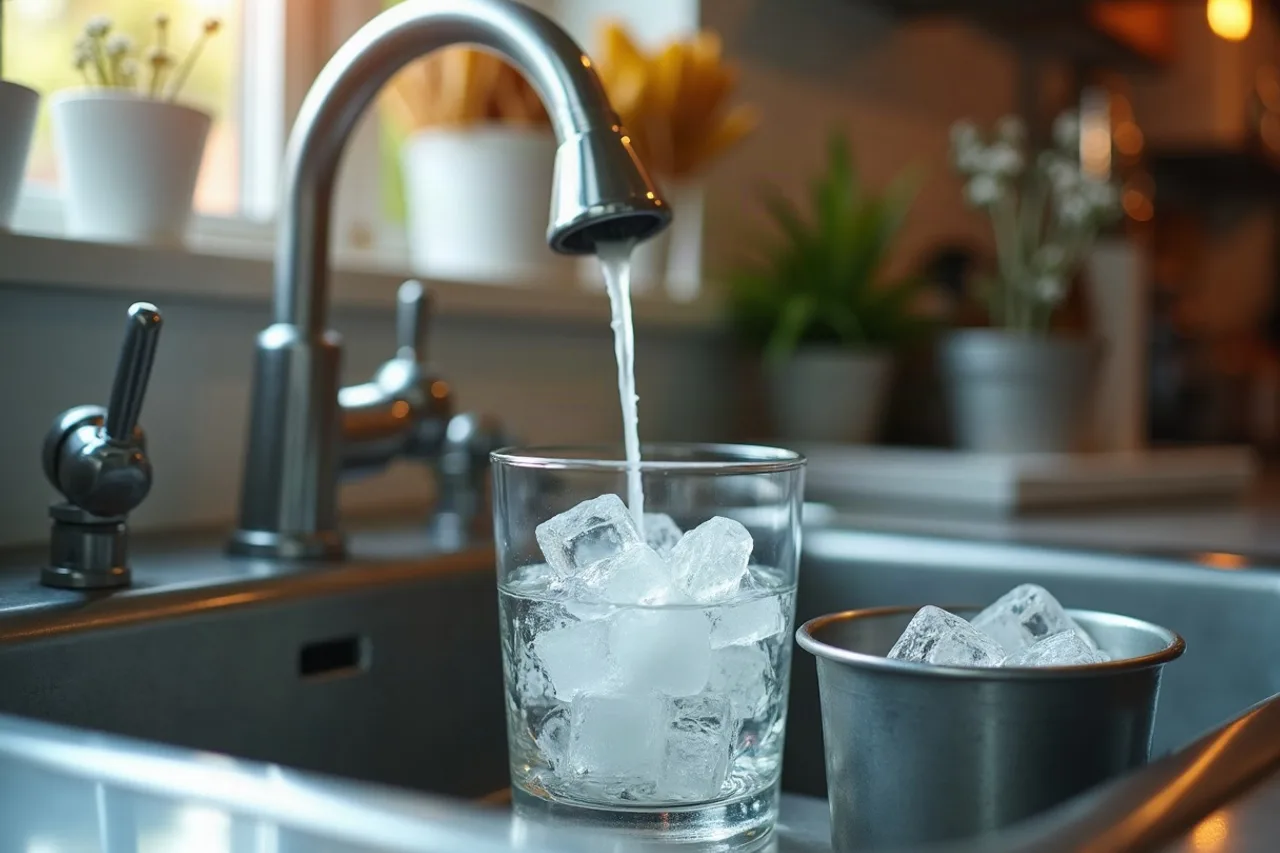
What the law says about water in a venue: drinking water, ice, the new 2026 act and regulation, priority facilities and the risk assessment by 30 June 2028.
The question about water comes up in every conversation about inspections: do I have to test tap water, who is responsible for it, is ice from an ice machine food. In 2026 the answer has two layers. The first, at EU level, has applied for years. The second is an amendment to the Act on Collective Water Supply (Dz.U. 2026, item 605) and a new regulation, which changed the national system for buildings, potentially including your premises.
Water in foodservice is in law both an ingredient and a cleaning agent, and also part of a building's installations. Each of these aspects has its own provision and its own addressee of the obligation.
The key points in brief
- Drinking water is used for contact with food. Annex II, Chapter VII of Regulation 852/2004 requires an adequate supply of potable water and its use wherever necessary to ensure that food is not contaminated.
- Ice that comes into contact with food must be made from potable water and stored in conditions that protect it from contamination.
- Since 21 May 2026 an amendment to the Act on Collective Water Supply has applied (Journal of Laws (Dz.U.) 2026, item 605), and since 24 June 2026 a new regulation of the Minister of Health on water quality (Dz.U. 2026, item 748).
- A facility in which more than 50 people a day are exposed to water-related risk may be a "priority facility" and requires a written risk assessment of the internal water supply system, submitted to the sanitary inspection by 30 June 2028.
- The obligation rests on the owner or manager of the facility, not directly on the tenant. In a rented premises this has to be settled in the lease.
EU requirements: Regulation 852/2004
Annex II to Regulation (EC) No 852/2004 contains provisions on water scattered across several chapters:
- Chapter I, point 4: an adequate number of wash-hand basins with hot and cold running water and materials for washing and hygienic drying of hands.
- Chapter II, points 2 and 3: facilities for cleaning and disinfecting tools and equipment with hot and cold water supply, and sinks for washing food with a supply of hot and/or cold potable water.
- Chapter VII, point 1: an adequate supply of potable water, used whenever necessary to ensure that food is not contaminated.
- Chapter VII, point 2: non-potable water (e.g. for fire control, cooling, steam production) must flow in separate, easily identifiable systems, with no connection to, and no possibility of backflow into, the potable water system.
- Chapter VII, point 4: ice that comes into contact with food or may contaminate it must be made from potable water, and produced, used and stored so as to protect it from contamination.
For mobile and temporary premises, Chapter III, point 2(e) requires an adequate supply of hot and/or cold potable water. We describe the details for food trucks in the article on water, handwashing and GHP (Good Hygiene Practice) in a food truck.
The definition of "drinking water" in Art. 2(1)(g) refers to Directive 98/83/EC. That directive is repealed by Art. 26 of Directive (EU) 2020/2184, and references to the repealed directive are treated as references to the new one. You therefore assess quality requirements today according to the provisions that implement Directive 2020/2184.
Who is responsible for the quality of tap water
If you use the municipal network, the quality of water up to the point of delivery is ensured by the water supplier. The Act of 7 June 2001 on Collective Water Supply, as amended in 2026, introduces a risk-based approach along the whole supply chain, from the water source to the internal water supply system (Art. 4d(1)). The third element of this chain is the risk assessment of the internal water supply system, that is, the installation inside the building, for which the supplier is not responsible.
For a venue this means something simple: the water can be good at the water meter and worse at the kitchen tap if the problem lies in the installation. The installation is the responsibility of the owner or manager of the building.
Priority facilities: could your venue be one
Art. 4j(1) of the Act defines a priority facility as a non-residential facility in which more than 50 people a day are exposed to water-related risk, in particular a public building or a building intended for temporary stay of people. Foodservice venues in larger buildings or with heavy guest traffic may exceed this threshold. The Act does not name restaurants, so the assessment depends on the specific facility and on how the sanitary authority reads "exposure to water-related risk". We found no official interpretation for foodservice.
If a facility is classified as a priority facility, its owner or manager:
- carries out a written risk assessment of the internal water supply system (Art. 4i(1)) and updates it at least every 6 years (para. 2),
- keeps the risk assessment and its updates for at least 12 years (Art. 4i(6)),
- submits the risk assessment to the competent State Poviat Sanitary Inspector (the local head of the sanitary inspection), for the first time by 30 June 2028 (Art. 9(1) of the transitional provisions), and then every 6 years by 30 June (Art. 4n(1)),
- must commission the assessment from a person who meets the requirements of Art. 4l, that is, among others, with three years of documented experience in sanitary installations or water quality supervision, or with construction qualifications, together with knowledge of managing water-related health risk, or with the qualification of an expert in sanitary and hygiene matters.
Failing to carry out the risk assessment is punishable by a fine imposed by decision of the State Poviat Sanitary Inspector of PLN 100 to PLN 10,000 (Art. 29(3c), (4)(4) and (6)(6) of the Act). A facility put into use after 30 June 2028 requires an assessment within 6 months of being put into use (Art. 9(7)).
Legionella and lead testing: only for the listed categories
The Act links testing for Legionella bacteria in domestic hot water to specific categories of facilities: medical entities with round-the-clock care, facilities for temporary stay of people (hotels, motels, guesthouses, resorts, campsites, prisons) and public buildings in which water aerosol is produced during use of the installation (Art. 4j(2)(1)). Lead is tested in facilities for pregnant women and children up to 6 years (point 2). A restaurant is not named directly. If a venue operates in a hotel or another facility on the list, the testing obligation falls on the owner or manager of that facility, and the frequency and procedures are set by the Minister of Health's regulation of 22 May 2026.
Your own water intake (well)
Art. 1b(4) of the Act excludes, as a rule, individual sources that supply on average less than 10 m3 of water per day or supply fewer than 50 people. The exclusion does not, however, cover cases where water is supplied to public buildings or to entities operating a food business, and it is water intended for human consumption. It follows from the wording of the provision that a foodservice venue using its own well cannot assume that the Act does not concern it. The scope of testing and its frequency depend on the classification of the intake and on arrangements with the sanitary inspection. Before starting up a venue with a well, consult the competent sanitary station.
Water and HACCP and GHP documentation
In the hazard analysis, water appears in several places: as an ingredient of dishes, in ice cubes, in washing vegetables, in dishwashing and in disinfection. The documentation should state the source of the water (network or own intake), the rules for ice, and the place where non-potable water is separated from potable water. We describe washing and disinfection procedures in the article cleaning and disinfection: a procedure that works, and the register in the article cleaning and disinfection register: a template. The full list of requirements checked by the inspection is in the article on Sanepid (the State Sanitary Inspection) requirements for foodservice.
Ice: the most often overlooked element
Ice for drinks and ice used to chill dishes comes into contact with food, so Chapter VII, point 4 requires potable water and conditions of production, use and storage that protect it from contamination. In practice this means a separate ice scoop that is not kept in the ice, and including the ice machine in the cleaning schedule. This is a conclusion from the provision, not a literal rule: the regulation says nothing about the frequency of cleaning ice machines.
Do I have to give guests free tap water?
We found no such obligation. Directive 2020/2184 in Art. 16(2)(d) lists encouraging the supply of tap water free of charge or for a low service charge to customers of restaurants and catering establishments as one of the measures Member States may apply. That is an encouragement, not an obligation, and in the text of the Act of 13 March 2026 we found no provision imposing such a requirement on venues.
Frequently asked questions
Does a foodservice venue have to test tap water?
Where supply comes from the network, water quality is monitored by the water supplier. The owner or manager of a priority facility must carry out a written risk assessment of the internal water supply system. Whether your venue is such a facility depends on the threshold of 50 people a day exposed to water-related risk and on the assessment of the sanitary authority.
By when must the risk assessment be submitted?
For the first time by 30 June 2028 (Art. 9(1) of the transitional provisions of the Act of 13 March 2026), and then every 6 years by 30 June (Art. 4n(1)).
Who is responsible for the risk assessment if I rent the premises?
The Act places the obligation on the owner or manager of the priority facility. In a rented premises you need to agree with the landlord who is the manager within the meaning of that Act and who bears the cost. We discuss the clauses to agree in the article on the lease of a foodservice premises.
What water must ice be made from?
Ice that remains in contact with food must be made from potable water (Annex II, Chapter VII, point 4 of Regulation 852/2004) and produced, used and stored in conditions that protect it from contamination.
What is the fine for no risk assessment?
From PLN 100 to PLN 10,000, imposed by decision of the State Poviat Sanitary Inspector (Art. 29(3c), (4)(4) and (6)(6) of the Act on Collective Water Supply).
Legal status as of: 12 November 2026
Legal basis: Regulation (EC) No 852/2004, Annex II (Chapter I point 4, Chapter II points 2 and 3, Chapter III point 2, Chapter VII); Directive (EU) 2020/2184 (Art. 16, Art. 26); Act of 7 June 2001 on Collective Water Supply and Collective Sewage Disposal as amended by the Act of 13 March 2026 (Dz.U. 2026, item 605, in force from 21 May 2026; Art. 1b(4), Art. 4d, 4i, 4j, 4l, 4n, Art. 29; Art. 9 of the transitional provisions); Regulation of the Minister of Health of 22 May 2026 on the quality of water intended for human consumption (Dz.U. 2026, item 748, in force from 24 June 2026). We found no official interpretation on whether a foodservice venue is a priority facility, and we did not analyse the testing frequency tables in the annexes to the regulation. Agree the scope for own intakes with the competent sanitary-epidemiological station. The review of 12 November 2026 covered only the metadata and text of Dz.U. 2026, item 605 (title, publication date 6 May 2026, entry into force 21 May 2026); we did not recheck the other acts since the review of 4 October 2026.
Last review: 12 November 2026
Do you need complete HACCP documentation?
GastroReady has a ready-made package of HACCP, GMP (Good Manufacturing Practice) and GHP documentation. The documents are sent by email after payment. From 299 PLN.