Dark Kitchen in Poland
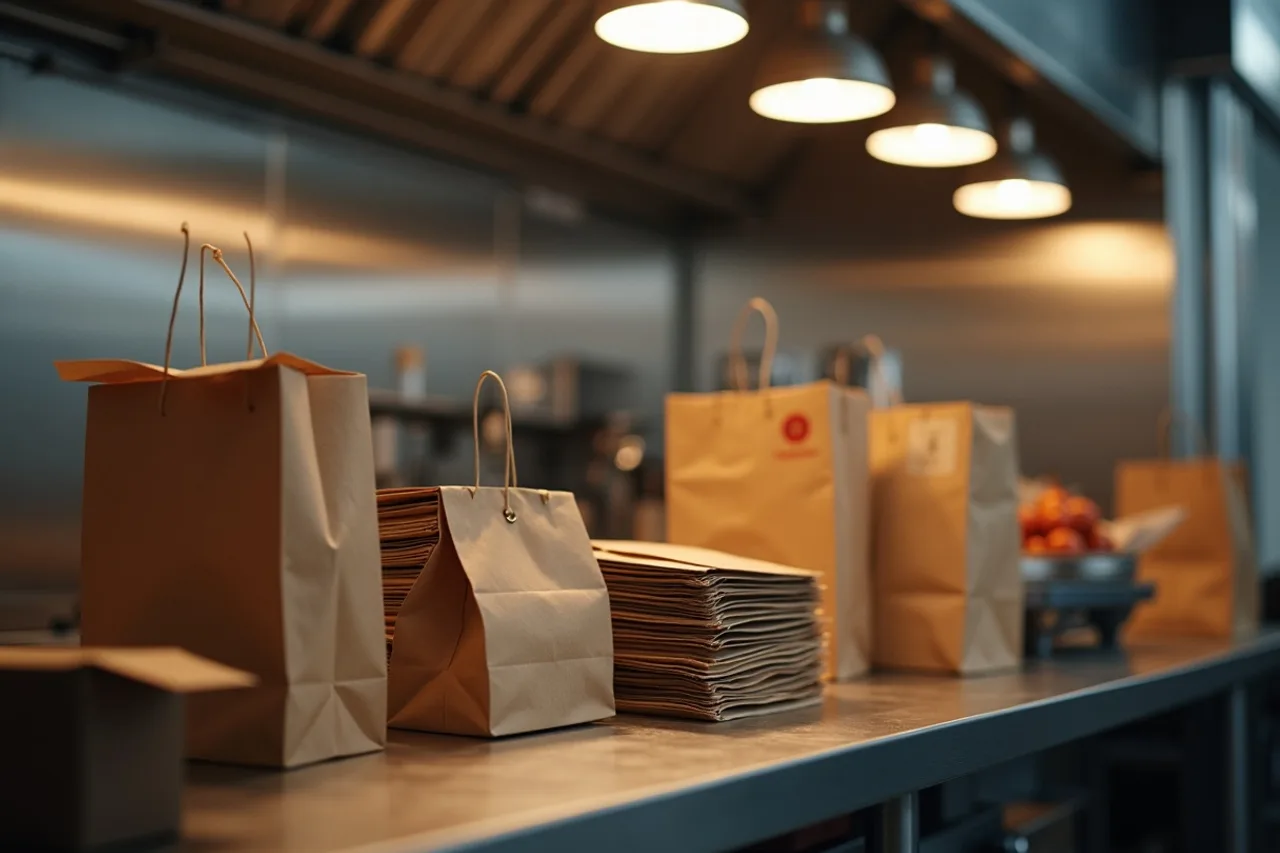
A delivery-only kitchen in Poland follows the same rules as a restaurant. Learn how to get Sanepid approval, set up HACCP and handle allergens.
A dark kitchen (also called a ghost kitchen) is a food business that cooks exclusively for delivery - no dining room, no waiters, often no sign on the street. The model is cheaper to launch than a classic restaurant, but legally there are no shortcuts in Poland. A dark kitchen falls under exactly the same rules as any food establishment: Regulation (EC) No 852/2004, the Polish Act on Food and Nutrition Safety, and the full list of Sanepid requirements for food service. This guide covers everything you need before opening: establishment approval, HACCP documentation adapted to delivery, labelling of meals for delivery, and allergen information for distance selling.
Dark kitchens under the law - no "grey zone"
Polish and EU food law has no separate category called "dark kitchen". From the perspective of a Sanepid (State Sanitary Inspection) inspector, your delivery-only kitchen is simply an establishment producing and placing food on the market - the same as a restaurant, bar, or catering company. That means you are covered by:
- Regulation (EC) No 852/2004 on the hygiene of foodstuffs - the obligation to implement HACCP, apply GHP/GMP principles, and obtain establishment approval before starting operations.
- Regulation (EC) No 178/2002 - general principles of food law, including traceability (you must be able to show where every raw material came from).
- Regulation (EU) No 1169/2011 - food information to consumers, including allergens, with additional requirements for distance selling discussed below.
- The Polish Act on Food and Nutrition Safety - registration procedure, inspections, sanctions.
Key rule: Having no dining room does not exempt you from a single sanitary obligation. A dark kitchen produces food and places it on the market - so it needs Sanepid approval, complete HACCP documentation, and GHP/GMP procedures exactly like a restaurant with fifty tables.
What actually changes compared to a restaurant
The difference is not that there are fewer requirements - they are simply distributed differently. Requirements tied to a dining room and on-site guest service fall away, but new areas appear that a classic restaurant does not analyse in such detail: meal transport, single-use food-contact packaging, communicating allergen information through an app or phone, and keeping the meal at a safe temperature from packing to handover.
Registration and establishment approval - required BEFORE you start
This is the most common mistake made by new dark kitchen operators: going live on delivery apps before the establishment has been approved by Sanepid. The order is the reverse - first the approval decision and the entry in the register, then the first order.
Step by step
- File an application for establishment approval and entry in the register with the State District Sanitary Inspector (PPIS) competent for the kitchen's location - at least 14 days before the planned start of operations.
- Describe the business truthfully: meal production exclusively for delivery, food categories, planned production scale, delivery method (own drivers, delivery platforms, customer pickup).
- Prepare for the approval inspection - the inspector will review the premises, zone layout, water supply, ventilation, staff sanitary facilities, and your HACCP and GHP/GMP documentation.
- Collect the approval decision (it may be conditional) and the register entry certificate - keep both in your establishment records.
Operating without approval is a violation subject to a financial penalty under the Act on Food and Nutrition Safety, and the inspector can additionally suspend operations until the decision is issued. The procedure and sanctions are described in detail in our article on sanitary requirements for food premises in Poland.
Premises requirements - a kitchen without a dining room is still a kitchen
- Zone separation - the dirty zone (goods receipt, pre-processing) separated from the clean zone (production, packing, dispatch). A dark kitchen adds a courier handover zone - design it so couriers never enter the production area.
- Washable surfaces - walls, floors, and counters easy to clean and disinfect, in good technical condition.
- Potable water and hand-washing basins separate from production sinks; ventilation removing steam and grease.
- Staff sanitary and social facilities - even if the team is two people.
- Refrigeration - equipment holding the required temperatures, with a temperature log.
HACCP for delivery - where the critical control points are
A dark kitchen's HACCP system covers all the classic stages - goods receipt, storage, cooking, cooling - familiar from the 7 HACCP principles explained with food service examples. The difference is that your hazard analysis must reach beyond the pass window: all the way to the moment the customer receives the meal from the courier. The transport stage is where additional control points are most often set.
Delivery-specific control areas
| Stage | Hazard | Example control measure |
|---|---|---|
| Packing the meal | Contamination from packaging, temperature drop before handover | Packaging with a food-contact declaration of compliance; packing immediately before courier handover |
| Waiting for the courier | Hot meals cool down, cold meals warm up | Heated or chilled dispatch zones; maximum waiting time defined in a procedure |
| Transport to the customer | Temperature outside the safe range, delivery time too long | Insulated bags; maximum delivery time defined in a procedure; rules for orders that exceed it |
| Handover | Mixed-up orders, damaged packaging | Tamper-evident seals or stickers, order identification labels |
Temperature and time - the two parameters you must control
For hot meals, the key is holding temperature from the end of cooking until handover. For cold meals (salads, sushi, desserts) - preventing warming during transport. In your HACCP documentation, define limits for both cases, the monitoring method (e.g. spot temperature checks before dispatch, tracking time from packing to delivery in your order system), and corrective actions when a limit is exceeded. We walk through such an analysis in our example hazard analysis for delivery sales.
If you work with delivery platforms, describe the division of responsibility in your procedures: what you control (dispatch temperature, sealed packaging, courier waiting time) and what sits with the platform. Your food safety responsibility does not simply end at the pass window - so document your choice of thermal bags and time limits even when the drivers are not your employees.
Labelling meals for delivery - what must reach the customer
A meal prepared to order and delivered to a customer is food placed on the market - and the information requirements of Regulation 1169/2011 apply. In practice, a dark kitchen must manage two layers of information: what the customer sees before purchase (in the app, on the website, over the phone) and what accompanies the order itself.
Allergens in distance selling - information BEFORE the purchase
This is the most important delivery-specific requirement: in distance selling, allergen information must be available to the customer before the purchase is concluded. A customer ordering through an app or by phone must be able to check allergens before paying - not only on a sticker on the box the courier brings to the door.
- In apps and on your website - allergens listed for each menu item or accessible through a clear reference (e.g. an expandable ingredient list with allergens highlighted).
- For phone orders - the person taking the order must be able to provide allergen information; keep an up-to-date allergen matrix by the phone.
- Consistency with the kitchen - the allergen list must match actual recipes and current suppliers, not an "approximation". See our guide on how to create an allergen list for your menu.
- At the moment of delivery - allergen information must also be available to the customer when the meal is handed over.
Remember: "Call us to ask about allergens" in small print is not enough if the customer has no realistic way to get that information before clicking "order". Responsibility for correct information lies with the food business operator - that is you, not the platform.
Food-contact packaging - declarations of compliance
Every package that comes into direct contact with the meal (boxes, trays, cups, films, printed paper bags on the food side) must be intended for food contact, and the supplier should provide you with a declaration of compliance for those materials. Keep the declarations in your records - the inspector may ask for them. Check the scope of each declaration too: some packaging is intended only for dry or cold food, while other types withstand fat and high temperatures. A box not rated for hot, fatty food is not suitable for a burger straight off the grill.
Dark kitchen documentation - the complete list
- HACCP book - establishment description, process flow diagram (including packing and transport), hazard analysis, control points with limits, monitoring procedures, corrective actions, verification.
- GHP/GMP procedures - personnel hygiene, cleaning and disinfection, goods receipt, waste management, pest control.
- Packing and dispatch procedure - including rules for extended courier waiting times.
- Transport procedure - thermal bag requirements, maximum delivery times, responsibility split with platforms.
- Allergen matrix - consistent with app menus and recipes.
- Declarations of compliance for packaging - from every supplier of food-contact materials.
- Logs - equipment temperatures, goods receipt, cleaning and disinfection, training, employee sanitary-epidemiological certificates.
Gaps in this documentation are one of the most common reasons for remarks at approval and later inspections - and the cost of missing HACCP documentation always exceeds the cost of preparing it.
Frequently asked questions
Does a dark kitchen need Sanepid approval if it serves no guests on site?
Yes. Establishment approval and entry in the register by the State District Sanitary Inspector are required before starting operations for every establishment producing or placing food on the market. The absence of a dining room changes nothing - what matters is that you produce food, not how you serve it.
Does a dark kitchen need full HACCP?
Yes, to an extent appropriate to the scale and nature of the business - like every establishment covered by Regulation 852/2004. In practice, the documentation must additionally cover stages a classic restaurant does not have: takeaway packing, waiting for the courier, and transport to the customer.
How do I provide allergen information when customers order through an app?
Allergen information must be available before the purchase is concluded - in the app or on the website at the menu-item level, before the customer pays. It must also be available at the moment of delivery. You, as the food business operator, are responsible for its accuracy.
Am I responsible for the meal after handing it to a platform courier?
You cannot assume your responsibility ends at the pass window. Document the control measures within your reach in your HACCP system: dispatch temperature, sealed and labelled packaging, thermal bags, time limits. Put the division of duties with the platform in a procedure and in your contract.
Can I run a dark kitchen from my apartment?
The premises must meet the hygiene requirements of Regulation 852/2004 and pass the Sanepid approval inspection - including zone separation, washable surfaces, ventilation, and sanitary facilities. A typical apartment does not meet these conditions. Ask your local district sanitary station to assess a specific location before signing a lease.
What packaging documents do I need to keep?
For all food-contact materials (boxes, trays, cups, films), keep declarations of compliance from your suppliers. Also check the scope of use - whether the packaging is rated for hot and fatty food if that is how you use it.
A dark kitchen lowers the barrier to entry into food service, but on paper it requires exactly what a restaurant does - plus procedures for packing, transport, and allergens in distance selling. Instead of writing it all from scratch, use the ready-made HACCP and GHP/GMP documentation packages from GastroReady - templates built around Regulation 852/2004 and Polish food law, which you fill in with your establishment's details before the inspector arrives.