How to Open a Cafe: Sanepid, HACCP, PKD
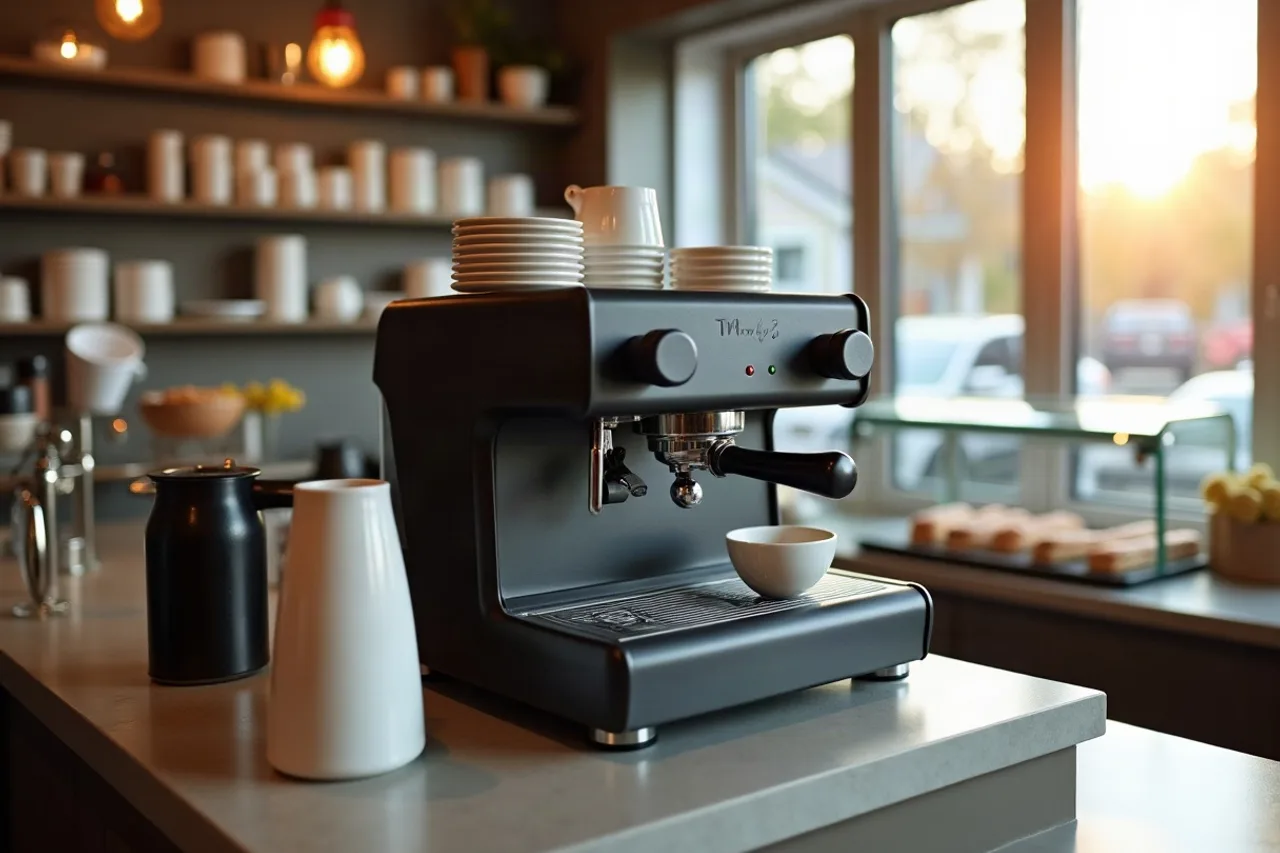
How to open a cafe step by step: company and PKD, premises, notifying Sanepid, HACCP for milk and cakes, alcohol and costs.
You can buy a coffee machine in a week. You will not get your establishment approved by Sanepid (the State Sanitary Inspection) in a week, because you submit the application at least 14 days before the start. That is why how to open a cafe depends less on the choice of beans and more on the order of the steps. This post lays them out one by one: company and PKD (the Polish Classification of Activities), premises, Sanepid, sanitary requirements, HACCP, alcohol and costs. We write from the perspective of the owner of a small venue who wants to open the doors without downtime for corrections.
In brief
- A cafe goes through the same sanitary path as a restaurant. You submit the application for approval of the establishment and entry in the register at least 14 days before the start (Art. 64(1) of the Act on Food and Nutrition Safety). You may operate after approval or conditional approval (Art. 63(1)).
- The order matters. First the premises and the change of use, then the renovation, then Sanepid, and the alcohol application only after Sanepid's decision.
- PKD 2025 depends on the offer. A cafe with cakes and lunch is 56.11.Z, and when drinks are the core of the offer, 56.30.Z.
- HACCP in a cafe is lighter than in a restaurant kitchen, but not zero. The risk sits in milk, bought-in cakes, sandwiches and allergens.
- Baristas and service staff need a medical certificate for sanitary-epidemiological purposes, because they work in contact with food (Art. 59(2)).
How to set up a cafe: the order of steps
The table below is our proposal for the order, not a requirement from the regulations. The Acts give only official deadlines, the rest of the time is set by the premises and the contractors.
| Step | What you do | What it unlocks |
|---|---|---|
| 1 | You register the company in CEIDG (the Central Register and Information on Business Activity) and choose the PKD | Data for the application to Sanepid and for the lease |
| 2 | You check the premises and the change of use | The decision whether to sign the lease at all |
| 3 | You adapt the premises to the sanitary requirements | Inspection by Sanepid |
| 4 | You submit the application to Sanepid (min. 14 days before the start) | The approval decision and entry in the register |
| 5 | You implement HACCP and train the team | A calm conversation with the inspector |
| 6 | You submit the alcohol application (if you plan it) | Sales of beer and wine |
Step 1: form of business and PKD
An entry in CEIDG is free of charge (Art. 13 of the CEIDG Act). Most start-up cafes begin as a sole proprietorship, because it is the fastest route. Discuss the form of taxation with your accountant before you submit the application, because it determines how you keep your records.
PKD 2025 has been in force since 1 January 2025. GUS (Statistics Poland) lists cafes in two places: in 56.11.Z (restaurants) and in 56.30.Z (serving of beverages). With cakes and lunch you choose 56.11.Z. When you sell mainly coffee and drinks, 56.30.Z. The code does not give rights to alcohol and does not replace approval by Sanepid. We described the details and the traps in the change of codes in the text on PKD 2025 codes for foodservice.
Step 2: premises and change of use
The most expensive mistake in this industry is signing a lease before checking the premises. A cafe in a former office or service salon usually changes the hygiene, sanitary and fire conditions, and this is a ground for a change of use under Art. 71(1)(2) of the Construction Law. You submit the notification before the change, and the authority has 30 days from service to object.
Start by establishing what function the premises have in the building's documentation. Who must submit what, we set out in the guide on the change of use of premises to foodservice. Do it before the renovation, because a notification submitted after the fact does not produce legal effects.
Step 3: notifying Sanepid about the cafe
You submit the application to the county State Sanitary Inspector competent for the place of business. According to Art. 64(2), the application contains, among other things, the operator's data, the type and scope of activity with the type of food, and the location. So describe specifically what you sell: hot drinks, bought-in cakes, sandwiches, salads. The more precise the description, the easier it is for the inspector to assess what equipment and procedures to expect.
Starting without submitting the application risks an administrative fine from PLN 1,000 to 5,000 (Art. 103(1)(4) and (2)(2)). The 14-day period is the minimum time for submitting the application, not the time for the decision. Plan a margin and see the details in the post on when to notify Sanepid about opening a venue.
Does a cafe need approval, or is an entry alone enough? The exceptions in Art. 63(2) concern, among others, direct supplies and sellers of non-food products who add packaged, microbiologically stable food. A typical cafe in which you prepare drinks and serve cakes does not fit in these exceptions (this is our assessment). With an unusual profile, ask your own station. The general rules of approval are described on the page of the Voivodeship Sanitary-Epidemiological Station in Krakow.
Step 4: sanitary requirements for cafe premises
The inspector assesses the premises according to Annex II to Regulation (EC) No 852/2004. In a cafe, check first:
- a hand-washing basin with hot and cold running water and with hand-washing and hygienic drying materials, ideally within the barista's reach, and not only in the toilet (Annex II, Chapter I, point 4)
- a separate sink or dishwasher for glassware, cups and milk equipment
- a fridge for milk, cakes and sandwiches with a thermometer that you can read without opening the door
- work surfaces and walls that can be washed down
- suitable and sufficient ventilation (Annex II, Chapter I, point 5)
- a place for waste and a back room for staff clothing
You have the full list divided into provisions and practice in the text on the sanitary requirements for a foodservice venue. In small venues it is easiest to overlook the technical documents that stations may ask for at the inspection. For example, the station in Krakow lists a chimney sweep's opinion or a ventilation declaration, a water test result and an agreement for water supply and sewage discharge (questions and answers of PSSE Krakow, the County Sanitary-Epidemiological Station). Other stations may require something else, so ask your own.
HACCP in a cafe: what really needs a procedure
Regulation 852/2004 requires procedures based on the HACCP principles, but the documents are to be proportionate to the nature and size of the business (Art. 5(2)(g)). A cafe with coffee and ready-made cakes therefore has a simpler system than a restaurant. Still, it has a few places where something can go wrong. Below is our working list, and the frequencies are proposals from practice, not figures from the regulations.
| Area | What the risk is | What you record in the system |
|---|---|---|
| Espresso machine and steam wand | Milk residue and limescale favour the growth of micro-organisms | Cleaning plan: after each use of the wand, daily rinsing, descaling per the manufacturer |
| Milk and plant-based drinks | Storage temperature, time after opening, allergen contact | Fridge temperature register, labelling of opened packages (date and time) |
| Bought-in cakes | A supplier without an entry in the register, no information on composition | List of suppliers, delivery documents, composition and allergen card |
| Sandwiches and salads | Ready-to-eat food, does not undergo heat treatment | Hand-washing rules, boards and knives, storage time, temperature |
| Water and ice | Quality of water for the machine and for drinks | Filter replacement per the manufacturer, record of replacement |
Enter fridge temperatures in a register that you will see in the HACCP fridge temperature register. We found no fixed figures for foodservice venues in the general provisions, so you set the critical limits in your own documentation. We collected working values from practice in the table of storage and processing temperatures.
Allergens at the bar
Allergen information is mandatory also for non-prepacked food (Art. 44(1)(a) of Regulation 1169/2011). In a cafe it most often concerns milk, gluten in cakes and sandwiches, eggs, nuts and soy. Oat drink contains oats, which belong to the group of cereals containing gluten. Soy drink is soy, and almond drink is nuts. One steam wand for frothing all kinds of milk is a simple way to cause allergen contact. The solution is cheap: separate jugs and a cloth for the wand after each drink. How to lay out the information in the menu is described in the guide allergens in the menu: how to do it.
You will find the full set of documents for such a venue on the page HACCP for cafes: procedures, registers and instructions that you adapt to your own offer.
The team: examinations and training before the first shift
Baristas, waiters serving cakes and people cleaning equipment work in contact with food. They should have the medical certificate for sanitary-epidemiological purposes before they start work. The regulations give no fixed validity period. The cost of an employee's examinations is borne by the employer (Art. 8(4) of the Act on the Prevention and Control of Infections and Infectious Diseases in Humans). You will find the details in the post on sanitary-epidemiological examinations in foodservice. You keep the certificates in the personnel files and copies at the venue (Art. 59(4) and (5) of the Act on Food and Nutrition Safety).
Alcohol in a cafe: first Sanepid, then the municipality
Beer and wine on the cafe menu require a separate permit, issued by the head of the municipality, the mayor or the city president. You attach to the application, among other things, the decision of the State Sanitary Inspector on approval of the establishment (Art. 18(6)(4) of the Act on Upbringing in Sobriety and Counteracting Alcoholism). Without it the application is incomplete, so alcohol always comes after Sanepid.
The fee in the first year is PLN 525 for a permit for drinks up to 4.5% and beer, and PLN 525 for drinks above 4.5% up to 18% (Art. 111(2)). For drinks above 18% you will pay PLN 2,100. The fees rise after sales thresholds are exceeded. We described all the rules, deadlines and the risk of the permit being withdrawn in the guide on the permit for selling alcohol at a venue.
Cafe opening costs
Official fees are small: CEIDG is free of charge, and in the list of stamp duties we found no item for approval of an establishment. The real budget is rent for the preparation period, adapting the premises, an espresso machine with a grinder, fridges, a cake display, a till, the team's examinations and HACCP documentation. We do not give prices of espresso machines and equipment, because we have no source that would allow us to indicate an honest range. Collect at least two offers for every larger item.
Two things that are forgotten in the budget, and Sanepid does not check them: a licence for music played to guests (usually from collective management organisations, e.g. ZAiKS and STOART) and the obligations related to the cash register. We did not verify the rates and exemptions, so check them with the organisations and at the tax office. You have a summary of the items and fees that can be confirmed in the Acts in the text on the costs of opening a foodservice venue.
Frequently asked questions
Where do I start when opening a cafe?
By checking the premises before signing the lease, that is, the function in the building's documentation and the change of use. In parallel register the company in CEIDG, because the data from the entry goes into the application to Sanepid.
How many days before opening a cafe should I apply to Sanepid?
You submit the application at least 14 days before the planned start of activity (Art. 64(1)). This is the deadline for submitting the application, not for the decision. A case requiring explanatory proceedings may take a month, and an especially complicated one two months (Art. 35 § 3 of the Code of Administrative Procedure, KPA).
Does a cafe have to have HACCP?
Yes. The obligation to implement procedures based on the HACCP principles follows from Art. 5 of Regulation 852/2004, and their scope is to be proportionate to the size of the venue. For a cafe this usually means a shorter system than for a restaurant.
Which PKD should I choose for a cafe?
For a cafe with cakes and lunch the right code is 56.11.Z from PKD 2025. When drinks are the core of the offer, choose 56.30.Z. The older codes 56.10.A and 56.10.B no longer apply in new applications.
Does a barista need a health card?
They need a medical certificate for sanitary-epidemiological purposes, because the health card ("książeczka sanepidowska") is the colloquial name of the former document. A person working in contact with food must obtain it before starting work (Art. 59(2) of the Act on Food and Nutrition Safety).
Legal status as of: 2 November 2026
Legal basis: Act on Food and Nutrition Safety of 25 August 2006 (consolidated text Journal of Laws (Dz.U.) 2026, item 1399: Art. 59, 61, 63, 64, 100, 103); Regulation (EC) No 852/2004 (Art. 5, Annex II, Chapter I); Regulation (EU) No 1169/2011 (Art. 44, Annex II); Act of 5 December 2008 on the Prevention and Control of Infections and Infectious Diseases in Humans (Art. 8); Act on Upbringing in Sobriety and Counteracting Alcoholism (Art. 18, 111); Construction Law (Art. 71); CEIDG Act (Art. 13); regulation of the Council of Ministers of 18 December 2024 on PKD (Journal of Laws item 1936); Code of Administrative Procedure (Art. 35). We did not check: music licence rates, obligations concerning cash registers, equipment prices or the practice of individual stations regarding attachments to the application. Whether a cafe with an unusual profile is subject to approval or to an entry alone is decided by the competent station.
Last review: 2 November 2026
Need complete HACCP documentation?
GastroReady offers a ready-made package of HACCP, GMP and GHP documentation for small foodservice: procedures, temperature registers and instructions that you adapt to the espresso machine, milk and bought-in cakes. You edit the documents yourself, without commissioning a study from a food technologist. From 299 PLN.