How to Open a Pizzeria: Oven, Sanepid, HACCP
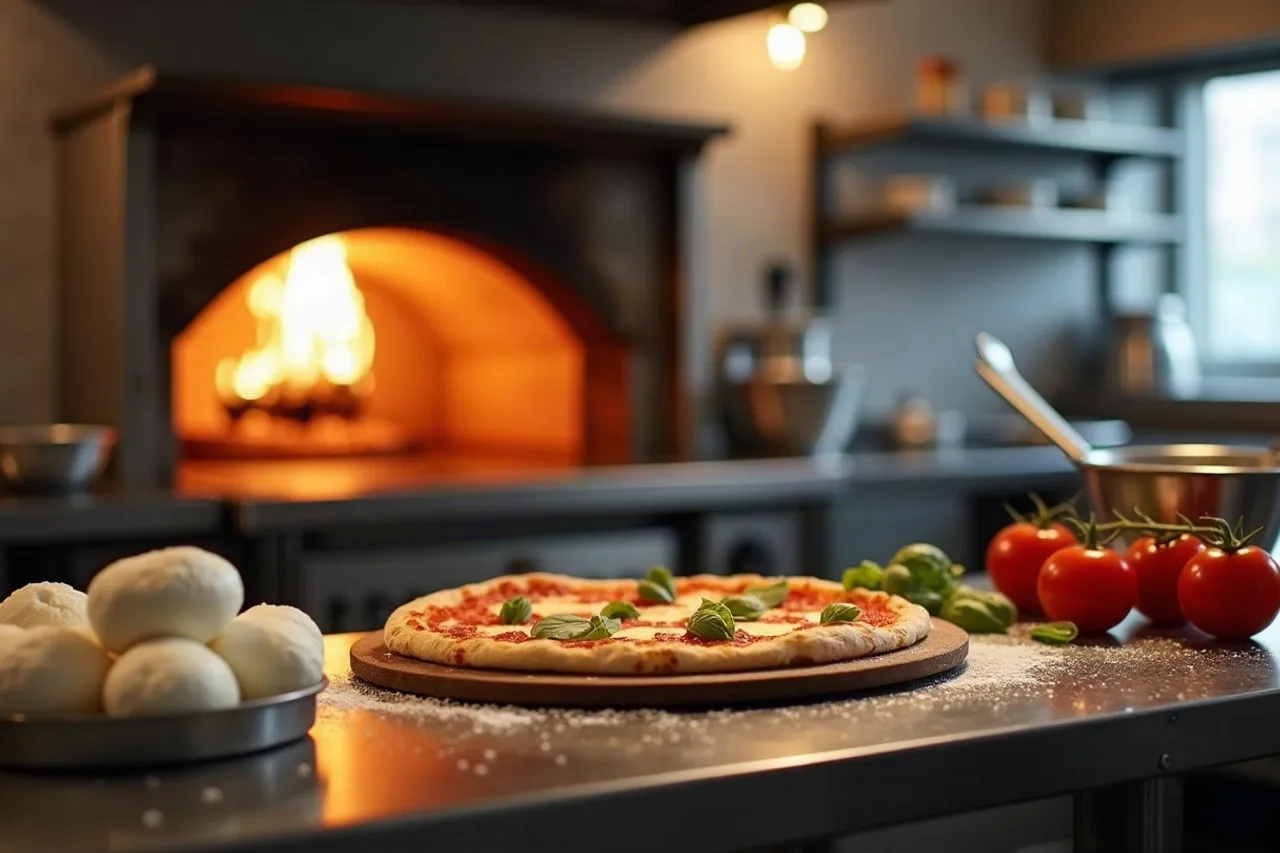
How to open a pizzeria: choosing the oven, ventilation and fire safety, notifying Sanepid and HACCP for dough, cheeses, allergens and deliveries.
A pizzeria can be opened in a small venue and with a short menu. It is just that in this business the oven decides everything else: ventilation, the chimney, inspections and the final acceptance. That is why how to open a pizzeria starts with choosing the oven, not with the menu. This post takes you through the formalities, the technical requirements and HACCP in a pizzeria: dough, cheeses, cold cuts, allergens and deliveries. We wrote it with an owner in mind who wants to get the documents in order before ordering equipment.
In brief
- The sanitary path is the same as for a restaurant. You submit the application for approval of the establishment and entry in the register at least 14 days before the start (Art. 64(1) of the Act on Food and Nutrition Safety).
- The oven sets the budget and the schedule. The hood, ducts, chimney sweep inspections and fire safety requirements depend on whether you choose an electric, gas or wood-fired oven.
- The greatest sanitary risk sits in the raw materials that go onto the pizza without processing: rocket, sliced cold cuts, cheese added after baking.
- In a pizzeria allergens are everywhere. Gluten and milk are present in almost every item. With delivery you provide allergen information before purchase and at the time of delivery (Art. 14 of Regulation 1169/2011).
- Traceability is an obligation, not goodwill. You must identify the supplier of every raw material (Art. 18 of Regulation 178/2002).
How to open a pizzeria: the order of steps
This is our proposal for the order, not a requirement from the regulations. The regulations set only official deadlines.
- Company and PKD (the Polish Classification of Activities). GUS (Statistics Poland) lists pizzerias directly in 56.11.Z (restaurants, including fast food and places with takeaway food). We described the code changes in the text on PKD 2025 in foodservice.
- Premises and change of use. A pizzeria in a former shop or office changes the hygiene, sanitary and fire conditions, so you usually need a notification under Art. 71 of the Construction Law. Do it before the renovation: change of use of premises to foodservice.
- Design of the oven, hood and ventilation. First you choose the oven, then you design the rest. The reverse order ends in rework.
- Application to Sanepid (the State Sanitary Inspection) with a precise description of the type of food. The deadlines and documents are discussed in the post when to notify Sanepid about opening a venue.
- HACCP, the team and medical certificates before the first shift.
- Alcohol (if you serve beer): a separate application to the municipality after Sanepid's decision, as in the guide on the permit for selling alcohol.
Starting without an application to Sanepid risks an administrative fine from PLN 1,000 to 5,000 (Art. 103(1)(4)). We described the general order for a full restaurant in the guide how to open a restaurant step by step, and the budget in the text on the costs of opening a venue.
The pizza oven: ventilation, chimney and fire safety
Sanitary regulations do not specify an oven model. Regulation 852/2004, however, requires suitable and sufficient ventilation systems (Annex II, Chapter I, point 5), and the fire brigade and the building supervision authority look at ducts and installations. The table below will help you compare three typical solutions before you buy equipment.
| Type of oven | What you check before buying | What follows from the regulations |
|---|---|---|
| Electric | The connection capacity of the premises and the condition of the electrical installation | No flue duct. Ventilation still applies (Annex II, Chapter I, point 5) |
| Gas | Gas installation, removal of flue gases, hood | Inspection of the gas installation at least once a year (Art. 62 of the Construction Law), cleaning of flue ducts from catering hearths at least once a month |
| Wood-fired | Chimney, anti-smog resolution, consent of the building manager | Cleaning of flue ducts at least once a month, chimney sweep inspection at least once a year |
The monthly cleaning follows from § 34(1)(1) of the regulation of the Minister of the Interior and Administration of 7 June 2010 on the fire protection of buildings: it concerns flue and exhaust ducts from the hearths of mass catering establishments and catering services, unless local regulations provide otherwise. Ventilation ducts are cleaned at least once a year (para. 2). This is done by people with chimney sweep qualifications (para. 3). You have the details and a table of documents in the texts on ventilation and the hood in a foodservice venue and on fire safety requirements at the acceptance of a venue.
With a wood-fired oven also check the anti-smog resolution of your voivodeship or city. According to press reports of February 2019, the resolution in force in Krakow also covered wood-fired pizza ovens, with the exception of larger installations. We did not check the current state of these provisions or the rules in other cities, so ask the municipality before you spend money on an oven.
Some stations ask for technical documents at the inspection. For example, the station in Krakow lists a chimney sweep's opinion or a ventilation declaration, a water test result and an agreement for water supply and sewage discharge (questions and answers of PSSE Krakow, the County Sanitary-Epidemiological Station). Another station may expect a different set.
HACCP in a pizzeria: dough, cheeses, cold cuts and seafood
Pizza has a simple process: goods receiving, storage, dough preparation, topping, baking, serving. The risks, however, are different than in a kitchen with cooking. We break the HACCP documentation for such a venue into several places that are worth describing separately. The temperature values are industry practice, not figures from the regulations that we found. We collected them in the table of storage and processing temperatures.
Flour and dough
Flour is not a product ready to be eaten raw. In February 2025 the Chief Sanitary Inspectorate (GIS) published a warning about the detection of STEC (Shiga toxin-producing E. coli) in type 650 wheat flour from specific batches, and the National Institute of Public Health NIH (PZH) assessed that consuming such flour without adequate heat treatment may pose a health risk (GIS warning of 24 February 2025). The practical conclusion: treat raw dough as a raw material, not as a ready semi-finished product. Do not nibble it at the workstation and do not put your hands into the dough after touching a phone.
Dough fermentation is usually carried out in covered containers, in the cold or at room temperature. The regulations give no times or temperatures. So write your own range in the instructions: how long the dough stands, where, in what containers and how you label it with the date and time of preparation. Dough that has exceeded this time you throw away.
Sensitive raw materials
| Raw material | Why it needs separate attention | What you record |
|---|---|---|
| Mozzarella and soft cheeses | A perishable product, after opening the storage time is shortened | Date of opening, fridge temperature, rules of use |
| Sliced cold cuts and Parma ham | You often add them after baking, so they do not undergo processing | A separate board and knife, temperature, time after opening |
| Rocket, fresh herbs, vegetables | They go onto the pizza after it is taken out of the oven | Washing, hand hygiene rules, rotation |
| Seafood | A high-risk raw material, three allergens at once | Supplier, thawing in the cold, storage time |
| Opened sauces | Opened cans and jars must not stand in a warm place | Date of opening, transfer to closable containers |
Baking is a heat treatment stage, but what you add after baking passes to the guest without it. Describe such an addition in HACCP as a separate step. We described the rules for thawing products in the text on freezing and thawing in foodservice. You set the critical limit for baking in your own documentation (Art. 5(2)(c) of Regulation 852/2004), because the regulations do not specify a single core temperature for venues.
Traceability
Art. 18(2) and (3) of Regulation 178/2002 requires you to be able to identify every person who supplied you with a foodstuff, and procedures for informing the authorities of this. A violation is a petty offence under Art. 100(1)(7) of the Act on Food and Nutrition Safety. In a pizzeria a binder with delivery documents and a label with the date on every opened package is enough. We described the minimum in the text on batch traceability. HACCP documentation for a venue of this type is the subject of the page HACCP for restaurants, where you will find procedures and registers to adapt to your own menu.
Allergens in a pizzeria and with delivery
The obligation to inform about allergens applies also to non-prepacked food (Art. 44(1)(a) of Regulation 1169/2011). Annex II lists 14 groups. In a pizzeria you will meet most of them:
- Cereals containing gluten: dough, dusting flour, breadcrumbs in toppings
- Milk: mozzarella, Parmesan, cream sauces
- Fish, crustaceans, molluscs: anchovies, seafood
- Eggs, mustard, celery, sulphites: sauces, cold cuts, wines used in sauces
- Nuts and soy: pesto, vegan cheeses
You may call a pizza gluten-free only when the finished product contains no more than 20 mg/kg of gluten. With a shared oven and shared flour in the air this is hard to guarantee, so it is safer to describe the composition honestly than to promise purity. Details in the text on the "gluten-free" and "vegan" claims.
With sales by phone, app or website, allergen information must be available before the purchase is concluded and at the time of delivery (Art. 14(1) and (2) of Regulation 1169/2011). A sheet of paper in the venue alone does not cover this. A practical solution is an allergen list in the online menu and in a leaflet put in the box. You will find the full description of the obligations, including responsibility with intermediary platforms, in the guide on allergens in delivery.
Pizzeria start-up documents: a checklist
- application to Sanepid for approval of the establishment and entry in the register, submitted at least 14 days before the start
- HACCP, GHP and GMP documentation adapted to the menu and the oven
- medical certificates of people working with food, in the personnel files and copies at the venue (Art. 59(4) and (5))
- documentation of training and instruction of employees (Art. 59(3))
- chimney sweep and gas installation inspection reports, if they apply to your oven
- list of suppliers and delivery documents
- allergen list for the on-site and online menu
The regulations give no fixed validity period for the medical certificate, and the cost of an employee's examinations is borne by the employer (Art. 8(4) of the Act on the Prevention and Control of Infections and Infectious Diseases in Humans). We described the details in the pillar article on sanitary-epidemiological examinations in foodservice.
Frequently asked questions
Does a pizzeria have to have HACCP?
Yes. The operator of an establishment must implement procedures based on the HACCP principles (Art. 5 of Regulation 852/2004). Failure to implement them or to comply with hygiene requirements is a petty offence under Art. 100(1)(8) of the Act on Food and Nutrition Safety. The documents are to be proportionate to the size of the venue.
Which PKD should I choose for a pizzeria?
GUS lists pizzerias in class 56.11.Z (restaurants) of PKD 2025. If you add sales from a food truck, you add 56.12.Z. The former codes 56.10.A and 56.10.B do not apply in new applications.
How many days before opening a pizzeria should I apply to Sanepid?
You submit the application at least 14 days before the planned start of activity (Art. 64(1)). Approval is a separate decision, so plan a margin and do not order an opening promotion with a specific date until you have the decision.
Can I have a wood-fired oven?
It depends on the anti-smog resolution and the technical conditions of the building, not on sanitary regulations. According to press reports of 2019, in Krakow wood-fired pizza ovens were covered by a ban, with the exception of larger installations. Check the resolution for your location and ask a chimney sweep before you buy an oven.
Do I have to give allergens for pizza with delivery?
Yes. For distance selling, allergen information must be available before the purchase and at the time of delivery (Art. 14 of Regulation 1169/2011). This also applies to orders by phone and by messenger.
Legal status as of: 2 November 2026
Legal basis: Act on Food and Nutrition Safety of 25 August 2006 (consolidated text Journal of Laws (Dz.U.) 2026, item 1399: Art. 59, 61, 63, 64, 100, 103); Regulation (EC) No 852/2004 (Art. 5, Annex II, Chapter I); Regulation (EC) No 178/2002 (Art. 18); Regulation (EU) No 1169/2011 (Art. 14, 44, Annex II); Implementing Regulation (EU) No 828/2014 (the 20 mg/kg gluten threshold); regulation of the Minister of the Interior and Administration of 7 June 2010 on the fire protection of buildings (consolidated text Journal of Laws 2023, item 822: § 34); Construction Law (Art. 62, 71); Act of 5 December 2008 on the Prevention and Control of Infections and Infectious Diseases in Humans (Art. 8). We did not check: current anti-smog resolutions (the information on Krakow comes from press reports of 2019), the rules on the building manager's consent for a chimney, connection capacities for electric ovens, requirements for gas ovens in particular buildings or the practice of individual stations regarding attachments to the application.
Last review: 2 November 2026
Need complete HACCP documentation?
GastroReady offers a ready-made package of HACCP, GMP and GHP documentation for small foodservice: procedures, temperature registers and instructions that you adapt to the oven, the dough and the menu with delivery. You edit the documents yourself, without commissioning a study from a food technologist. From 299 PLN.