Food samples: who must take them
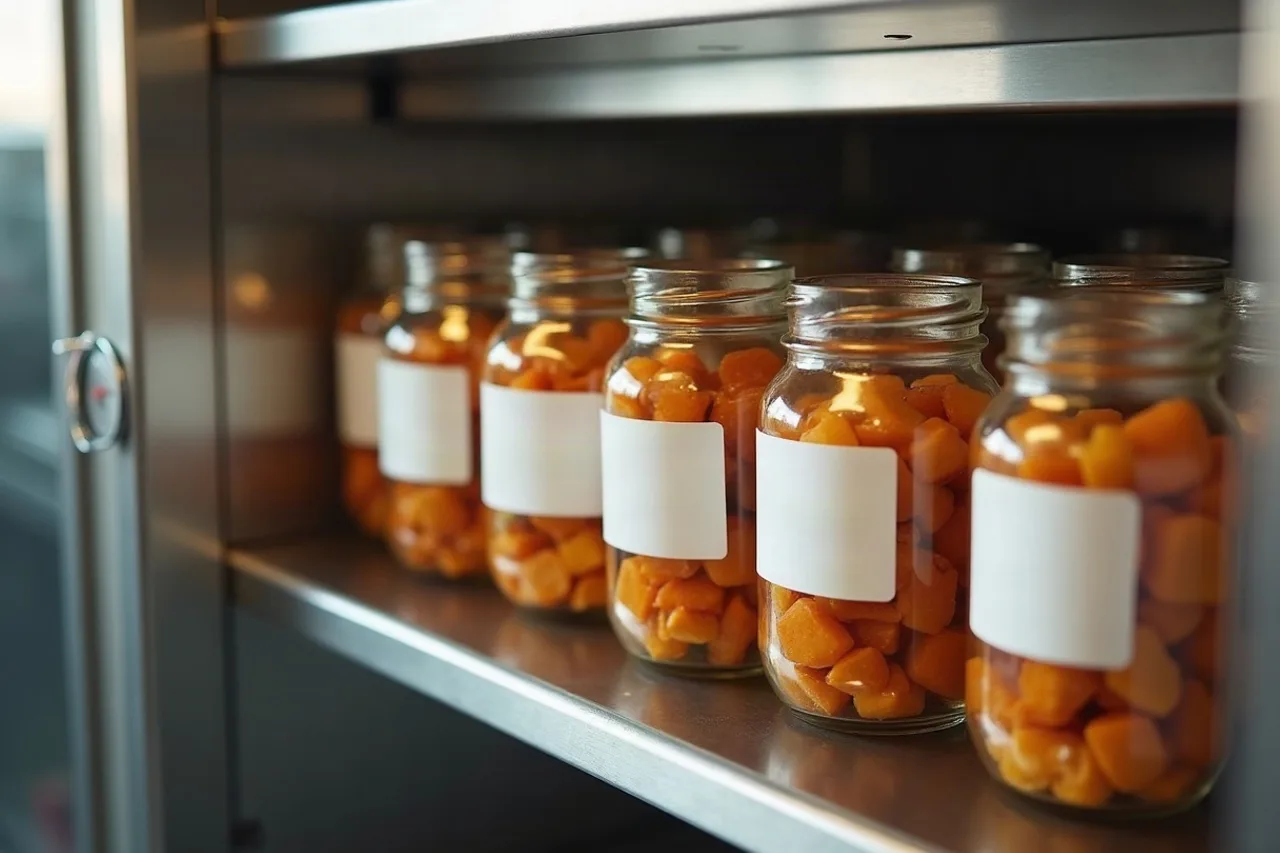
The obligation to take samples applies only to some establishments. Check who must, who takes them voluntarily, how many grams and how long to keep them.
The phone call from Sanepid (the State Sanitary Inspection) always sounds the same: "we have a report of food poisoning after a lunch from your kitchen". The inspector's second sentence is about samples. If you have them, the conversation moves on to laboratory testing. If you do not, what remains is your word against the account of the person who fell ill.
A lot of myths have grown up around food samples. The most common one goes: "every canteen has a statutory obligation". We checked the regulations at the source, and the result differs from what half the industry repeats.
Key points at a glance
- For dishes cooked on site there is no obligation. Art. 72(1) of the Act on Food and Nutrition Safety (25 August 2006) says that a closed-type mass catering establishment "may keep" samples. The obligation disappeared on 11 March 2010.
- The obligation remains for dishes from outside. When a canteen serves dishes delivered from another establishment, Art. 72(2) already says "keeps". A written agreement can transfer it to the producer.
- A restaurant, bar and food truck are not subject to Art. 72. These are open-type establishments, and sampling is voluntary here.
- If you take samples, the regulation prescribes the method: not less than 150 g for the listed groups of dishes, +4°C or lower, at least 3 days, a designated place.
- A procedure written into your HACCP documentation becomes binding. Sanepid holds you to what you yourself declared.
Who has an obligation and who takes samples voluntarily
Until 10 March 2010, Art. 72(1) required closed-type mass catering establishments to keep samples of all dishes. The act of 8 January 2010 (Journal of Laws (Dz.U.) 2010 No. 21, item 105) changed this wording. Today the provision says that such an establishment may keep samples of dishes with a short shelf life produced on site. Even so, hundreds of training courses still repeat the pre-2010 version.
Where the obligation really remained
Art. 72(2) reads differently. If a closed-type establishment places on the market ready-made dishes coming from other establishments, it keeps samples of the individual dishes received with the delivery of each batch. There is no "may" here. There is "keeps".
Example: a school without its own kitchen, lunches delivered by a caterer, staff only serve them. That school must keep samples from every delivery. Art. 72(3) provides an exit: on the basis of a written agreement, the obligation can be taken over by the producer of the dishes. This clause should be in every catering agreement with an institution.
Who is a closed-type establishment
It is an establishment providing organised meals to defined groups of consumers, in particular in hospitals, care and educational institutions, nurseries, kindergartens, schools, boarding schools and workplaces. Catering in means of transport is excluded.
A restaurant, pizzeria, milk bar and food truck are open-type establishments and Art. 72 does not apply to them. Do you run a canteen in an educational institution? Check the HACCP documentation for a school and kindergarten canteen.
Why it is worth sampling even without an obligation
A sample is the cheapest policy you have: a container, 150 g of food and a minute of work. When a poisoning is reported, it provides material for testing, and the result may rule out your kitchen as the source. Without it, the inspector relies on interviews with those affected. The second reason is commercial: more and more tenders and B2B contracts require samples as a condition of the contract.
Which dishes and in what quantity
If you take samples, you are bound by the Minister of Health regulation of 17 April 2007. It does not say "whether", only "how".
Samples are taken of each component part of a dish from a given batch. Not one plate with the whole lunch, but the soup, meat, potatoes and salad separately. The moment of sampling: at the end of the portioning period, from the end of the same batch that consumers ate.
The quantity must be sufficient for laboratory tests, and not less than 150 g for: soups, meat, meat and fish dishes, cold cuts and cured meat products (in one piece), cooked vegetables, sauces, flour-based and dairy dishes, legumes, ready-to-eat deli products, salads and ice cream. This is the minimum for the listed groups, not a universal standard. For items outside the list, agree the sample size with the laboratory. For dishes delivered from outside, you take a sample from every delivery, not once a week.
Storage conditions and time
You take the sample with clean metal utensils that have been scalded beforehand. You store it in single-use packaging intended for this purpose or in scalded glass, porcelain or enamel vessels, tightly closed.
Temperature: +4°C or lower, depending on the stored product.
Time: at least 3 days. This is a common mistake. The regulation counts this period not from the preparation of the dish but from the moment the whole batch was consumed or received into the establishment. The popular "72 hours from cooking" can shorten your storage by a whole day.
Place: designated exclusively for this purpose, not a shelf with raw materials. Only the person in charge of the establishment or an authorised person is to have access.
Labelling the sample: what must be on the label
The regulation requires a durable inscription on the container. A marker on tape that peels off in the cold room does not meet this. The label must contain:
- the contents, that is, the name of the dish or its component part
- the date and time of preparation of the dish
- the first name, surname and job title of the person who took the sample
Two special cases. Where a food product from a can is used, the date and time of opening it are added, together with data from the packaging: producer, production date or use-by date. For a dish delivered from another establishment, the date and time of taking the sample or of delivery of the product are entered.
Sample register: template and common mistakes
To be fair: the regulation requires a label on the container, not a separate register. You keep a register so that after a week you can reconstruct what was taken and when. It is the same logic as for the other HACCP registers.
| Taken (date, time) | Dish / component | Prepared | Batch or delivery no. | Weight | Taken by | Disposal and signature |
|---|---|---|---|---|---|---|
| 12.03, 14:10 | Tomato soup | 12.03, 09:30 | own, lunch I | 150 g | A. Kowalska, cook | 15.03, signature |
| 12.03, 14:10 | Pork cutlet | 12.03, 11:00 | own, lunch I | 150 g | A. Kowalska, cook | 15.03, signature |
| 12.03, 11:45 | Goulash (delivery) | received 12.03, 11:40 | delivery 114/03 | 150 g | M. Nowak, catering manager | 15.03, signature |
Mistakes the inspector spots straight away:
- One sample for the whole meal. Each component part is taken separately.
- Date only, no time. The regulation requires the date and the time.
- Samples in the fridge with raw materials instead of in a designated and secured place.
- Disposal 72 hours after cooking. The clock starts from consumption of the whole batch or receipt of the delivery.
- No batch number. Without it you lose the trail described in batch traceability at a minimum scope.
- A register filled in once a week. Entries made from memory are visible at once.
What to do with a sample when a report comes in
Art. 72(4) is short: the samples taken are made available to the State Sanitary Inspection authorities on their request. Your task is not to destroy the material before the inspector arrives.
- Suspend disposal of samples from the dates covered by the report, even after 3 days.
- Secure the rest of the batch and the packaging of raw materials from that day.
- Print the sample register together with the temperature and delivery registers.
- Do not open the containers. A tampered sample loses its evidential value.
- Hand the samples over to the inspector and note to whom and when you gave them.
We described the full sequence of actions after a phone call from a customer in the text on suspected food poisoning in a venue.
Samples for off-site catering and events
Catering for a wedding, a company party or a fair is an open-type establishment and Art. 72 imposes no obligation here. It is also the situation of highest risk: one batch reaches a hundred people at once, and several hours pass between production and consumption outside your control.
Practical minimum: take samples at production, just before packing into insulated containers, and transport them in a separate chilled container. Do not count on sampling on site, because there you have neither the conditions nor a fridge. More about large orders in the text on scaling holiday and corporate catering, and with boxed diet meals there is the labelling from the post on HACCP in diet catering.
Frequently asked questions
Does a school canteen have to take food samples?
For meals cooked in its own kitchen, the act creates no obligation. Art. 72(1) has said since 11 March 2010 that a closed-type mass catering establishment "may keep" samples. The obligation remains in Art. 72(2), that is, when the school serves ready-made dishes delivered from outside. Independently of this, the managing authority, the catering agreement or your own HACCP procedure may impose samples as an internal requirement.
Does a restaurant have to keep samples of dishes?
No. A restaurant, bar, pizzeria and food truck are open-type establishments, and Art. 72 applies only to closed ones. Sampling is voluntary here, but when a poisoning is reported, a sample is the cheapest evidence.
How long must food samples be kept?
At least 3 days, counted from the moment the whole batch was consumed or received into the establishment. Not from the cooking of the dish. The temperature is +4°C or lower, in a place designated exclusively for this purpose.
How many grams must a control sample weigh?
Not less than 150 g for soups, meat, meat and fish dishes, cold cuts in one piece, cooked vegetables, sauces, flour-based and dairy dishes, legumes, ready-to-eat deli products, salads and ice cream. The general rule is broader: the quantity must be sufficient for laboratory tests.
Can a catering company take over the obligation to take samples from an institution?
Yes. Art. 72(3) allows establishments to agree, on the basis of a written agreement, that the obligation applies to the establishment where the dishes were produced. The condition is written form. Without such a clause, the obligation stays with the institution serving the meals.
Legal status as of: 8 November 2026
Legal basis: Act on Food and Nutrition Safety of 25 August 2006, Art. 3(3)(56) and Art. 72 (consolidated text Journal of Laws (Dz.U.) 2026, item 1399); wording of Art. 72(1)-(4) given by the act of 8 January 2010 (Dz.U. 2010 No. 21, item 105), in force from 11 March 2010; Minister of Health regulation of 17 April 2007 on the taking and storage of food samples by closed-type mass catering establishments (Dz.U. 2007 No. 80, item 545). The review of 8 November 2026 covered the Act on Food and Nutrition Safety (consolidated text Dz.U. 2026, item 1399, status as of 28.09.2026); we checked the cited articles in those texts and found no changes to their meaning compared with the previous consolidated texts. We did not recheck the other acts on this list since the review of 24 August 2026.
Last review: 8 November 2026
Need a sampling procedure in your documentation?
With GastroReady you get a ready HACCP, GMP (Good Manufacturing Practice) and GHP (Good Hygiene Practice) documentation package with a sampling instruction and a register template. The documents are sent by e-mail after payment. From 299 PLN.